

The Realities of Community College Transfer: Statistics and Obstacles
Community college transfer to an Ivy League university is possible, but admission is competitive. Start by checking each university’s transfer rules and deadlines. Then meet with a community college advisor, choose courses that fit your intended major, and ask the university how those credits may count. Keep your grades strong and leave time to gather transcripts, recommendations, and financial aid forms.
If you’re helping your teen plan, you don’t need to sort it all out at once. A short list of target schools and a course plan can make the next step much clearer. Admission and credit acceptance are separate decisions, so confirm both before counting on a transfer.
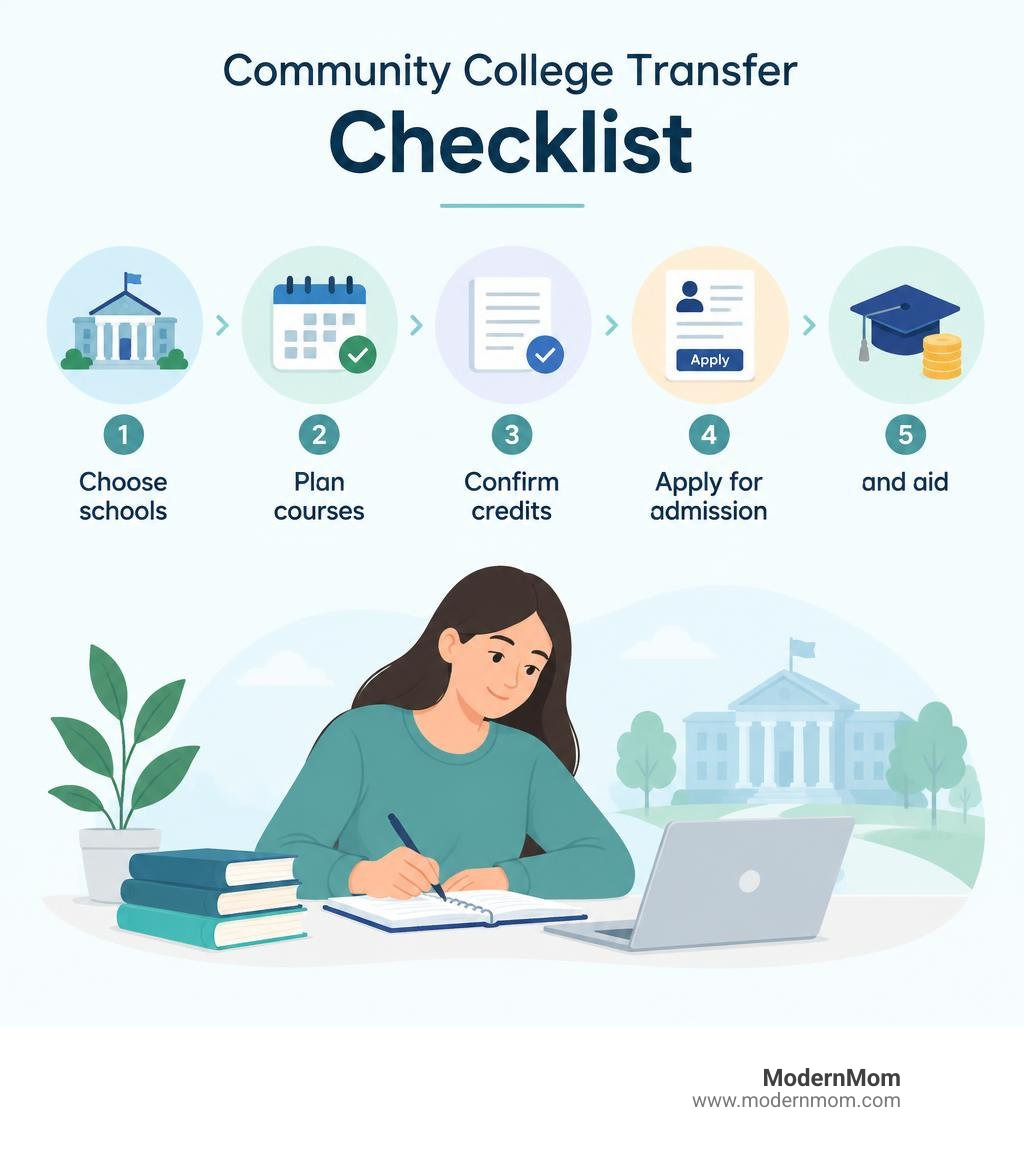
Simple guide to Community college transfer:
Navigating a transfer path can feel like solving a puzzle with missing pieces. While about 80% of students entering community college set their sights on earning a bachelor’s degree, data reveals that only 33% successfully transfer to a four-year institution. Even more telling, just 16% complete a four-year degree within six years. Understanding the process early—much like using a college admissions process roadmap—helps families avoid costly missteps and keep their academic journey moving forward.
Systemic hurdles and credit loss often stand in the way of degree completion. In fact, only 8% of successful transfer students follow the traditional 2+2 timeline (two years at community college followed by two years at university). Many students take six years or longer, often because courses don’t articulate cleanly or advising isn’t aligned with university major prerequisites.
Demographic disparities highlight the need for clear support structures. Data shows that only 11% of low-income community college students earn a bachelor’s degree within six years. Completion rates stand at roughly 9% for Black students, 13% for Hispanic students, and just 6% for adult learners. Furthermore, transfer access remains uneven: 52% of transfer students originate from top-quintile income neighborhoods, compared to just 27% from lower-income backgrounds.
Bachelor’s Degree Completion Rates and Demographics
Earning a recognized credential before making the leap pays massive dividends. Studies show that 67% of community college students who complete a pre-transfer award, such as an Associate of Arts (AA) or Associate of Science (AS), graduate with a bachelor’s degree within four years of transferring. In contrast, only 42% of students who transfer without earning an associate degree finish within four years.
Completing an associate degree locks in credits through statewide transfer blocks. It protects coursework from individual departmental review and gives students academic momentum.
How Four-Year Institution Types Impact Completion
Where a student transfers matters just as much as when they transfer. Four-year institutions vary widely in how effectively they guide transfer students to graduation.
| Institution Type | 4-Year Bachelor’s Completion Rate Post-Transfer | Primary Strengths & Characteristics |
|---|---|---|
| Public 4-Year Universities | 57% | Clear statewide articulation, comprehensive support centers, established major pathways |
| Private Nonprofit Universities | 44% | Robust need-based financial aid, low student-faculty ratios, holistic credit reviews |
| Private For-Profit & Online Institutions | 23%–25% | Highly flexible scheduling, but significantly lower completion rates and variable credit acceptance |
Public universities deliver the highest completion rates for transfer cohorts because of established state policies. On the other hand, private for-profit and predominantly online programs frequently leave students with fewer transferable credits and lower degree attainment.
Essential Planning Tools and Statewide Articulation Pathways
Successful transfer planning begins on day one. Students must verify how every single course aligns with their intended four-year major before enrolling.

State systems provide clear, published resources to map these steps. For instance, the North Carolina Community College transfer resources outline comprehensive articulation agreements across the UNC System, standardizing how 60 credit hours satisfy lower-division general education requirements.
Leveraging Digital Platforms for Course Equivalency
Digital course-mapping tools eliminate guesswork when selecting classes:
- ASSIST: The official transfer repository for California public higher education, offering major agreements and AI-driven planning tools between community colleges, CSUs, and UCs.
- Transferology: A nationwide network connecting more than 400 institutions, allowing students to input courses, AP credits, and military experience to view ranked school matches.
- NJ Transfer: A centralized portal for New Jersey students providing direct course equivalencies, transcript evaluations, and major curriculum sequences.
- Local Institution Portals: Regional hubs, like the West Virginia Northern Community College transfer guidance, detail core transfer agreements and reverse transfer opportunities with four-year partners.
Guaranteed Admission and Articulation Agreements
Many states have established direct pathways to remove transfer ambiguity and lock in credits:
| Pathway / Program | Participating Systems | Key Guarantees & Features |
|---|---|---|
| MassTransfer A2B Pathways | Massachusetts Community Colleges & State Universities / UMass | Guarantees junior standing for 60-credit associate holders; offers up to a 28% tuition credit for GPAs of 3.0+ |
| 2NAU (90/30 Program) | Northern Arizona University & Partner Community Colleges | Allows up to 90 community college credits to transfer; students finish the final 30 credits at NAU with merit scholarship access |
| CSU Transfer Success Pathway | California Community Colleges & California State University | Guarantees dual-admission pathway across 22 CSU campuses with early advising support |
Exploring programs like MassTransfer A2B pathways or the Northern Arizona University 2NAU 90/30 program gives students clear roadmaps and substantial tuition savings. Furthermore, reverse transfer agreements allow students who move to a university early to send credits back to complete their associate degree.
Step-by-Step Guide: How to Transfer from Community College to Top Universities
Transferring to highly selective institutions, including Ivy League universities, requires a proactive strategy that balances rigorous academics with compelling personal narratives.

Top-tier admissions committees look for transfer applicants who have thrived in their community college coursework and demonstrate clear reasons for needing specific institutional resources. Avoiding common college application mistakes, like missing supplemental essay prompts or submitting generic recommendation letters, is essential for a competitive application.
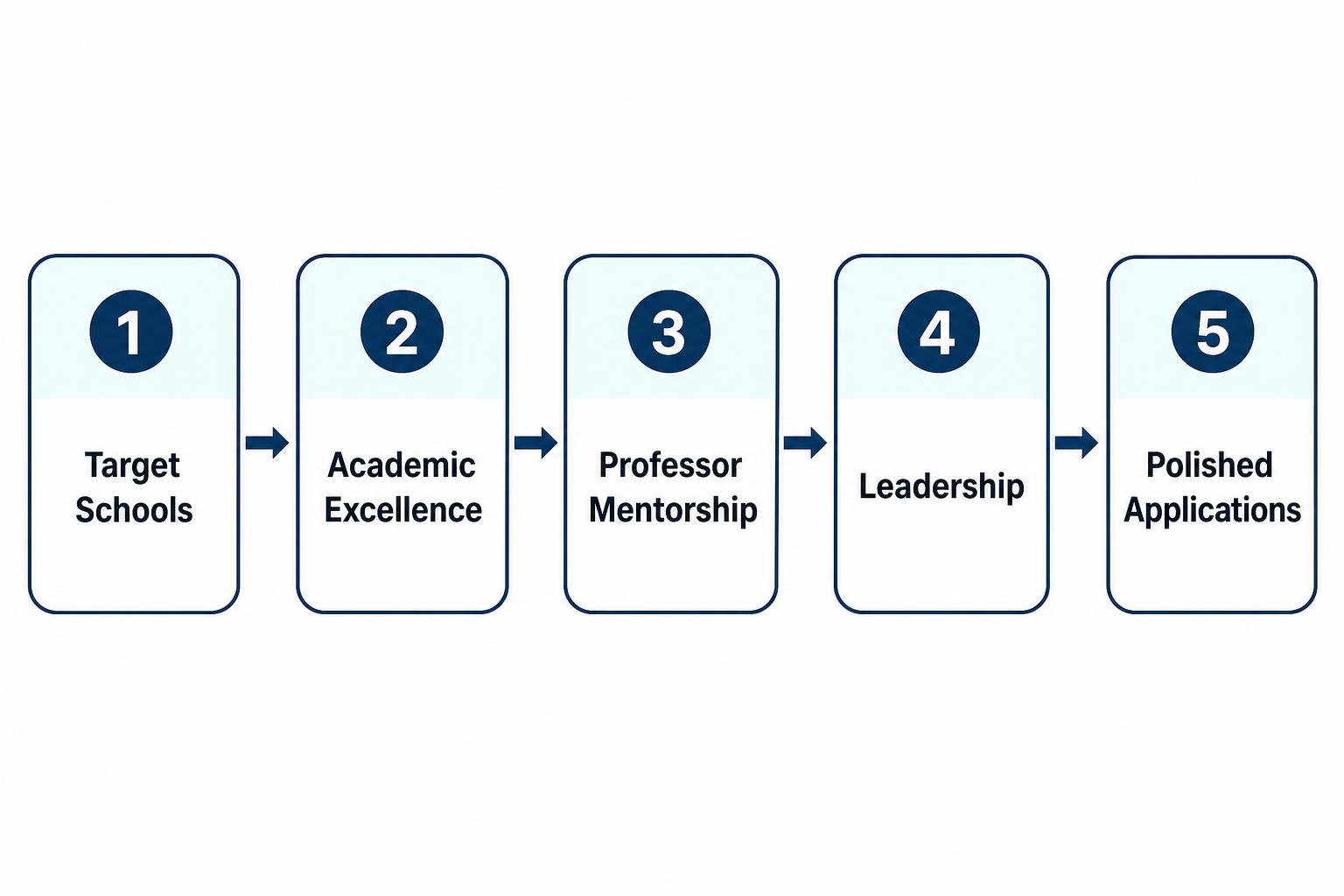
Proven Step-by-Step Community College Transfer Strategy for Elite Admissions
- Maintain Academic Excellence: Aim for a near-perfect GPA (3.85–4.00) while taking honors sections, calculus, and foundational courses relevant to your target major. Check out our tips on maintaining straight As in college coursework for practical study strategies.
- Build Meaningful Faculty Relationships: Attend office hours regularly. Selective schools require detailed letters of recommendation from college professors who can speak to your intellectual curiosity and classroom leadership.
- Engage in Focused Extracurriculars: Elite universities value depth over breadth. Take on leadership roles in student government, organize community initiatives, or participate in undergraduate research.
- Articulate Your “Why” Clearly: Your personal statements should explain why you chose community college, what you accomplished, and why your target four-year institution is the necessary next step for your academic goals.
How Early Advising Accelerates Community College Transfer Success
Working closely with transfer advisors ensures that every semester moves you toward graduation. Dedicated transfer advisors help students map prerequisite sequences, track transcript deadlines, and submit application fee waivers.
Universities such as UNC Asheville emphasize hands-on advising. The UNC Asheville transfer admissions office offers direct credit audits, 4-year transfer plans, and automatic merit scholarship reviews during the application process.
Financial Advantages and Affordability of Starting at Community College
Beginning at a community college is one of the most effective ways to lower the overall cost of a four-year degree. By completing general education courses at affordable local tuition rates, families can save tens of thousands of dollars on tuition, campus housing, and student fees.
Maximizing aid starts with navigating financial aid and FAFSA early every academic year to access federal Pell Grants, state funding, and institutional awards.
Tuition Savings and Transfer Scholarships
Beyond low initial tuition rates, structured transfer agreements offer dedicated financial aid incentives:
- State Tuition Waivers: Programs like the Massachusetts Commonwealth Commitment offer average tuition rebates of 40% for students who maintain a continuous full-time schedule and a 3.0 GPA.
- Regional Access Grants: Programs like UNC Asheville’s Access Asheville grant cap tuition costs for eligible in-state students with household incomes under designated thresholds.
- Transfer Merit Awards: Many universities automatically evaluate incoming transfer applicants for dedicated scholarships based on community college GPA.
Proactively searching for merit scholarships helps offset upper-division tuition and books after transfer.
Frequently Asked Questions About Community College Transfer
Do Ivy League and selective universities actually accept community college transfer students?
Yes. Institutions such as Princeton, Columbia (through its School of General Studies), Cornell, and Yale actively recruit community college students, adult learners, and military veterans. While acceptance rates are low, applicants with stellar academic records, strong faculty recommendations, and distinct life experiences are competitive candidates.
How can I make sure all my community college credits transfer without credit loss?
Stick to general education courses that carry regional accreditation and statewide transfer guarantees. Always retain complete course syllabi, verify minimum grade thresholds (most institutions require at least a C- or C), and use tools like Transferology or ASSIST to confirm major prerequisite equivalencies with an advisor.
Does completing an associate degree increase my chances of graduating after transferring?
Yes. National data indicates that 67% of community college transfer students who finish an associate degree complete their bachelor’s degree within four years, compared to 42% who transfer without an associate credential. Associate degrees often transfer as a completed general education block, protecting coursework from credit loss.
Conclusion
Starting your higher education journey at a two-year school provides a practical, high-value launchpad for earning a bachelor’s degree at a state university, a private college, or an Ivy League institution. Success comes down to early planning, regular academic advising, and using statewide articulation tools to safeguard your hard-earned credits. Explore our full library of ModernMom education resources for more guides on college planning, scholarships, and family learning strategies.