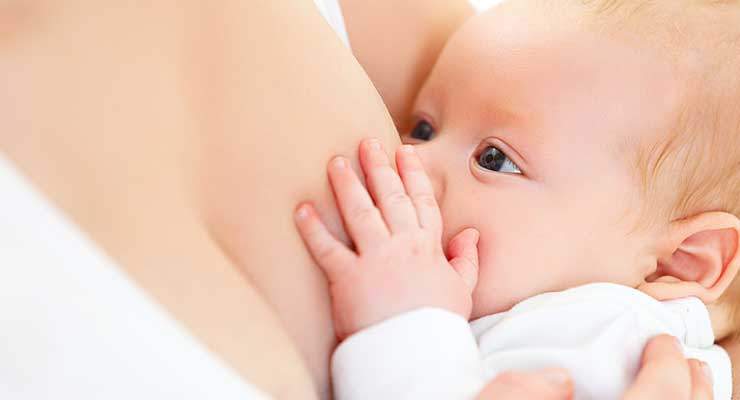
For the first year of life, breast milk or formula provides the bulk of your baby’s nutrition, even after he begins eating solid foods. As a mother, you have asked yourself, how much milk should a healthy baby have? You may worry whether your baby is drinking enough — or too much. Your baby’s appetite may vary from day to day and may be completely different from another baby’s appetite — all of this is normal.
General Guidelines
By rule of thumb, according to Dr. Alan Greene, a baby should drink between 2 and 3 ounces per pound of body weight. This means that as your baby grows, she’s going to need to drink more milk. It’s easy to measure this if you are feeding with formula or expressed breast milk, but you cannot measure the amount of milk that your baby drinks from the breast. In most cases, you don’t need to worry about the exact amount, as long as your baby is growing and doesn’t seem hungry.
Your Baby’s Weight
Your baby’s weight is the biggest indicator as to whether or not he’s drinking enough milk. He should be gaining weight steadily, usually staying within or exceeding the same percentile on a growth chart. If you have a concern, discuss it with your doctor.
Hunger Signals
Pay more attention to your baby’s hunger signals than the numbers on the bottle or on the clock. You should not limit your baby’s milk intake simply because she already drank the recommended 4 to 8 ounces of milk. Don’t worry about your baby gaining too much weight; generally, weight gain is a good thing. Nursing mothers increase their milk supply and ensure ample nutrition for their babies by nursing on demand throughout the day. If you limit food or delay nursing to every three or more hours on a rigid schedule, you’ll end up with an unhappy and unhealthy baby. Likewise, refrain from forcing your baby to finish the bottle or nurse longer if she doesn’t want any more. Excess eating can interrupt the body’s natural appetite regulator, which can contribute to weight problems later in life.
Milk and Solid Foods
Once your baby begins eating solid foods at age six months and goes on to add more foods to his diet, you may notice that he’s drinking less milk. This is normal. However, most of his nutrition is coming from the milk, so he should be drinking that as well. Start the meal by giving him solid foods, then finish it off with milk or a nursing session.
Warning
With babies, “milk” should always refer to breast milk or formula. Do not give your baby cow’s milk — or any other types of milk — until after her first birthday, at which point you can give your baby full-fat cow’s milk.
How Much Milk Should a Healthy Baby Have?: