


Sports Equipment Storage That Works for Busy Families
Sports equipment storage starts with a spot for each kind of gear. Keep balls in an open bin or rack, hang bats and rackets, and give each child a labeled cubby or basket. Put practice-day gear near the door. Let damp cleats and pads dry before putting them away.
When one practice ends and another is about to start, a simple system makes it easier to find what everyone needs—and easier for kids to put it back. The product picks ahead cover small entryways, crowded garages, and the gear that never seems to fit in a regular closet.
Whether you’re juggling toddlers with balance bikes, tweens with travel-ball gear, or teens heading to late practices, a clear home base saves rushed mornings and keeps everyone calmer. Start small this weekend and build from there.
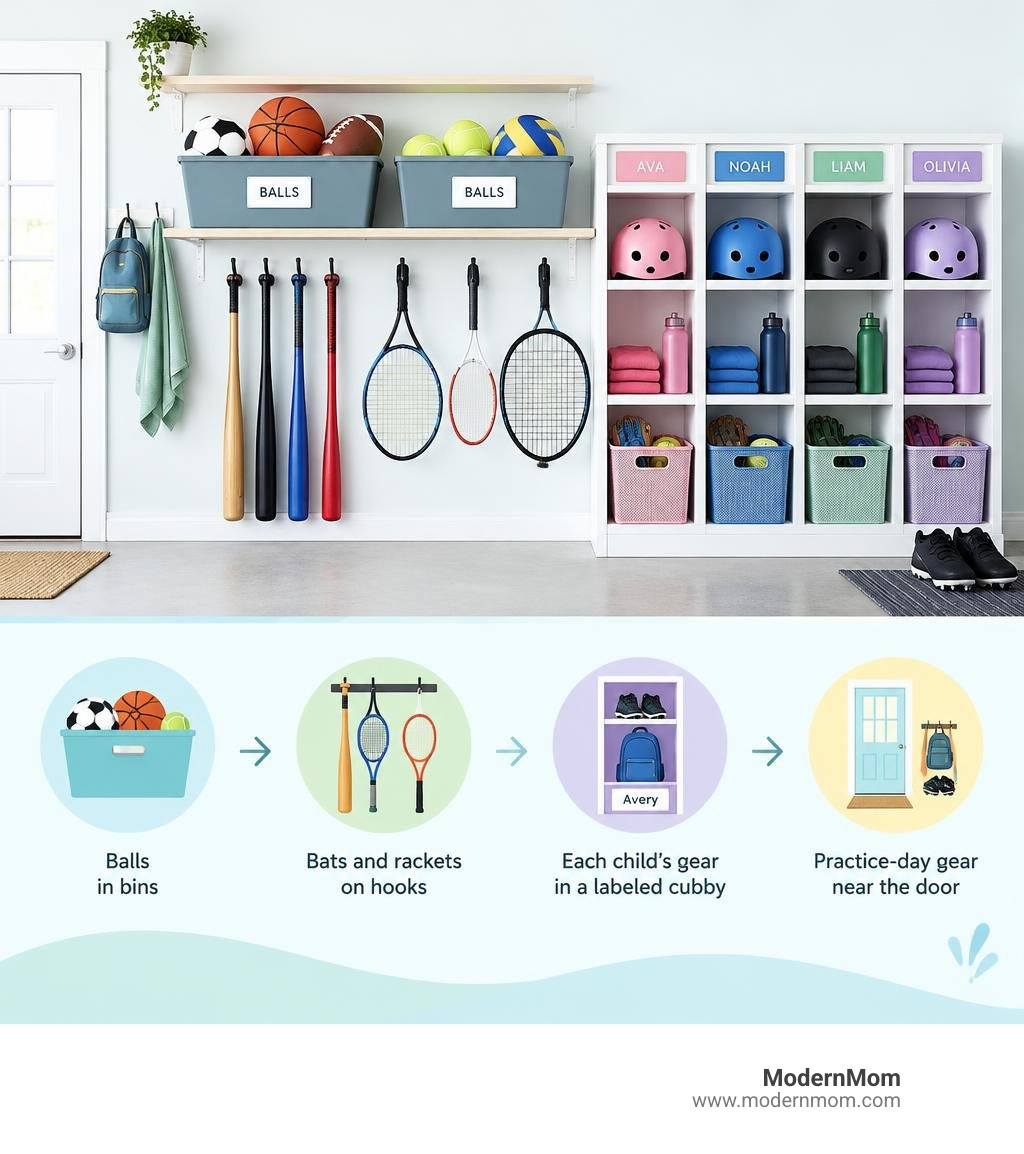
Key Sports equipment storage vocabulary:
Choose Sports Equipment Storage That Fits Your Gear and Space
Setting up a functional system starts with a simple gear audit. Lay out everything your athletes use, check weight limits, and measure your available floor and wall space before buying bins or organizers.
Do the audit together on a Saturday morning so kids can help sort what they’ve outgrown. Toss cracked balls, donate gear no one uses, and keep only what fits your current season. That quick reset prevents buying storage for clutter you don’t need.
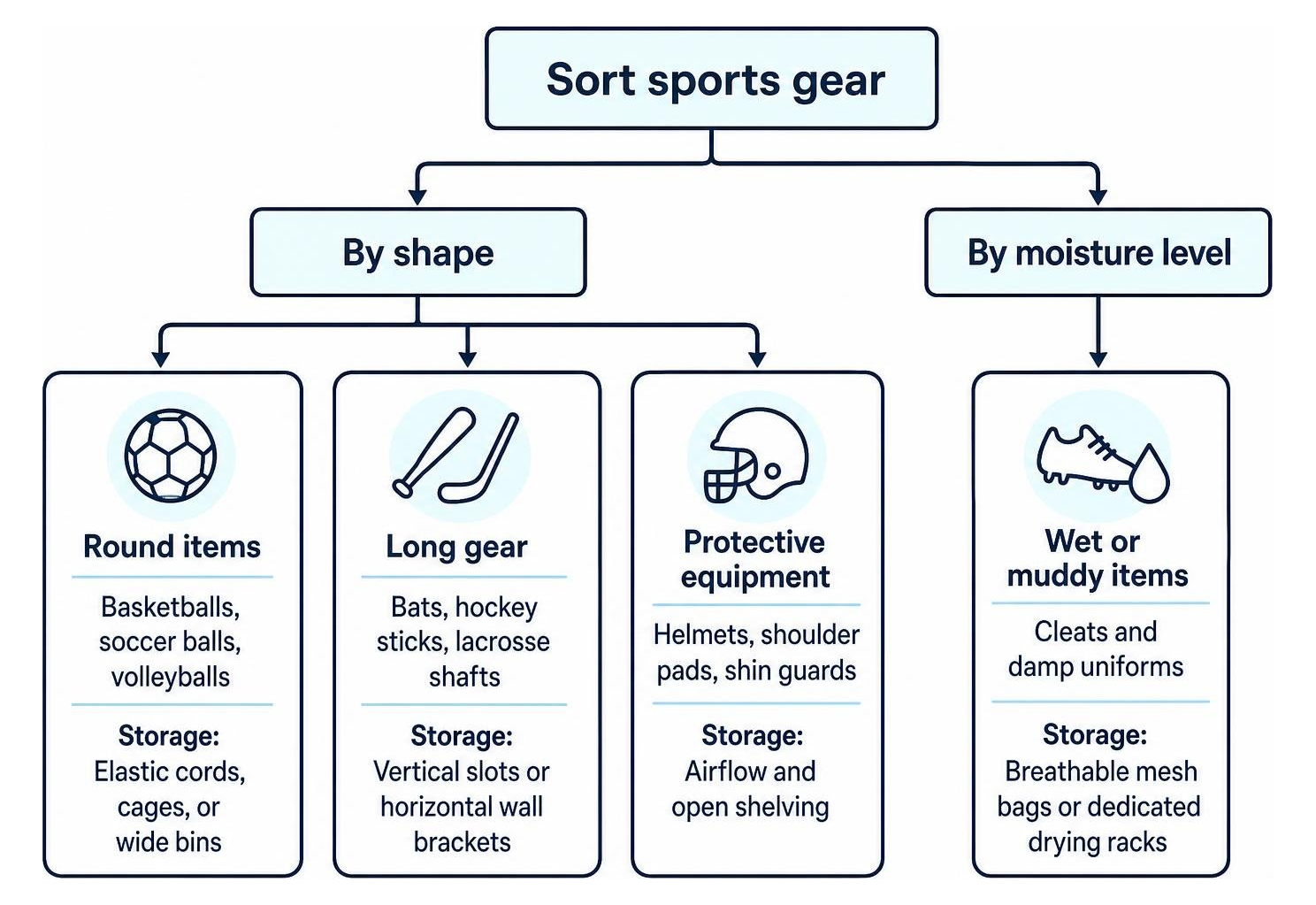
Sort gear by shape and storage needs
Instead of organizing strictly by sport, group items by physical shape:
- Round items: Basketballs, soccer balls, and volleyballs need elastic cords, cages, or wide bins so they don’t roll away.
- Long gear: Bats, hockey sticks, and lacrosse shafts belong in vertical slots or horizontal wall brackets.
- Protective equipment: Helmets, shoulder pads, and shin guards need airflow and open shelving.
- Wet or muddy items: Cleats and damp uniforms require breathable mesh bags or dedicated drying racks.
Match storage to your home, garage, or routine
Consider your family’s daily flow. Mudrooms and entryways work best for grab-and-go essentials on practice days, while garages and basements hold bulkier items. As highlighted in IKEA sports gear ideas, creating dedicated lifestyle zones keeps equipment accessible without cluttering living areas. Always place everyday items at children’s eye level so they can put things away independently.
For younger kids, picture labels work better than words. For older kids and busy caregivers, a simple checklist by the door helps everyone grab the right mouthguard, water bottle, and cleats without a last-minute search.
Compare wall-mounted and freestanding systems
Choosing between wall-mounted racks and freestanding organizers depends on your space and layout flexibility.
| Feature | Wall-Mounted Systems | Freestanding & Rolling Carts |
|---|---|---|
| Floor Space | Keeps all floor areas completely clear | Uses 2–4 square feet of floor space |
| Accessibility | Best for older kids and adults | Easy for younger kids to reach |
| Mobility | Fixed in place once installed | Moveable with lockable caster wheels |
| Installation | Requires finding studs and drilling | Simple assembly with hand tools |
| Best Use | Heavy bikes, skis, and narrow garages | Mixed balls, helmets, and daily gear |
Sports Equipment Storage for Garages, Small Homes, and Home Gyms
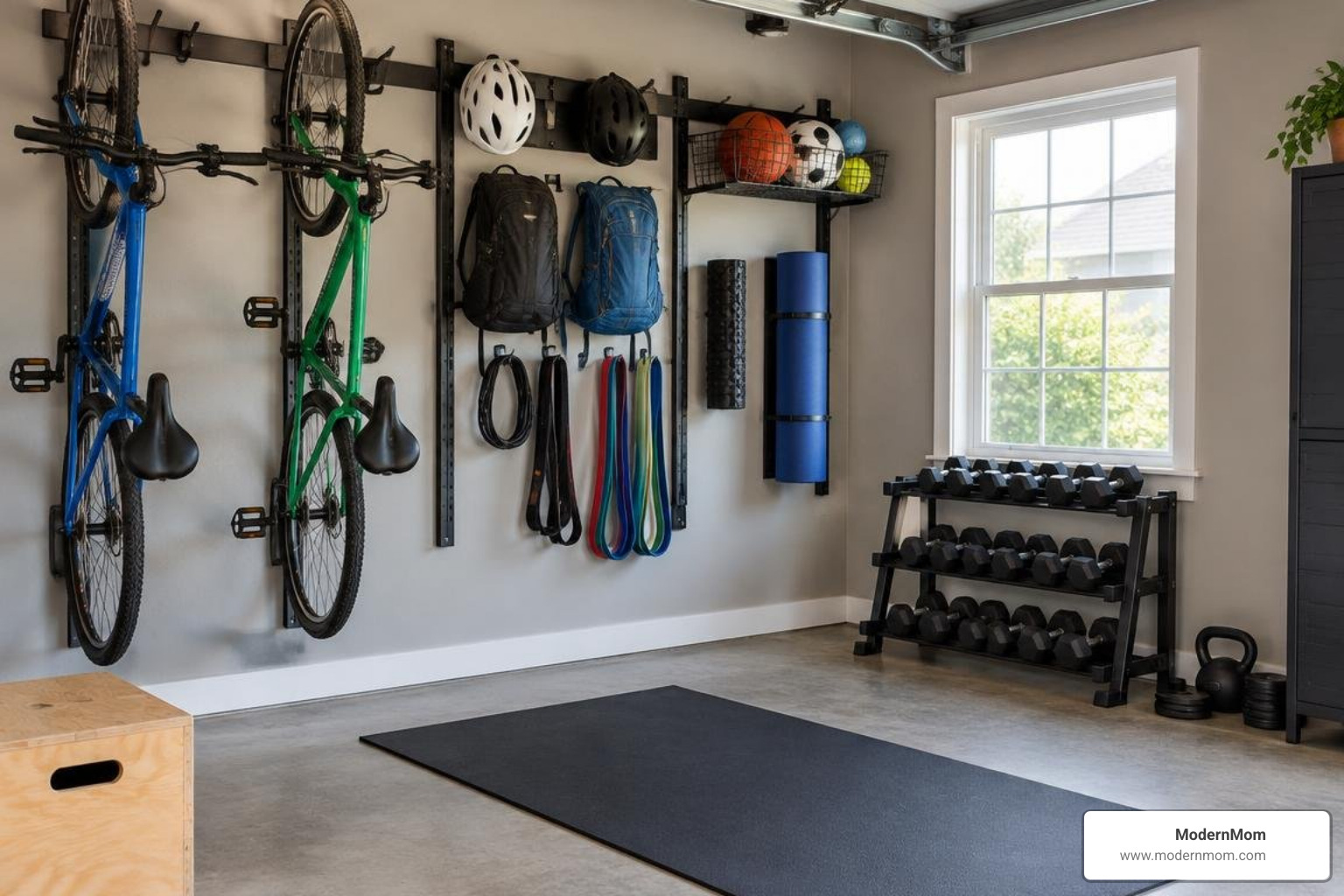
Save floor space in a small garage or home
When square footage is tight, go vertical. Utilize wall tracks and overhead ceiling racks for seasonal gear, keeping walking paths clear around parked cars. In smaller homes, an under-stair closet outfitted with low bins or a stylish entryway basket works wonders. For workout gear, hide a compact corner setup behind a full-length curtain.
If you’re caring for kids and aging parents in the same home, keep a clear path for strollers, walkers, and quick exits. Store heavy items low, leave tripping hazards out of walkways, and keep a small basket by the door for daily essentials.
Choose storage for indoor versus outdoor gear
Indoor storage allows for softer materials and open bins, while outdoor storage requires weather resistance. If you use a deck box or shed, choose UV-stable resin or powder-coated steel to prevent rust. Always ensure damp items are completely dry before placing them inside enclosed outdoor containers to prevent mildew.
Install and secure racks safely
Safety is paramount around active children. Follow these key installation steps:
- Always anchor heavy wall rails directly into wall studs rather than hollow drywall.
- Use the correct masonry anchors when mounting to brick or concrete walls.
- Secure tall freestanding shelves to the wall to prevent tipping.
- Check and retighten mounting screws once or twice a year.
Sports Equipment Storage for Balls, Bats, Rackets, and Family Gear
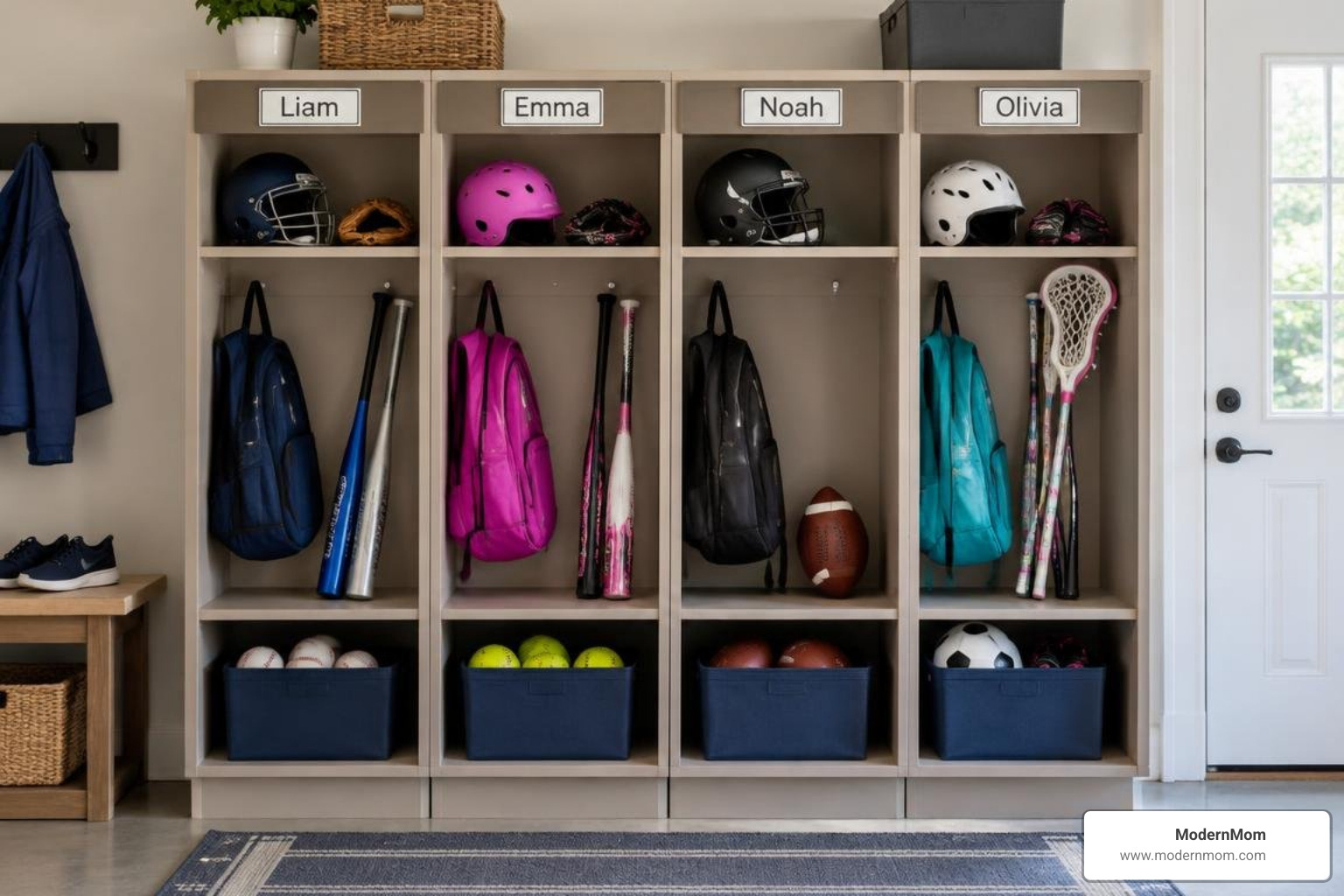
Store balls, bats, rackets, and protective gear
Protecting expensive athletic gear extends its lifespan. Store tennis and pickleball rackets hung by their head beams rather than their strings to prevent warping. Avoid storing inflated balls in hot car trunks or direct sunlight, and leave them slightly under-inflated during extended off-seasons. For step-by-step room setups, explore how to organize sports equipment to streamline your family’s gear zones.
Add a small repair kit nearby with a ball pump, needles, and grip tape. Checking air pressure monthly keeps balls ready for practice and helps you spot leaks before game day.
Make a shared family system kids can maintain
The easiest way to prevent sibling mix-ups is assigning one labeled cubby or locker per child rather than sorting purely by sport. Keep open bins low to the ground so young athletes can toss their own gear inside. Establish a quick 5-minute Sunday evening reset to clear out muddy practice bags and prep for the week ahead.
Top-Rated Sports Equipment Organizers: Picks for Different Needs
Finding the right organizer can instantly restore order to a chaotic garage or mudroom. Marketplace customer ratings offer helpful insight into everyday performance:
- Mythinglogic Rolling Sports Equipment Organizer: Features lockable wheels, multiple baskets, and bat racks. Rated 4.7 out of 5 stars from over 1,500 reviews.
- Kinghouse Sport Equipment Organizer: A sturdy garage rack built for balls, bats, and workout gear. Rated 4.6 out of 5 stars from 1,800+ reviews.
- Ball Storage Rack with Wheels: Compact multi-tier rolling cart with elastic straps for quick ball retrieval. Rated 4.7 out of 5 stars from 1,100+ reviews.
- WALMANN Garage Sports Organizer & Golf Bag Stand: Combines wide golf bag storage with side baskets and hooks. Rated 4.8 out of 5 stars across 276 reviews.
- Garage Sports Equipment Organizer Rolling Cart: Heavy-duty steel organizer with lockable casters for mobility. Rated 4.8 out of 5 stars from 350+ reviews.
- TomCare Garage Ball Storage Rack: Versatile rolling cart with side hooks and deep bins. Rated 4.3 out of 5 stars from over 700 reviews.
Before you buy, measure your doorway and garage space, then check whether wheels lock and whether bins lift out for cleaning. A cart that rolls to the car on practice night can save tired arms and extra trips.
Compare budget-friendly, all-in-one, and premium options
Basic rolling ball caddies and single wall hooks start around $30 to $50, making them budget-friendly choices for smaller collections. Comprehensive multi-sport stations with dedicated golf bag bays, bat racks, and heavy-duty casters generally range from $90 to $200. Check product dimensions and weight ratings to match your gear volume before buying.
Protect Gear, Rotate Seasonal Items, and Handle Overflow
Store damp or smelly gear without trapping moisture
Never pack damp protective pads, cleats, or gloves straight into enclosed plastic bins. Hang sweaty gear on open wire racks or inside ventilated mesh bags immediately after games. Removable liners should be washed regularly, and cleats should air-dry completely before going into cubbies.
Try a simple routine: shake out gear outside, hang it for an hour, then store it. Sprinkle a little baking soda in smelly bags overnight and shake it out in the morning to freshen things up.
Put skis, snowboards, golf clubs, and other seasonal gear away safely
Store winter gear and golf clubs upright in padded bags inside a temperature-controlled space. Never stack heavy storage tubs on top of skis or snowboards, as uneven pressure can flatten their camber and ruin edges. Keep a simple checklist taped to the storage tote so you know exactly what gear needs replacing before next season starts.
Use a storage unit when home space runs out
If family sports gear overwhelms your home, a small 5’x5′ or 5’x10′ storage unit provides an ideal seasonal rotation hub. Use vertical freestanding shelving, keep clear aisles, and place heavy gear on lower shelves. Climate-controlled units are recommended for expensive leather items, memorabilia, and delicate electronics to prevent moisture damage.
Frequently Asked Questions About Sports Equipment Storage
How do I keep balls from losing their shape in storage?
Store sports balls in dedicated ball corrals or elastic cages without heavy equipment stacked on top. Avoid high-heat areas like direct sunlight or unventilated attics, and let out a small amount of air if storing them away for several months.
Can I mount a sports rack on drywall?
Heavy racks holding bikes, bats, or multiple balls should always be screwed into solid wood wall studs. If stud placement does not align with your rack, secure a horizontal wood mounting board to the studs first, then mount the rack directly to the board.
Should sports gear go in a climate-controlled storage unit?
Standard plastic cones, soccer balls, and practice gear tolerate standard storage well. However, leather gloves, high-end golf clubs, tech accessories, and autographed memorabilia should always be kept in climate-controlled conditions to protect against humidity and temperature extremes.
If you’re short on time, start with the gear you use most often. A single labeled bin by the door often solves the biggest daily headaches first.
Conclusion
Creating an orderly sports hub doesn’t require an entire room makeover. By sorting gear by shape, using vertical wall space, and giving each child their own labeled zone, you can eliminate game-day panic. While you’re refreshing your routines, you can tackle a quick home reset while coffee brews to keep everyday living spaces feeling just as organized and peaceful.