
Why the Four-Box Method Is a Game-Changer for Overwhelmed Families
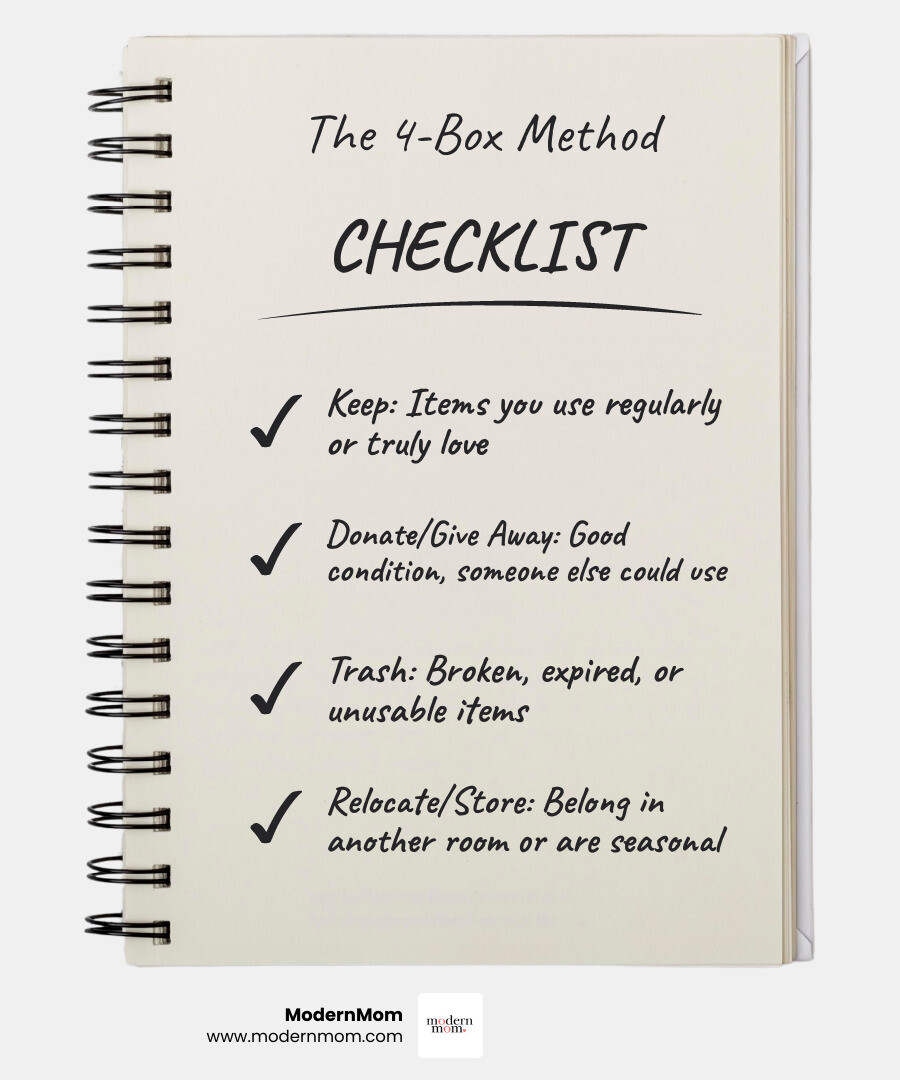
The Four-box decluttering method is a simple sorting system that helps you tackle clutter by placing each item into one of four clearly labeled categories: Keep, Donate/Give Away, Trash, or Relocate/Store. This structured approach eliminates decision fatigue and helps you make quick, confident choices about what stays and what goes.
How It Works:
- Keep – Items you use regularly or truly love
- Donate/Give Away – Items in good condition that someone else could use
- Trash – Broken, expired, or unusable items
- Relocate/Store – Items that belong in another room or are seasonal
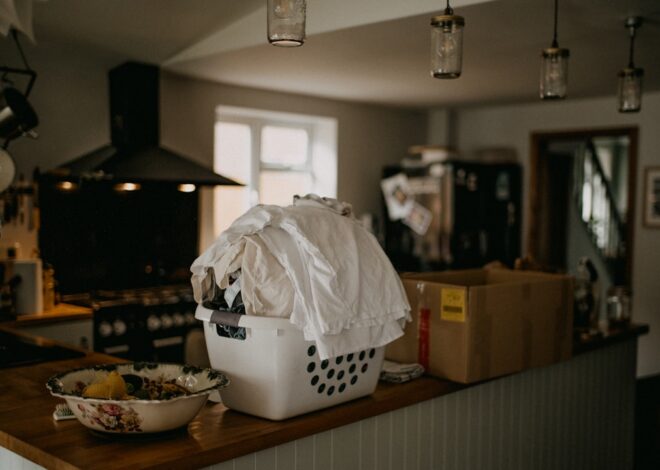
When you’re staring at a mountain of toys, a kitchen counter buried under papers, or a closet you can barely open, decluttering can feel impossible. You know you need to tackle it, but where do you even start?
Here’s the truth: you don’t need a whole weekend or a complete home makeover. You just need a system that works with your real life—not against it.
The four-box method provides exactly that. It gives you structure when you’re drowning in decisions, reduces overwhelm by limiting your options, and helps you see progress fast. Experts agree that this approach works because it provides a clear path forward, which is especially helpful when you’re juggling a million other things.
Small wins matter. When you can sort through one drawer in 15 minutes and actually see the difference, it builds momentum. You start to believe the whole house doesn’t have to stay this way.
The key to tackling big challenges is breaking them into manageable steps. The four-box decluttering method does exactly that—it transforms overwhelming chaos into a simple, repeatable process that busy moms can actually stick with.
If you like having a clear framework, you might also appreciate how other methods, like the KonMari method, focus on joy and intentional living. The four-box method gives you that same sense of purpose, but in a super practical, bite-sized way.
Ready to reclaim your space without the stress? Let’s walk through exactly how this method works and how you can use it to tackle any cluttered corner of your home.
Four-box decluttering method terms to know:
What Is the Four-Box Method and Why Does It Work for Busy Moms?
The Four-box decluttering method is a straightforward, highly effective technique designed to simplify the often-overwhelming task of decluttering. At its core, it involves setting up four distinct containers, each labeled with a specific action: Keep, Donate/Give Away, Trash, and Relocate/Store. This structure provides a clear, actionable path for every item you encounter.
This method works wonders for busy parents because it directly addresses common decluttering pain points. For starters, it combats decision fatigue. As organization expert Mary Jo Contello explains, “Giving yourself four different options when evaluating something helps to make decisions, reducing your ‘maybes’ and decision fatigue.” Instead of endless deliberation, you have a limited set of choices, making the process much faster. Chas Greener, creator of Chas’ Crazy Creations, highlights that “The beauty of the four-box method is that it provides structure and quick decision-making, which can reduce emotional overwhelm.”
The method also offers immediate visual progress. As you sort, you see boxes filling up, which builds momentum and makes the process feel less daunting. This is particularly motivating when you’re short on time. It’s also incredibly effective for small spaces, where clutter can quickly feel suffocating. By moving through items efficiently, we can transform a chaotic area into a calm, functional one. This method is a real game-changer for visual learners who thrive on seeing tangible results.
The Four Categories Explained
Let’s dive a little deeper into what goes into each of these crucial boxes. Understanding the purpose of each category is key to making swift, confident decisions.
-
Keep Box: This box is for items that are functional, frequently used, or hold deep, meaningful sentimental value. Think of things you use weekly, items that fit well in your home, or those irreplaceable family heirlooms. The goal here is to be intentional. Ask yourself, “Do I use this regularly?” or “Does this truly make my life better?” Try to keep this pile as small as possible to avoid simply shifting clutter around.
-
Donate/Give Away Box: This is for items that are still in good condition and perfectly usable, but no longer serve a purpose in our home. Old toys your children have outgrown, clothes that no longer fit, or books you’ve read and won’t reread are perfect candidates. It’s a win-win: you declutter, and someone else benefits. Only give away items you would be happy to receive yourself—nothing broken, unhygienic, or unusable.
-
Trash Box: This category is for anything broken beyond repair, expired (like old spices or medicines), stained, ripped, or simply no longer functional. Old magazines, broken appliances, or half-finished DIY projects that will never see the light of day belong here. Be ruthless! This box is about clearing out true waste and making space for what truly matters.
-
Relocate/Store Box: This box is for items that belong in another room (e.g., a book from the kitchen that belongs in the bedroom), or items you want to keep but don’t need access to regularly. This includes seasonal décor, out-of-season clothing, or sports equipment. Professional organizer Hester Van Hien wisely advises, “Try to keep the ‘keep but store away’ pile as small as possible, because when you store things away where you can’t see them, it’s easy to forget about them.” For items that need long-term storage, especially those susceptible to weather damage or pests, a self-storage unit can be a practical solution, offering security and climate control.
The Psychology Behind the Sort
The brilliance of the four-box method lies not just in its practicality, but in its psychological savvy. As Cara Palmer, home organization expert, explains, “It is a decision-making framework that eliminates the dreaded ‘maybe’ pile, which is often the biggest roadblock to successfully following helpful decluttering tips.” By forcing us to make a definitive choice, it prevents procrastination and the accumulation of those “I’ll decide later” items that quickly become new clutter piles.
This structured approach significantly reduces emotional overwhelm. When faced with a mountain of belongings, our brains can freeze. By providing clear categories, the method offers a mental roadmap, allowing us to move through items efficiently without getting stuck in perfectionism or sentimentality. This quick decision-making process builds confidence. Each item sorted is a small victory, and these small wins accumulate, making the entire decluttering journey feel less intimidating and more achievable. We gain a sense of control, changing the daunting task into a manageable project with a clear path to a tidier home.
Your Step-by-Step Guide to the Four-Box Decluttering Method
Ready to roll up your sleeves and dive in? Here’s our simple, step-by-step guide to making the Four-box decluttering method work for your home.
Step 1: Gather Your Supplies and Set the Stage
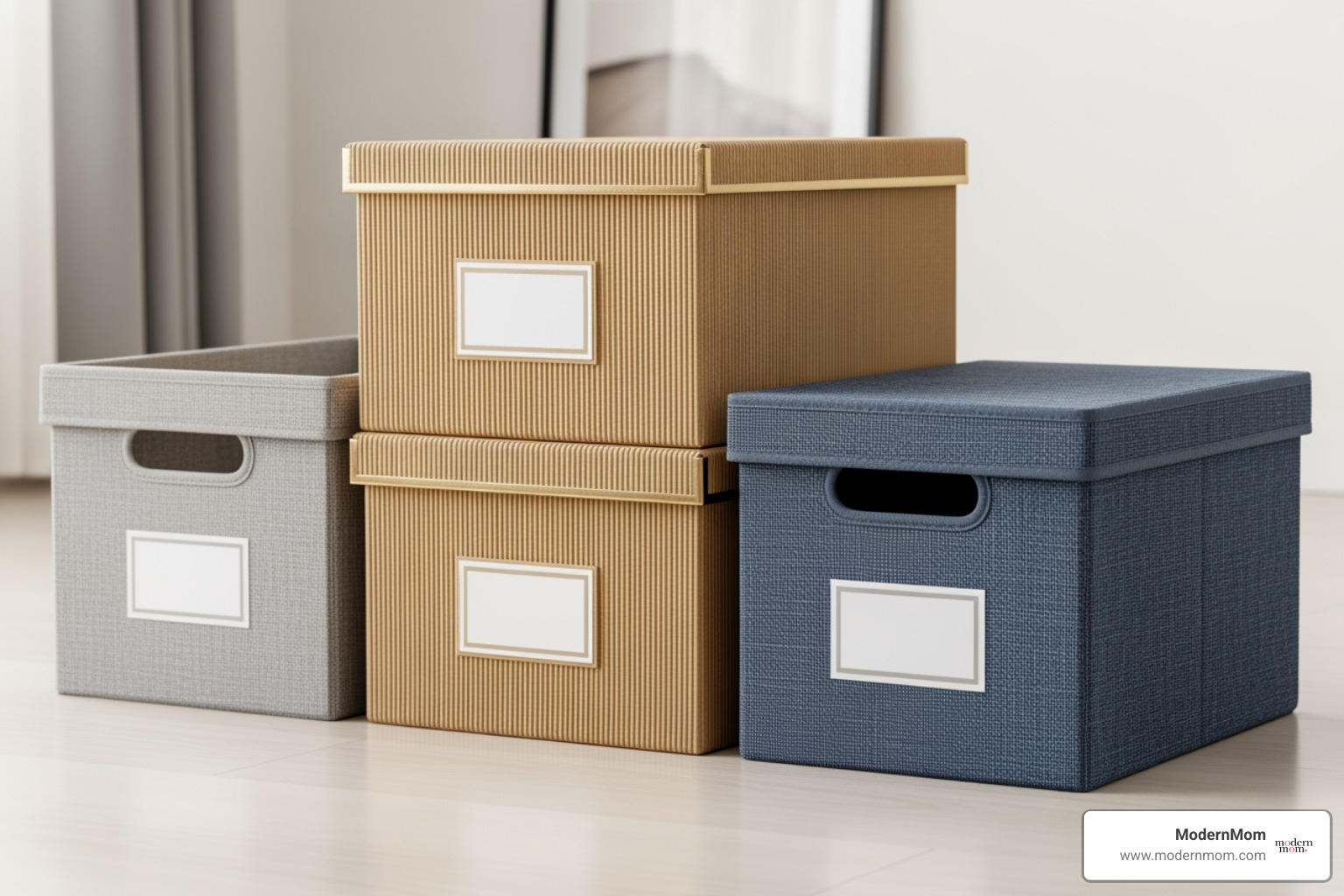
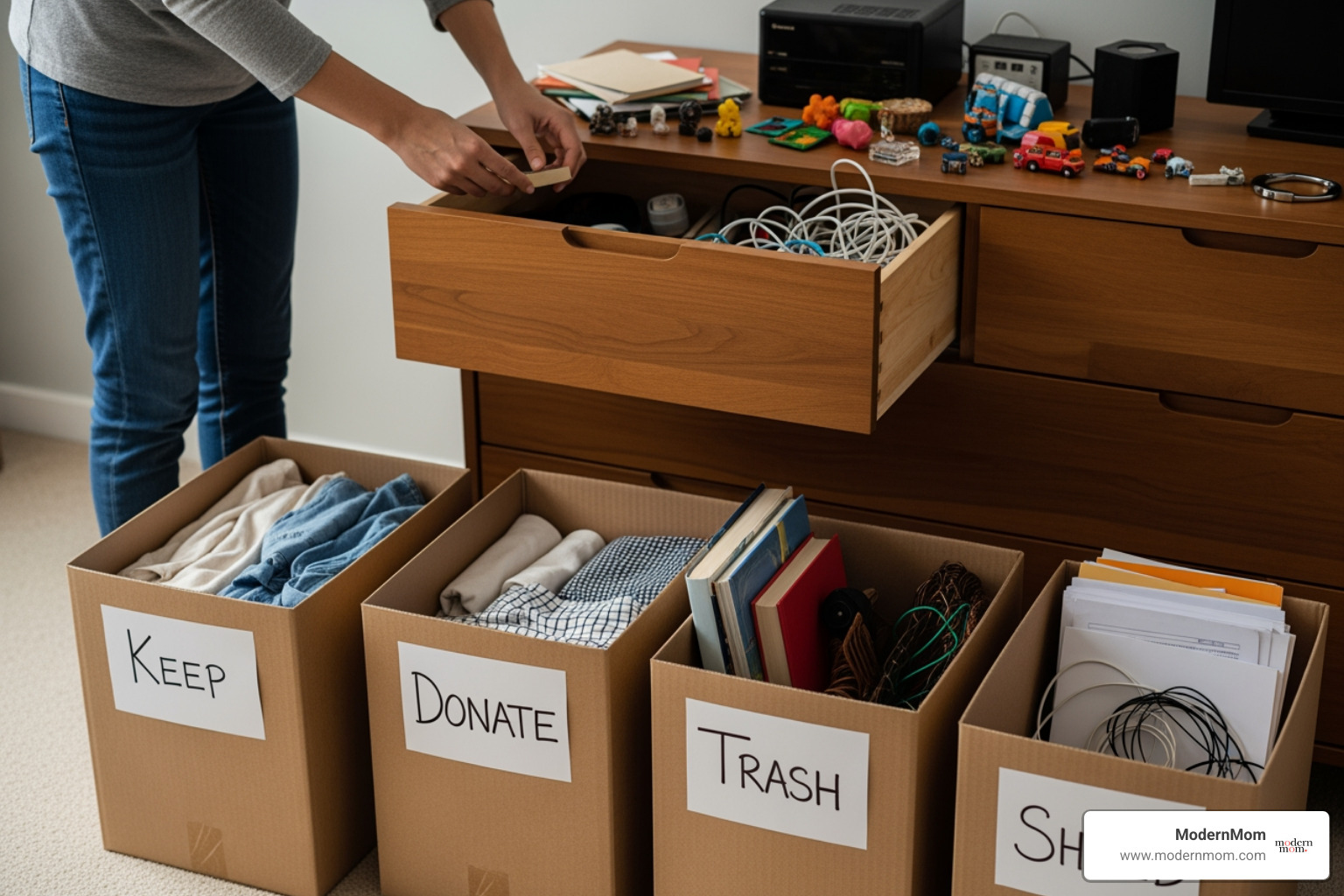
Preparation is key to a smooth decluttering session. First, gather your “four boxes.” These don’t have to be fancy! Cardboard moving boxes are perfect, but you can also use laundry baskets, large reusable shopping bags, or even foldable fabric bins. If you plan to use this method regularly, investing in foldable bins is a practical choice, as they’re easy to store away when not in use.
Next, label each box clearly: “Keep,” “Donate/Give Away,” “Trash,” and “Relocate/Store.” While sticky notes might seem convenient, we’ve learned from experience that they tend to fall off. A permanent marker or proper labels will save you a headache. Have some sturdy trash bags on hand for the “Trash” and “Donate” piles.
Finally, set yourself up for success. Pick just one small area to start—a single drawer, a shelf, or a corner of a room. This prevents overwhelm and allows for quick wins. Set a timer for 15 to 30 minutes. Short bursts of focused decluttering can prevent burnout and keep you motivated. Put on some upbeat music, grab a refreshing drink, and let’s get sorting!
Step 2: How to use the four-box decluttering method to sort your items
This is where the magic happens! Go to your chosen area and pick up each item, one by one. The key is to make a quick decision for every single item. Don’t overthink it; trust your gut reaction.
As you hold each item, ask yourself these crucial questions:
- “Do I use this regularly?” If it’s something you reach for often, keep it. If not, consider the other categories.
- “Do I truly love this item?” This isn’t just about functionality; it’s about joy and aesthetic pleasure. If it brings a smile to your face, it’s a keeper.
- “Would I buy this item again today?” Professional organizer Di Ter Avest suggests this question as a powerful reality check. If the answer is no, it’s a strong signal it might be time to let it go.
- “Does this item spark joy, or am I thinking back to a past time it used to bring joy?” This helps differentiate between genuine present value and nostalgic attachment that no longer serves you.
Place each item into the appropriate labeled box. The goal is efficiency, not perfection. If you’re really stuck, we’ll cover a “maybe” box strategy later, but for now, try to make a definitive choice. The more quickly you move, the less likely you are to get bogged down in indecision.
Step 3: The Crucial Final Step: Empty the Boxes
This step is non-negotiable for a successful decluttering session. The moment your boxes are full, or your timer goes off, it’s time to take action. Don’t let those filled boxes sit around, creating new piles of clutter.
- Trash: Immediately take out the “Trash” box to the bin or recycling. Out of sight, out of mind! You don’t want to second-guess those decisions.
- Donate/Give Away: Place the “Donate/Give Away” box directly in your car or by the door, ready for its next trip. The sooner it leaves your home, the better. You can use strong trash bags for these items.
- Relocate/Store: Take the items from the “Relocate/Store” box and put them in their designated new homes right away. If they’re going into long-term storage, ensure they’re properly packed and labeled. Some companies can even help with collection and secure storage.
- Keep: Finally, put away the items from your “Keep” box into their newly cleaned and organized space. This is the satisfying part! After everything is sorted and put away, take a moment to clean the now-empty surface or area. Use your favorite multi-surface cleaning spray and a good microfiber cloth. This completes the change and gives you a fresh start.
Pro Tips for a Successful Sort (and Common Pitfalls to Avoid)
The Four-box decluttering method is brilliant in its simplicity, but a few pro tips can make it even more effective, and knowing common mistakes can help us avoid frustration.
Tips for Success When Using the Four-Box Method
- Start Small: Don’t try to declutter your entire house in one go. Pick a single drawer, a small shelf, or even just one corner of a room. Small wins build momentum and make the whole process feel less overwhelming.
- Don’t Get Distracted: Stay focused on the task at hand. Avoid getting sidetracked by looking through old photos or reminiscing. The goal is quick decision-making.
- Finish One Area Before Starting Another: This creates a sense of accomplishment and prevents a half-finished mess from spreading. Complete one space, then reward yourself before moving on.
- Involve the Kids (Make It a Game!): For younger children, you can turn it into a fun sorting game. Mary Jo Contello suggests, “With kids, you can always make the four-box-method into a game. But I’d perhaps encourage parents to leave out the ‘store’ box if they’re decluttering with younger children.” This helps them focus on keeping, donating, or trashing.
- Take Before-and-After Photos: Visual motivation is powerful! Seeing the change of a cluttered space into an organized one can be incredibly encouraging and fuel your next decluttering session.
- Work in Short Bursts: We’ve mentioned it before, but it bears repeating: giving yourself 15 to 30 minutes keeps you focused and prevents burnout. Even a few minutes during a commercial break can make a difference.
Common Mistakes to Avoid
Even with a great system, there are a few traps we can fall into:
- Keeping Too Much: The biggest challenge can be letting too many items pile into the “Keep” box. Di Ter Avest, professional organizer and author of ‘Organize Yourself Healthy’, warns that the four-box method can sometimes encourage people to keep too much if the “Keep” box ticks over without critical evaluation. Be honest: if you wouldn’t buy it again today, reconsider.
- Letting the “Relocate” Box Become a New Clutter Pile: The “Relocate” box is a temporary holding zone. If items sit there for weeks, they become clutter. Ensure they find their permanent home quickly.
- Not Emptying the Boxes Right Away: Leaving full “Donate” or “Trash” boxes in your home defeats the purpose. This can lead to second-guessing your decisions or simply moving the mess from one spot to another. Immediate action is key.
- Keep the “Store Away” Pile Small: As Hester Van Hien reminds us, “Try to keep the ‘keep but store away’ pile as small as possible, because when you store things away where you can’t see them, it’s easy to forget about them.” This prevents accumulating duplicates and forgotten treasures.
- Decluttering When You’re Tired or Emotional: Our decision-making skills are sharper when we’re rested and calm. Decluttering sentimental items, especially, can be emotionally draining, so earmark those for a separate day. Trying to power through when exhausted can lead to burnout and poor choices.
How to Handle Sentimental Items
Sentimental items are often the hardest to part with, and that’s okay. They hold precious memories and connections.
- Set Limits: Instead of keeping every memento, designate a specific “memory box” or container. Only items that fit in this box get to stay. This helps us curate our most cherished items.
- Take Photos: We can keep cherished memories without hanging onto all the physical stuff. Take high-quality photos of items you love but don’t need to keep physically. Create a digital album or even a photo book.
- Ask if the Memory Exists Without the Object: Often, the memory is within us, not solely tied to the physical item. If letting go of the object doesn’t diminish the memory, it might be time to release it.
- Schedule a Separate Time: If sorting sentimental items feels too overwhelming during a general decluttering session, set it aside for another day. Dedicate specific, quiet time to go through these items when you’re emotionally ready.
Frequently Asked Questions about Decluttering
We know you might have more questions, so let’s tackle some common ones.
What if I’m still undecided about an item?
It’s completely normal to feel stuck on certain items. For these “maybes,” we recommend creating a temporary “maybe” box. Place the undecided items in it, seal it, and write a future date on it—say, three or six months from now. If you haven’t needed or thought about anything in that box by the deadline, it’s a clear sign it can go. This strategy reduces decision fatigue in the moment and allows for a fresh perspective later.
How does this compare to other methods like KonMari?
The Four-box decluttering method is often praised for its practicality and speed, particularly for those who are easily overwhelmed. It’s less philosophical than some other popular methods. For example, the KonMari method, popularized by Marie Kondo, asks if an item “sparks joy” and focuses on decluttering by category (e.g., all clothes at once). While powerful, this can be overwhelming for some, as it might involve piling every item you own into one heap.
In contrast, the four-box method is more about rapid, practical sorting within a specific area, directly eliminating the “maybe” pile. It’s a decision-making framework that provides clear steps rather than a deep emotional assessment for every item. Other methods like the “3-box method” (often just Keep, Donate, Trash) or “chaos decluttering” (where you make a big mess then sort) also exist, but the four-box technique strikes a balance by offering a dedicated “Relocate/Store” option, which many find invaluable.
How can I keep the clutter from coming back?
Maintaining a decluttered home is an ongoing process, not a one-time event. Here are our top tips:
- Implement a “One In, One Out” Rule: For every new item that comes into your home, one similar item must leave. For example, if you buy a new sweater, donate an old one. This prevents accumulation.
- Do Regular 15-Minute Tidies: We don’t need to dedicate entire days to decluttering. Short, consistent efforts are far more effective. A quick 15-minute tidy each day can make a huge difference in keeping clutter at bay.
- Assign a “Home” for Every Item: When everything has a designated place, it’s much easier to put things away and prevent piles from forming.
- Re-evaluate Clutter Hotspots Seasonally: Certain areas of our homes are prone to clutter—the kitchen counter, the entryway, kids’ playrooms. Make a habit of doing a quick four-box sort in these areas every few months.
- Use the 80/20 Rule: We often only use 20% of our belongings 80% of the time. If you haven’t used an item in a year, seriously consider letting it go (excluding special occasion items).
- Consider Project 333: For clothing, try the minimalist fashion challenge Project 333, where you dress with 33 items or less for three months. It helps us realize how little we truly need.
Conclusion: Reclaim Your Space and Your Sanity
The Four-box decluttering method is more than just a way to organize our stuff; it’s a pathway to a calmer, less stressful home environment. By providing structure, reducing decision fatigue, and offering clear, actionable steps, it empowers us to tackle even the most daunting clutter with confidence.
We know that as busy moms, our time and energy are precious. This method respects that by offering a flexible, efficient approach that delivers visible results. Imagine less time searching for lost items, more time enjoying your family, and a home that feels like a sanctuary rather than a storage unit.
You’ve got this, ModernMom! Start small, trust the process, and celebrate every step of your decluttering journey. For more guidance and resources on creating a harmonious home, learn more about managing clutter and neurodiversity in families.
Learn more about managing clutter and neurodiversity in families