
When the Nest Empties: Your New Chapter Begins
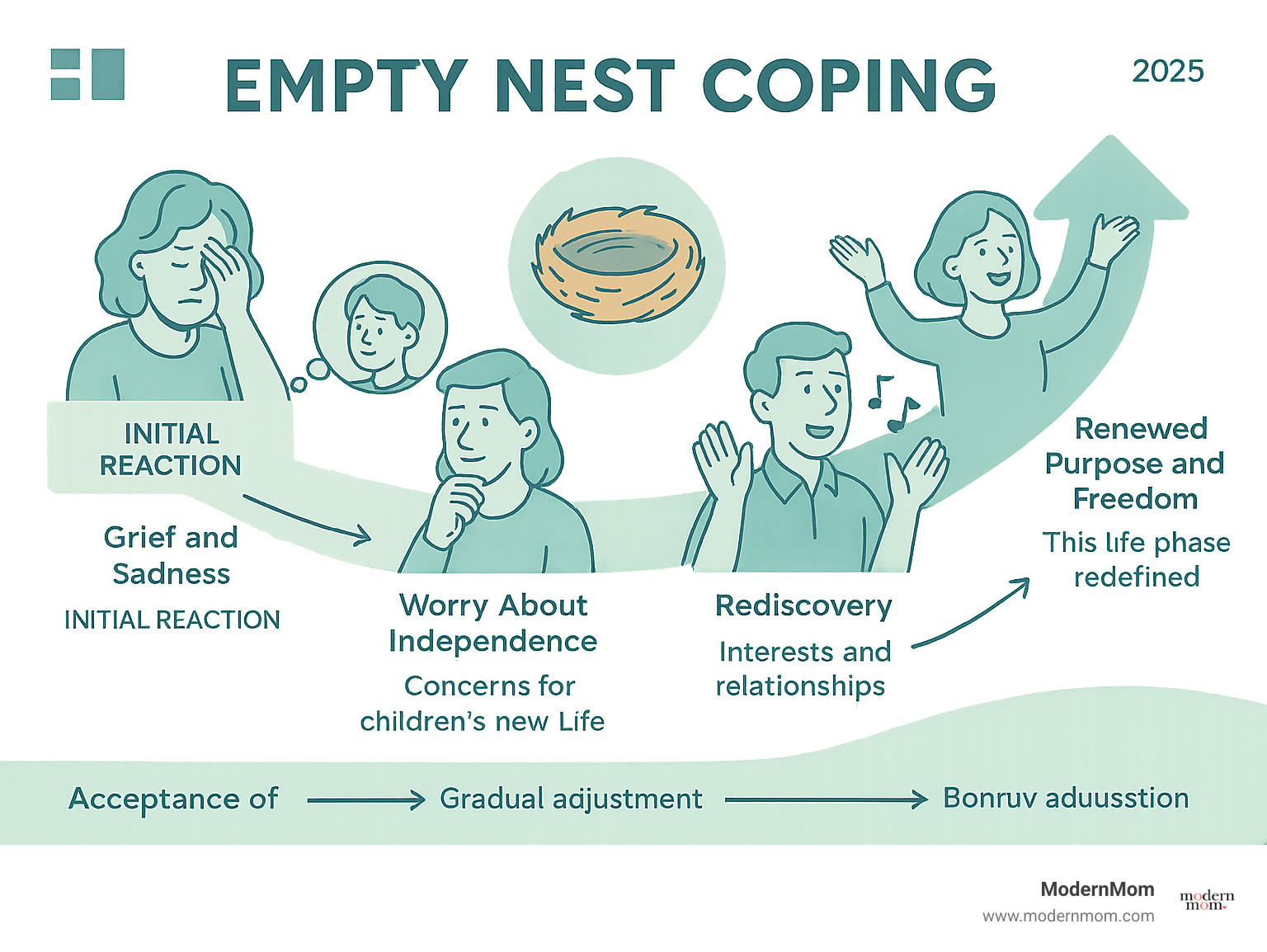
Empty nest coping starts with understanding that those feelings of loss, pride, and uncertainty are completely normal. Here’s what helps most:
- Accept your emotions – grief and excitement can coexist
- Stay connected with your kids while respecting their independence
- Refind yourself through hobbies, goals, or relationships you’ve put on hold
- Give it time – most parents adjust within 18 months to 2 years
- Seek support when feelings becomes overwhelming
If you’ve spent years as the family taxi driver, chef, and chief worry officer, the sudden quiet can feel deafening. Research shows that parents – especially moms who’ve been primary caregivers – often struggle with this transition because so much of their identity has been wrapped up in active parenting.
But here’s what the experts know: this isn’t just an ending. It’s also a beginning.
You raised capable humans who are ready to take on the world. That’s not a loss – that’s a massive win. And while it’s completely normal to feel sad, worried, or even a bit lost, you don’t have to stay stuck there.
Whether your youngest just left for college or you’re preparing for that day, you’re not alone in this transition. Millions of parents steer these waters, and there are real, practical ways to not just survive this phase – but actually thrive in it.
What is Empty Nest Syndrome, Really?
Let’s get one thing straight: empty nest syndrome isn’t something you’ll find in a medical textbook. It’s not a clinical diagnosis, but it’s absolutely a real experience that millions of parents go through when their children leave home.
Think of it as a major life transition – one that can bring up feelings you might not have expected. Grief, loneliness, and a profound sense of loss are all completely normal responses to this change. After all, you’ve just experienced what feels like the end of an era.
Why do moms often feel this transition so deeply? The answer lies in the role we’ve played for the past 18-plus years. As mothers, we’re typically the primary caregivers – the ones coordinating schedules, packing lunches, giving pep talks, and being the family’s emotional headquarters. When that daily caregiving suddenly shifts, it can leave a significant void.
Some factors can make this transition feel even more challenging. If you have an only child, if your identity is strongly tied to being a mom, or if you have concerns about whether your child is truly ready for independence, you might find yourself struggling more. The same goes if you’re dealing with relationship changes or other major life shifts at the same time.
Common Signs and Symptoms
Wondering if what you’re feeling is normal? Here are the telltale signs that you’re navigating empty nest syndrome:
- Persistent sadness that doesn’t seem to lift, even on good days
- Feeling unneeded – like your primary purpose has suddenly vanished
- Restlessness and difficulty settling into the quiet house
- Constant worry about your child’s well-being, safety, and ability to handle adult life
- Loss of purpose or questioning who you are outside of being “Mom”
- Changes in sleep or appetite as your routine completely shifts
If you’re nodding along to several of these, you’re definitely not alone. These feelings are your heart’s way of processing a massive change.
Why This Transition Can Feel So Overwhelming
Here’s the thing: your child leaving home isn’t just a logistical change. It’s a psychological response to the end of an era – years of active nurturing and caregiving coming to what feels like an abrupt pause.
The departure triggers what experts recognize as a genuine grief response. You’re mourning the daily connection, the sense of being needed, and frankly, the version of yourself that existed primarily as an active, hands-on parent.
The challenge of feeling less needed after decades of being central to someone’s daily survival can be deeply unsettling. It’s completely natural to wonder, “Who am I if I’m not the one making sure everyone’s okay?”
This transition can feel especially overwhelming because it often coincides with other major life changes. Hormonal shifts during perimenopause or menopause can intensify feelings of sadness and identity questioning, creating what feels like a perfect storm of emotional upheaval.
Research on the emotional impact of children leaving home confirms what many moms instinctively know: this isn’t just about missing your kids. It’s about refinding yourself after years of putting someone else’s needs first. And that process? It takes time, patience, and a good dose of empty nest coping strategies to steer successfully.
Your Guide to Empty Nest Coping
When the last box is loaded into the car and your child drives away to their new life, you might feel like you’re standing at the edge of a cliff. Empty nest coping begins with a simple but profound truth: everything you’re feeling right now is completely normal.
The sadness, the pride, the worry, even that strange sense of relief mixed with panic – it’s all part of this monumental life transition. Give yourself permission to grieve. You’re not just mourning an empty bedroom; you’re processing the end of an entire era of hands-on parenting.
Here’s something that helps many moms: think of this as a process, not an event. You don’t wake up one day magically adjusted to your new reality. Empty nest coping is more like learning a new dance – it takes time, patience, and plenty of grace with yourself as you find your rhythm.

Practical Tips for Empty Nest Coping
The good news? There are real, practical ways to steer this transition that don’t involve pretending you’re fine when you’re not.
Stay connected, but respect boundaries. Your relationship with your kids isn’t ending – it’s evolving. Text them funny memes, schedule regular video calls, or plan visits that work for both of you. But resist the urge to check in every hour. They need space to stumble, figure things out, and call you when they actually need you. Trust the foundation you built – it’s stronger than you think.
Refind your partner. If you’re married or in a relationship, this is your chance to remember what you talked about before discussing carpool schedules and college applications. Plan actual date nights. Try that restaurant you’ve been meaning to visit for three years. Dream together about what you want your next chapter to look like. Many couples find their relationships actually improve during this phase once they adjust to being partners again, not just co-parents.
Prioritize yourself without guilt. Remember how you used to tell your kids to eat their vegetables, get enough sleep, and pursue their interests? Time to take your own advice. This might mean finally joining that yoga class, getting back into reading, or simply taking long walks without anyone asking where you’re going. Self-care isn’t selfish – it’s essential for this transition.
Find your people. Connect with friends who get it. Other empty nesters understand the weird mix of freedom and loss you’re experiencing. Research shows that strong social support significantly reduces depression and loneliness during this phase. Whether it’s your sister, your college roommate, or that mom from soccer practice whose kid also left for college, lean on people who understand this unique chapter.
When Empty Nest Coping Feels Like Too Much
Sometimes the sadness feels heavier than it should. If you’re struggling to get out of bed, can’t stop worrying about your child’s safety, or feel hopeless about your future, these might be signs that you need additional support.
There’s absolutely no shame in reaching out to a therapist or counselor. Think of it as getting a guide for unfamiliar territory. Professional support can provide you with specific strategies for managing anxiety, processing grief, and building confidence in this new phase of life.
Online therapy has become increasingly effective and convenient for busy parents. Many moms find it easier to fit sessions into their schedules when they don’t have to factor in drive time. The key is finding someone who understands that empty nest syndrome isn’t just about missing your kids – it’s about rebuilding your entire sense of identity and purpose.
Remember: asking for help shows wisdom, not weakness. You spent years making sure your children had the support they needed to thrive. Now it’s time to extend that same care to yourself.
The Silver Lining: Finding Freedom in the Quiet
Here’s something that might surprise you: the quiet house that feels so empty right now? It’s actually full of possibilities you haven’t finded yet.
Bestselling author Gretchen Rubin calls this the “open door stage” of life, and there’s real wisdom in that phrase. Those doors aren’t just opening for your kids – they’re opening for you too. After years of scheduling your life around soccer practices and school pickup times, you suddenly have something precious: freedom to choose how you spend your days.
Think about it – no more mountains of laundry that multiply overnight. No more mediating sibling squabbles or negotiating bedtimes. Your grocery bill just got smaller, and you can actually finish a cup of coffee while it’s still hot. These aren’t small things when you’ve been without them for years.
This newfound space creates room for personal growth you might not have imagined possible. Maybe there’s a creative project that’s been whispering your name, or a career opportunity you couldn’t pursue when you were juggling everyone else’s schedules. Empty nest coping often begins when you realize this transition isn’t just about what you’ve lost – it’s about what you’re free to gain.
Here’s how life shifts when the nest empties:
| Life with Kids at Home | Life as an Empty Nester |
|---|---|
| Schedule: Structured around school, activities, meals | Schedule: Flexible, dictated by personal desires |
| Free Time: Limited, often spent on child-related tasks | Free Time: Abundant, available for hobbies, relaxation, new pursuits |
| Spontaneity: Difficult to achieve, requires extensive planning | Spontaneity: Easy to accept, last-minute trips or outings are possible |
| Household Noise: Constant chatter, music, games, arguments | Household Noise: Quiet, peaceful, conducive to reflection or personal projects |
| Meals: Catering to diverse preferences, picky eaters | Meals: Cooking for one or two, exploring new cuisines |
| Travel: Family-focused, limited by school breaks and budgets | Travel: More frequent, varied destinations, shorter trips possible |
Benefits You Might Not Expect
The empty nest phase comes with some genuine surprises – and most of them are actually wonderful.
Your relationship with your adult children often deepens in unexpected ways. Instead of being their daily manager, you become their trusted advisor. They call you because they want to, not because they need permission or a ride somewhere. These conversations tend to be richer, more honest, and surprisingly fulfilling.
You’ll likely refind parts of yourself that got tucked away during the busy parenting years. Guitar gathering dust in the closet? The art supplies you meant to use “someday”? That book you always wanted to write? Suddenly, someday is today, and you have both the time and mental space to pursue what genuinely interests you.
This phase also opens doors to new professional and creative opportunities. With fewer daily demands pulling at your attention, you might find energy for continuing education, career changes, or meaningful volunteer work. Many women find this is when they finally have the bandwidth to channel their nurturing skills into causes they care deeply about.
Research backs up what many empty nesters find: building new connections and activities during this phase leads to lower rates of depression and increased life satisfaction. The key is staying socially engaged and finding new sources of purpose and joy.
The quiet that felt so unsettling at first? It often becomes a gift – space to think, reflect, and dream about what comes next in your story.
Refinding You: Rekindling Passions and Relationships
The empty nest phase presents a unique opportunity to answer a profound question: Who are you outside of “Mom”? For many of us, our identity has been so deeply intertwined with our parenting role that when our children leave, we experience a temporary identity crisis. But here’s the beautiful truth – this is your chance to accept personal growth and welcome a new, multifaceted identity.
This period isn’t about abandoning your past or pretending those parenting years didn’t shape you. Instead, it’s about building upon everything you’ve learned. You’re not starting from scratch – you’re integrating the person you were before children with all the wisdom, strength, and experience you’ve gained through years of nurturing others.

Think of this as your personal renaissance. You’ve spent decades being incredibly good at taking care of everyone else. Now it’s time to channel some of that energy toward yourself and the relationships that matter most to you.
Reconnecting with Your Partner
Person you fell in love with years ago? They’re still there, probably wondering the same thing you are: “Now what?” With the kids out of the house, you have the chance to shift from being co-parents back to being partners and lovers again.
Dreaming and planning for the future becomes exciting again when you’re not coordinating around soccer schedules and school events. What adventures have you both put on hold? Maybe it’s finally taking that trip to Italy, renovating the kitchen the way you want it, or even exploring new career paths together.
Traveling together takes on a whole new meaning when you can be spontaneous. Weekend getaways don’t require finding babysitters, and you can actually have conversations during dinner without refereeing sibling arguments.
Finding new hobbies as a couple can reignite that spark you might have thought was gone forever. Take a cooking class where you can focus on each other instead of making sure everyone eats their vegetables. Learn to dance, join a hiking group, or explore local cultural events without checking if it’s “kid-friendly.”
Most importantly, strengthen your communication by talking openly about this transition. Share your feelings about the empty nest, your hopes, and yes, even your anxieties. This is your chance to really listen to each other again and support one another through this major life change.
Reconnecting with Yourself
Here’s where empty nest coping gets exciting – this is your moment to shine! With more time and mental energy, you can finally pursue those personal interests that got shelved somewhere between potty training and college applications.
Joining a book club means you can actually finish a book without falling asleep after two pages. Trying a yoga class becomes about your own well-being, not squeezing it in between carpools. Starting a garden lets you nurture something that won’t ask for money or complain about your cooking.
Volunteering for a cause you love channels that nurturing energy into making a difference in the world. Whether it’s literacy programs, environmental causes, or community outreach, you’ll find that your parenting skills translate beautifully into other forms of caring. Websites like VolunteerMatch can help you find opportunities that align with your passions.
Maybe you’ve always wanted to take a class – learn Spanish, master photography, or dive into art history. Or perhaps it’s time to write that book you’ve been thinking about for years. Now you have the quiet space and mental bandwidth to bring your stories to life.
The key is practicing what experts call “savoring” – slowing down and truly taking in positive emotions and experiences. When you savor, you’re not just feeling pleasure, but acknowledging it and extending your enjoyment of that moment. After years of rushing through life at kid-speed, you can finally move at your own pace and appreciate the small joys along the way.
This isn’t about becoming a completely different person. It’s about refinding the multifaceted woman you’ve always been, just with more time and freedom to explore all the different parts of yourself.
Frequently Asked Questions about Adjusting to an Empty Nest
You’re not alone in having questions about this major life transition. Here are the answers to what most moms want to know about empty nest coping.
How long does empty nest syndrome last?
The honest answer? It varies dramatically from mom to mom. Some find their footing in just a few weeks, while others need several months or even a couple of years to fully adjust. Research suggests that most parents successfully transition within 18 months to two years, especially mothers who’ve strongly identified with their caregiving role.
Your timeline depends on several factors. If you’re dealing with other major life changes simultaneously – like menopause, career shifts, or relationship issues – the adjustment might take longer. The strength of your support system makes a huge difference too. Moms with strong friendships and family connections tend to bounce back faster than those who feel isolated.
Don’t put pressure on yourself to “get over it” quickly. This is a significant life change that deserves time and patience.
What if my child comes back home?
Welcome to the boomerang effect – it’s incredibly common these days. Whether it’s financial pressures, job changes, or just needing a temporary landing spot, many adult children return home after that initial launch.
This can feel jarring after you’ve started adjusting to your quiet house. The key is setting new house rules that work for everyone. You’re not going back to parenting a teenager – you’re navigating life with an adult housemate who happens to be your child.
Have honest conversations about household contributions, whether that’s rent, groceries, or chores. Discuss guest policies, shared spaces, and communication expectations. This isn’t about control – it’s about creating a respectful living arrangement that preserves both your newfound independence and their growing autonomy.
This phase is usually temporary. Most boomerang kids eventually re-launch when their circumstances improve.
How do I stop worrying so much about my child?
The worry doesn’t just disappear when they move out – if anything, it can intensify because you have less day-to-day insight into their lives. But there are ways to manage those anxious thoughts and trust the foundation you’ve built.
Let them learn from their own experiences, even when it’s hard to watch. Making mistakes is how they develop real-world problem-solving skills. When you constantly intervene or try to solve their problems, you’re actually undermining their confidence.
Encourage their independence by supporting their decisions, even when you might have chosen differently. Celebrate their wins and offer a listening ear during challenges, but resist the urge to jump in with solutions unless they specifically ask.
Schedule regular check-ins that work for both of you. Maybe it’s a weekly phone call or monthly video chat. Having this structure can ease your worry because you know when you’ll next connect.
Most importantly, focus on what you can control – your own thoughts, actions, and well-being. When worry creeps in, redirect that energy toward your own life, relationships, and interests. Self-compassion helps you stay grounded and actually makes you a better support system for your child when they do need you.
A New Beginning is Waiting for You
Here’s the truth that might be hard to see right now: empty nest coping isn’t just about getting through this transition—it’s about recognizing what an incredible accomplishment this moment represents. You’ve successfully launched independent, capable humans into the world. That quiet house? It’s proof that you did your job really well.
Yes, the emotional journey can feel like a rollercoaster. One minute you’re proud, the next you’re missing the chaos of busy mornings and homework battles. That’s completely normal, and you don’t have to choose between feeling sad about what’s ending and excited about what’s beginning.
Your next chapter is truly yours to write, and that’s both terrifying and thrilling. For the first time in decades, you get to ask yourself what you want to do with your Tuesday evening or Saturday morning. You’ve earned this time to focus on yourself, your partner, and those dreams you tucked away when life got busy.
Think of this as your permission slip to be a little selfish. Accept the quiet moments—they’re not empty, they’re full of possibility. Savor the freedom to make spontaneous plans or change your mind without coordinating three different schedules. Explore all the wonderful opportunities waiting for you, whether that’s finally taking that photography class or sleeping in on weekends without guilt.
This isn’t an ending—it’s a vibrant new beginning. And just like you’ve guided your kids through their big transitions, you can guide yourself through this one too. Trust yourself. You’ve got this.
For more inspiration on creating your most fulfilling life, explore ModernMom’s guide to healthy living and find new ways to thrive in every season of motherhood.