

The Foundation: Mastering Time, Space, and Motivation
Study skills resources are the tools, strategies, and support systems that help students learn more effectively, retain information longer, and perform better academically. Whether you’re a parent helping your child steer homework battles or a busy mom tackling your own coursework, the right resources can transform study time from stressful to successful.
Quick Answer: Essential Study Skills Resources Include:
- Time Management Tools – Planners, calendars, apps, and the Pomodoro Technique
- Note-Taking Systems – Cornell Method, mind mapping, and digital note apps
- Memory Techniques – Chunking, mnemonics, spaced repetition, and flashcards
- Active Learning Methods – Self-quizzing, explaining concepts aloud, and study groups
- Digital Platforms – Quizlet for flashcards, Grammarly for writing, educational YouTube channels
- Human Support – Tutors, study groups, office hours, and campus academic centers
- Study Environment – Distraction-free zones, organizational systems, and focus aids
If you’ve ever watched your child stare blankly at a textbook for an hour or felt your own brain turn to mush during exam prep, you’re not alone. That Sunday-night panic when a big project looms or test anxiety kicks in? We’ve all been there.
Here’s the good news: effective study skills aren’t something you’re born with—they’re learned, practiced, and perfected over time.
The research backs this up. For every hour spent in class, students should expect to spend another two to three hours on reading, writing, and studying. That’s a lot of time. But when you have the right study skills resources in your toolkit, that time becomes dramatically more productive and a whole lot less stressful.
This guide is your family’s complete resource for turning study time from a battle into a victory. Whether you’re helping your third-grader master multiplication tables, supporting your teen through AP exams, or juggling your own online degree alongside carpools and meal prep, you’ll find practical, research-backed strategies that actually work.
As someone who’s built brands, websites, and businesses while managing real-world challenges, I understand the value of smart systems and efficient workflows. The same principles that drive successful digital strategy apply beautifully to mastering study skills resources—it’s all about finding what works, building sustainable habits, and using the right tools for the job.
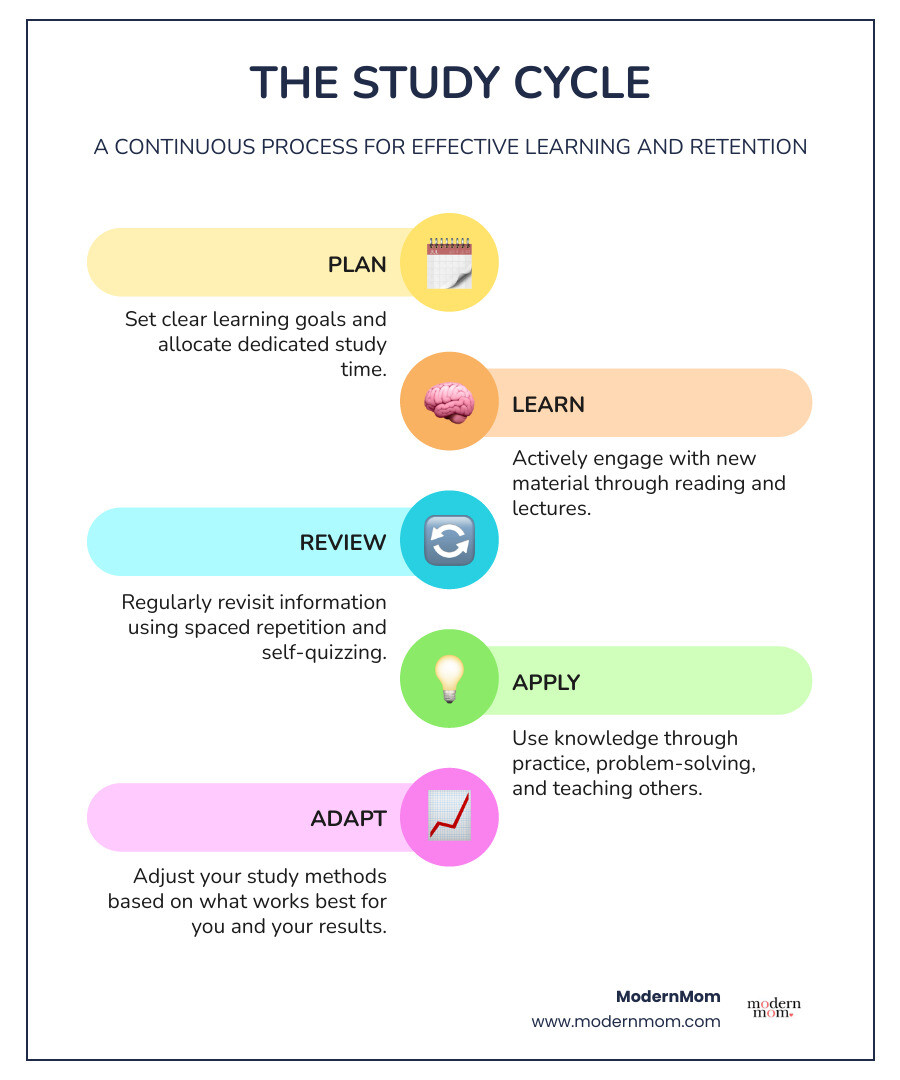
Common study skills resources vocab:
Before diving into textbooks, setting the stage is crucial. Strong time management and a great study spot can dramatically reduce stress and make learning more efficient. It’s about creating habits that stick and building a solid foundation for academic success.

Beat the Clock: Time Management That Actually Works
Time management is arguably one of the most critical study skills resources a student can develop. It’s not just about getting things done; it’s about reducing stress and laying the groundwork for successful and healthy study habits. For college students, a typical full-time schedule of fifteen credit hours translates into thirty to forty-five hours per week spent on schoolwork outside of class – that’s a serious commitment that requires careful planning!
Here’s how we can help ourselves and our kids develop strong time management abilities:
- Planners and Calendars: Whether it’s a physical planner, a digital calendar, or an app, writing down assignments, tests, and deadlines is the first step. This gives a clear overview of what needs to be done and when. We can explore more info about staying organized to find the perfect fit.
- Prioritizing Tasks: Not all tasks are created equal. Teach yourself and your children to identify the most important tasks and tackle them first. Breaking large projects into smaller, manageable steps makes them less daunting and easier to start.
- Breaking Down Large Projects: A huge essay or a complex science project can feel overwhelming. Guide students to break it into smaller parts: research, outline, first draft, revision. This strategy makes the workload seem less intimidating and provides clear milestones.
- The Pomodoro Technique: This popular method involves focused work sessions (typically 25 minutes) followed by short breaks (5 minutes). After four “Pomodoros,” take a longer break. This helps maintain focus and prevents burnout.
- Setting Realistic Schedules: Be honest about how much time is truly available. It’s better to schedule shorter, consistent study blocks than unrealistic long ones that lead to frustration. Check out these useful videos on time management, including 1st and 2nd Tools of Time Management: Reminder and Prioritization to get started.
Consistent effort over time is far more effective than last-minute cramming.
Creating Your Perfect Study Zone
A productive study environment plays a vital role in academic success. It’s not just about having a desk; it’s about intentionally creating a space that supports focus and minimizes distractions.
- Minimizing Distractions: This is non-negotiable. Turn off notifications on phones and computers. If studying on a computer, exit unnecessary websites. For busy moms juggling family life, this might mean studying after the kids are asleep or finding a quiet corner during naptime.
- Organization Tips: A cluttered space often leads to a cluttered mind. Keep study materials neatly organized. Having everything you need within reach reduces interruptions and helps maintain focus.
- The Myth of Multitasking: We might feel like superheroes when we juggle multiple tasks, but cognitive science research tells us otherwise. According to the Cleveland Clinic, research shows that only a tiny 2.5 percent of people can multitask efficiently. For the rest of us, trying to do too many things at once actually reduces efficiency and comprehension. It’s far better to focus on one task at a time. Learn more about the science behind multitasking inefficiency.
- Using Background Noise: While silence is golden for some, others find a little background noise helpful. A 2017 study in Scientific Reports suggests that “listening to white noise may improve some aspects of cognitive performance in individuals with lower attention.” This could be a gentle rain sound, instrumental music, or even ambient cafe sounds from services like Coffitivity. Experiment to see what works for you or your child.
- Quiet vs. Social Study Spots: Understand personal preferences. Some thrive in the quiet solitude of a library, while others benefit from the subtle hum of a coffee shop or a shared study space. The goal is to find an environment where concentration comes naturally.
Overcoming Procrastination and Finding Motivation
Procrastination and lack of motivation are common study challenges that can derail even the most well-intentioned student. But they’re not impossible. We can equip ourselves and our children with study skills resources to conquer these problems.
- Understanding the Procrastination Cycle: Often, we procrastinate because a task feels too big, too hard, or too unpleasant. This leads to avoidance, which then creates more stress. Recognizing this cycle is the first step to breaking it.
- Setting Small, Achievable Goals: Instead of “study for the history test,” try “read one chapter of the history textbook.” Small wins build confidence and momentum. This ties back to breaking down large projects – each small step becomes an achievable goal.
- Reward Systems: Positive reinforcement works wonders! For kids, it could be screen time after completing homework. For adults, perhaps a favorite podcast or a few minutes of quiet relaxation. Rewards don’t have to be grand; they just need to be motivating.
- Building Momentum: The hardest part is often starting. Once you begin, even on a small part of a task, momentum can carry you forward. Remind yourself, and your kids, that a small start is better than no start.
- Seeking Support: If procrastination becomes a chronic issue, external study skills resources can help. Websites like Procrastination resources offer valuable insights and strategies. Sometimes, talking to a teacher, counselor, or academic advisor can also provide the necessary guidance and accountability.
Work Smarter, Not Harder: Active Learning and Memory Magic
The most effective studying happens when the brain is actively engaged. Forget passively re-reading highlighted text – cognitive science research has shown us that active studying is a method where the student cognitively engages and interacts with the material they are learning. These techniques help cement information for better comprehension and long-term recall.
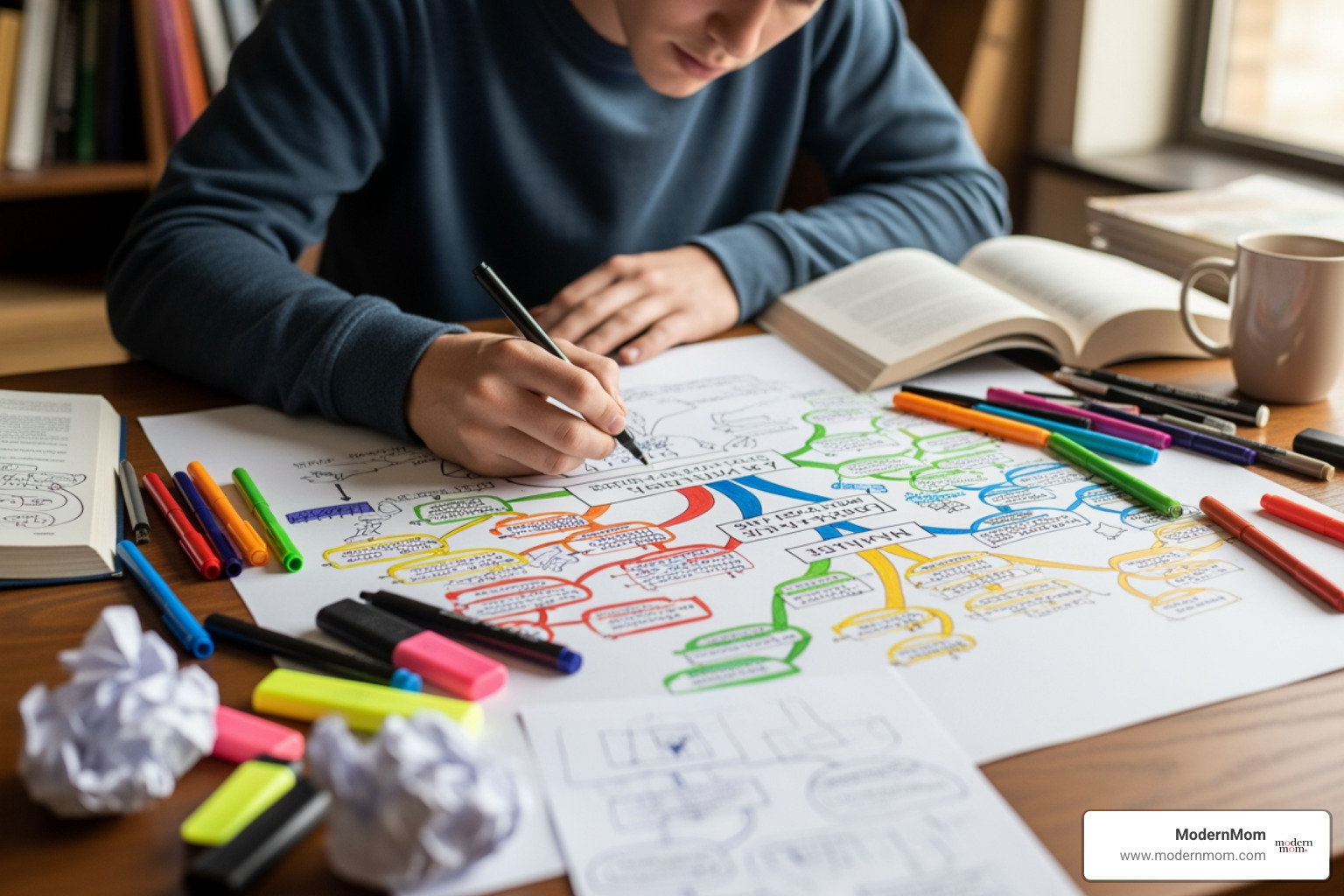
From Passive to Active: Engaging Your Brain
Passive learning, like simply re-reading notes or highlighting text, gives the illusion of understanding but doesn’t lead to deep retention. Active learning, however, transforms how we process and remember information.
- Active vs. Passive Learning: Active learning means you’re doing something with the material – summarizing, questioning, applying. Passive means you’re just receiving it. Active learning promotes higher thinking skills through application: problem-solving, analysis, self-quizzing, role play, mapping, etc. Learn more about What is Active Learning?.
- Self-Quizzing: Instead of just reviewing, test yourself! Flashcards, practice questions, or even just covering notes and trying to recall information are incredibly powerful. This “retrieval practice” strengthens memory pathways.
- Explaining Concepts Aloud: A 2017 study out of the University of Waterloo found that reading text aloud helps seal words into long-term memory. This “production effect” comes from the dual action of speaking and hearing. Try explaining a concept to a pet, a sibling, or even an imaginary friend. If you can teach it, you truly understand it.
- Making Practical Connections: How does this material relate to real life? To other subjects? To personal experiences? Finding these connections makes information more meaningful and easier to recall. For instance, understanding how math concepts apply to budgeting or cooking.
- Critical Thinking Skills: Active learning inherently builds critical thinking. When we analyze, evaluate, and synthesize information, we’re developing the ability to think deeply about our studies. This involves asking “why” and “how,” not just “what.”
Note-Taking Strategies for Every Learner
Effective note-taking is a cornerstone of academic success. It helps us process information during lectures and provides organized study skills resources for review. What works best can depend on learning style and subject matter.
- Cornell Method: This structured method divides your page into three sections: a main note-taking area, a smaller cue column for keywords and questions, and a summary section at the bottom. It encourages active processing during and after a lecture.
- Mind Mapping: A visual approach where the main topic is in the center, and related ideas branch out. This is excellent for visual learners and for subjects that require understanding relationships between concepts, like history or psychology. Mind mapping is a powerful approach to note-taking, as detailed on Mind Maps: A Powerful Approach to Note-taking.
- Outlining: A hierarchical method using main points and sub-points. This is effective for well-structured lectures or textbook chapters and helps organize information logically.
- Charting Method: Best for subjects with a lot of comparable data, like science or social studies. Create columns for categories (e.g., historical figures, dates, events) and fill in information across rows.
Top 3 Note-Taking Apps for Students:
- Evernote: Great for capturing notes, web clippings, and organizing across devices.
- OneNote: Microsoft’s free-form digital notebook, perfect for mixing text, drawings, and multimedia.
- GoodNotes (iOS only): Ideal for handwritten notes on tablets, allowing for easy organization and searchability.
Remember the “five Rs” of note-taking: Record, Reduce, Recite, Reflect, and Review. This process ensures your notes are a powerful learning tool, not just a transcription.
Opening Up Your Memory: Techniques That Stick
Our brains are incredible, but they need the right techniques to store and retrieve information effectively. These memory-enhancing study skills resources move beyond rote memorization.
- Chunking Information: Our short-term memory has limits. George Armitage Miller observed in 1956 that the average person can hold about five to nine things in short-term memory (the “seven plus or minus two” rule). “Chunking” refers to dividing large pieces of information into smaller, more palatable units. For instance, remembering a phone number in groups of three or four digits. This makes information easier to process and store. Dig deeper into the power of “chunking”.
- Mnemonics: These are memory aids that help us recall larger pieces of information. Think of “ROY G. BIV” for the colors of the rainbow or “Please Excuse My Dear Aunt Sally” for mathematical order of operations. They can be acronyms, rhymes, or vivid images.
- Spaced Repetition: Instead of cramming, spread your study sessions out over time. Reviewing material at increasing intervals (e.g., 1 day, 3 days, 1 week, 2 weeks) helps solidify information in long-term memory. This “distributed practice” is far more effective than trying to absorb everything in one go.
- Active Recall: As mentioned with self-quizzing, actively retrieving information from memory is key. Don’t just re-read; try to remember. This effort strengthens the memory trace.
- Visualization: Create vivid mental images related to the information you’re trying to learn. The more imaginative and multisensory the image, the more likely you are to remember it. For example, picturing a historical event as a movie scene.
Your Go-To Guide for Essential Study Skills Resources
Having the right tools can make all the difference. From digital helpers to human support systems, here are the best study skills resources to add to your academic toolkit.
Top Digital Study Skills Resources and Tools
In our increasingly digital world, a wealth of online study skills resources can improve learning and organization for students of all ages.
- Quizlet: This fantastic free resource offers lessons on various subjects, flashcards to nail the material, and quizzes to test newfound knowledge. Students can create their own flashcards or use sets created by others.
- Grammarly: There’s a free and premium version, and both are incredibly useful. Grammarly helps identify misspelled words, punctuation errors, and grammatical mistakes in notes, essays, and any written work. It’s a lifesaver for ensuring clarity and accuracy.
- Coffitivity: For those who thrive with background noise, Coffitivity recreates the ambient sounds of a coffee shop. This can help improve focus and concentration, especially when a quiet environment isn’t an option.
- Digital Flashcards: Beyond Quizlet, many apps allow for creating and using digital flashcards, often incorporating spaced repetition algorithms for optimal review. Anki is another powerful option.
- Educational YouTube Channels: Platforms like YouTube host countless educational resources. For example, check out the Learning How to Learn at U of T playlist on YouTube for a wide range of study tips and strategies directly from a university. These videos can break down complex topics or demonstrate effective study techniques.
These tools can be particularly helpful for busy moms who might be studying online or need flexible ways to manage their academic pursuits.
People Power: Study Groups and Academic Support
While digital tools are powerful, sometimes the best study skills resources come from human connection and support.
- Study Groups: Collaborative learning can be incredibly effective. Study groups allow students to discuss concepts, quiz each other, and gain different perspectives. The act of explaining something to someone else deepens one’s own understanding. For groups to be effective, set clear goals and establish ground rules for participation.
- Communicating with Professors: Professors are a valuable resource. Encourage students (and ourselves!) to use office hours, ask questions, and seek clarification. Building a relationship with instructors can lead to better understanding of course material and expectations. This can also provide opportunities for mentorship.
- Utilizing Campus Resources: Most schools, from high school to college, offer a variety of academic support services. These can include:
- Tutoring Services: One-on-one or group tutoring can provide targeted help in challenging subjects.
- Writing Centers: Assistance with essays, research papers, and improving writing skills.
- Academic Advising: Guidance on course selection, academic planning, and career paths.
- Learning Centers: Workshops and resources specifically dedicated to improving study skills.
- We can also find valuable insights on Developing Good Study Habits on our own site.
- Seeking Support: Don’t hesitate to ask for help! Whether it’s a peer, a teacher, a tutor, or a school counselor, seeking support is a sign of strength, not weakness. It’s a key strategy for maintaining academic success and managing stress.
From Grade School to Grad School: Adapting Skills for Every Age
Study needs aren’t one-size-fits-all. They evolve as a student moves through their academic journey. Here’s how to tailor study skills resources and strategies for every stage, recognizing that foundational habits built early on will serve them well later.
Elementary School (K-5)
In elementary school, the focus is on building the very first blocks of effective learning. It’s about instilling routine and positive attitudes towards schoolwork.
- Building Foundational Habits: This means establishing a consistent time and place for homework. It’s less about intense studying and more about creating a predictable structure.
- Creating a Homework Routine: A regular schedule helps children anticipate and prepare for schoolwork, reducing resistance.
- Simple Organization: Teach kids to keep their backpack tidy, put papers in folders, and know where their supplies are. Color-coded folders can be a fun way to start.
- Following Directions: A crucial skill! Practice listening carefully to multi-step instructions and following them through. This is key for classroom success.
- Active Listening: Encourage children to pay attention in class, ask questions, and participate. This lays the groundwork for effective note-taking later on.
- Making Learning Fun: Incorporate games, hands-on activities, and real-world examples to make learning engaging and enjoyable.
Middle School (Grades 6-8)
Middle school is a transition period where students gain more independence and face increased academic demands. Study skills resources need to adapt to this shift.
- Developing Independence: Students start managing multiple teachers and subjects. Encourage them to take ownership of their assignments and deadlines.
- Using a Planner: This becomes essential. Students should learn to record assignments, due dates, and test schedules for each class. Digital tools can be introduced here.
- Basic Note-Taking: Introduce simple note-taking methods like bullet points or basic outlining during lectures or while reading. The goal is to capture key information, not every word.
- Breaking Down Projects: Middle school projects are often larger and more complex. Guide students through breaking them into smaller, manageable steps, setting mini-deadlines for each.
- Asking Questions: Foster an environment where asking clarifying questions in class or of teachers is encouraged. This is crucial for deeper understanding and critical thinking.
- For more insights on preparing for future academic challenges, check out More info about preparing for the future.
High School & College (Grades 9+)
By high school and college, study skills resources become more sophisticated, focusing on advanced strategies, self-advocacy, and long-term academic planning.
- Refining Advanced Skills: Students should be mastering various note-taking methods (Cornell, mind mapping), active reading techniques (SQ3R), and memory strategies (mnemonics, spaced repetition).
- Long-Term Planning: This includes managing an entire semester or academic year, balancing coursework with extracurriculars, and planning for standardized tests. A full-time college schedule can demand 30-45 hours of study per week.
- Preparing for Major Exams: This involves consistent review, practice tests, understanding exam formats (essay, multiple-choice), and developing effective study guides.
- Managing Stress: Academic pressure can be significant. Teach and practice stress management techniques like mindfulness, exercise, and maintaining a healthy work-life balance.
- Self-Advocacy: Students need to know how to communicate effectively with professors, use campus resources like tutoring centers and academic advisors, and seek help when needed.
- For those looking ahead to higher education, our guides on College Admissions and the Financial Aid Guide offer comprehensive support.
Frequently Asked Questions about Study Skills
How can I help my child who hates studying?
It’s common for kids to dislike studying, but we can reframe it. Focus on making it manageable and relevant. Use techniques like the Pomodoro method (short bursts of study with breaks), connect topics to their interests, and celebrate small wins instead of focusing only on grades. Creating a comfortable, positive study environment—free from distractions and well-organized—also helps reduce resistance. For example, if they’re learning about fractions, bake cookies together and use fractions in the recipe. Showing them the real-world application can make a huge difference.
What are the three most important study skills?
Experts agree that time management, active learning, and consistency are the cornerstones. If you can manage your time effectively, actively engage with the material (not just passively re-read it), and review information regularly, you’re building a powerful foundation for success. These three skills work together to create an efficient and effective learning process that leads to deeper understanding and better retention.
How much should a student study per day?
A common guideline for college students is to study two to three hours for every hour spent in class. This means a 15-credit hour course load could require 30-45 hours of study per week! For younger students, it’s more about consistency than sheer hours. A daily, focused 30-60 minute session is often more effective than cramming for hours once a week. The key is “distributed practice,” spreading study time over several shorter periods, which cognitive science shows is more effective for retaining information than cramming.
Conclusion: You’ve Got This!
Building great study habits is a journey, not a destination. By using these strategies and study skills resources, you and your children can face any academic challenge with confidence and less stress. It’s about empowering learners to take control of their education and find their potential. At ModernMom, we believe in providing you with the tools to make every part of family life a little smoother and a lot more successful.
Ready to get organized? Check out our guide to the best planners and apps for students!