

Why Every Mom Deserves a Mental Health and Emotional Reset
Taking a mental health and emotional Reset is about hitting pause when life feels overwhelming—giving yourself permission to step back, release stress, and restore emotional balance. It’s not about a complete life overhaul. It’s about small, intentional actions that help you feel more grounded, focused, and like yourself again.
Here’s what an emotional reset looks like:
- Quick relief: 5-minute breathing exercises, body scans, or gratitude check-ins
- Foundational habits: Protecting your sleep, eating to stabilize energy, and moving your body
- Boundary setting: Learning to say no and creating space for what matters
- Connection: Leaning on supportive relationships and reducing isolation
- Professional support: Knowing when to reach out for therapy or counseling
If you’re running on empty, constantly irritable, or feeling disconnected from the things you love—you’re not alone. According to the American Psychological Association, Americans of all ages are reporting record-high levels of stress. For moms juggling work, family, and everything in between, that pressure can feel relentless.
The good news? You don’t need a week at a spa or a total schedule overhaul to feel better. Small, consistent resets—done daily or weekly—can make a real difference in how you show up for yourself and your family.
At Modern Mom, we believe mental wellness isn’t a luxury. It’s essential. And because we know you’re short on time, this guide is packed with practical strategies you can start using today—whether you have five minutes or fifty.
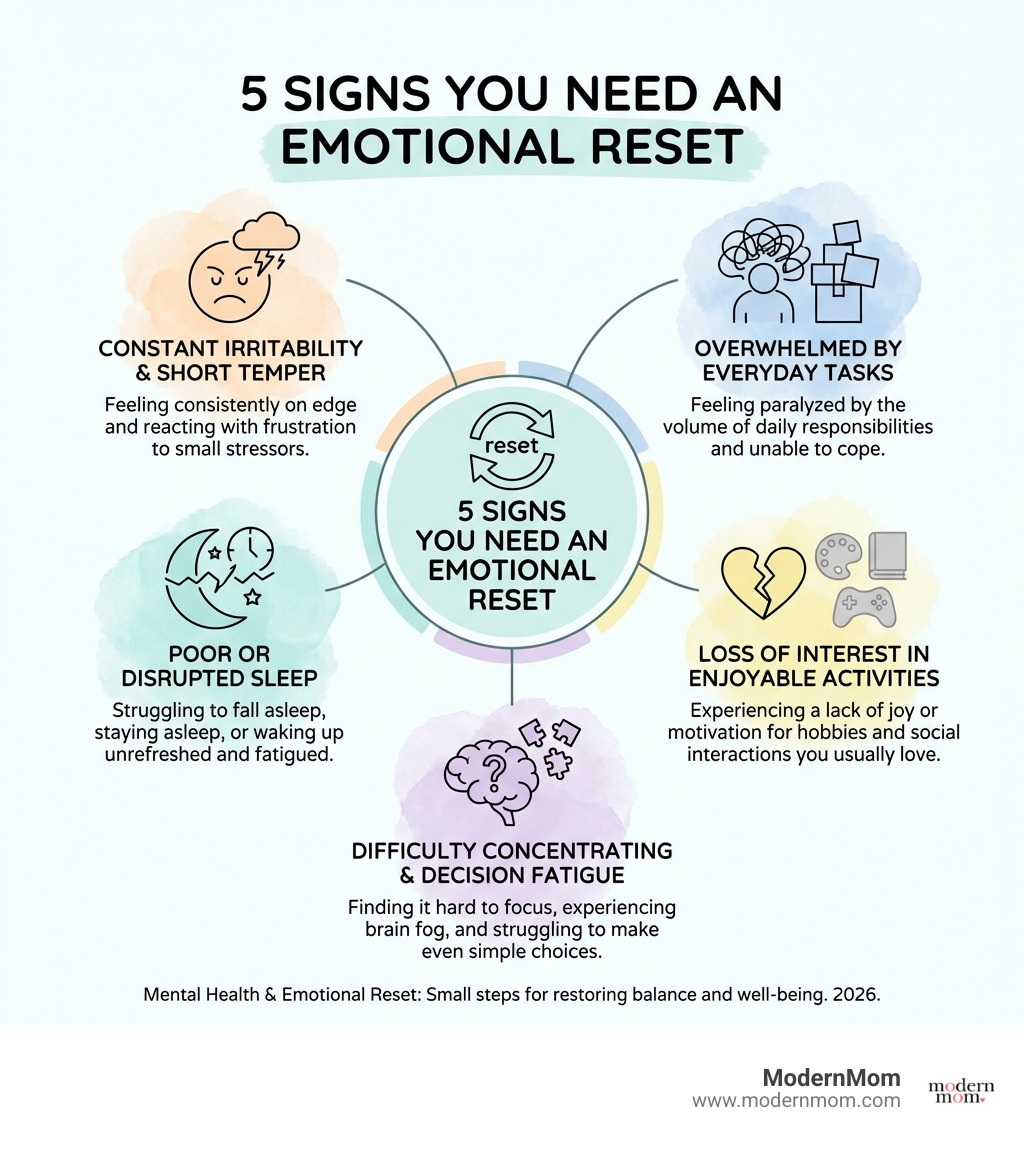
Key signs you need a mental health & emotional reset: constant irritability, feeling overwhelmed by everyday tasks, poor or disrupted sleep, loss of interest in things you usually enjoy, and difficulty concentrating or making decisions.
What is an Emotional Reset (and Why You Deserve One)
Life as a mom often means being constantly “on”—managing schedules, nurturing children, and often balancing careers or other responsibilities. It’s easy to lose ourselves in the daily grind, pushing our own needs to the side. But a mental health and emotional reset isn’t just about coping; it’s about thriving.

A mental reset is simply a conscious effort to interrupt a cycle of stress, overwhelm, or negative emotions and actively shift your mental and emotional state. It’s about taking a moment to step back, recalibrate, and regain perspective. Experts define mental health as encompassing our emotional, psychological, and social well-being, noting it’s more than just the absence of illness—it’s crucial for our overall health and quality of life.
For us moms, this isn’t a luxury; it’s a necessity. We constantly pour from our cups, and without intentional moments to refill, we risk emotional exhaustion and burnout. Our capacity to handle daily challenges, like explaining complex world events to a child with autism or navigating unexpected changes, relies heavily on our mental and emotional reserves. When we feel overwhelmed, our ability to respond with patience and presence diminishes.
The importance of self-care in this process can’t be overstated. Self-care means doing things that help you live well and improve both your physical and mental health. Even small acts can help manage stress, lower your risk of illness, and boost your energy. It’s the foundation upon which a successful mental health and emotional reset is built.
Recognizing the Signs You Need a Break
How do you know when it’s time for an emotional reset? Our bodies and minds often send us clear signals, but in our busy lives, it’s easy to overlook them. Think of these as your personal warning lights, indicating that your emotional battery is running low.
You might find yourself feeling constantly irritable, snapping at loved ones over minor things, or experiencing persistent fatigue even after a full night’s sleep. Difficulty concentrating, changes in appetite, or disrupted sleep patterns are also common indicators. Perhaps you’ve noticed you’re losing interest in hobbies you once loved or feeling disconnected from your family and friends.
These symptoms aren’t just minor inconveniences; they’re signs that your mental health needs attention. According to health experts, if you’re experiencing severe or distressing symptoms that have lasted two weeks or more—such as difficulty sleeping, changes in appetite or unplanned weight changes, difficulty getting out of bed because of mood, or an inability to complete usual tasks—it’s a strong signal that you need to prioritize a reset. Recognizing these signs is the first step toward taking proactive care of your well-being.
Quick Resets: 5-Minute Strategies to Reclaim Your Calm
Sometimes, we don’t have hours for self-care; we barely have minutes. That’s where quick, actionable resets come in. These are powerful, short-term strategies designed to help you manage stress and regulate emotions in the moment, no matter how chaotic your day might be. They’re like mini-pauses that allow you to catch your breath and recenter.

These small habits, often incorporating mindfulness and emotional regulation, can make a significant difference. They remind us that self-care doesn’t need to be elaborate; it just needs to be consistent.
Practice Mindful Breathing
One of the most immediate ways to calm your nervous system is through mindful breathing. This isn’t just about taking a deep breath; it’s about intentional, diaphragmatic breathing that signals to your body that it’s safe to relax.
Try this simple deep breathing exercise: find a comfortable position, place one hand on your chest and the other below your rib cage. Slowly inhale through your nose, feeling your belly rise. Then, exhale slowly through your nose, feeling your belly go down. Continue this for one to five minutes. Another effective technique is 4-count box breathing: inhale for four counts, hold for four, exhale for four, and hold for four. Repeat this cycle a few times. These techniques are powerful relaxation techniques that can quickly bring you back to the present moment and reduce stress.
Try a Quick Body Scan or Stretch
Our bodies often hold onto stress and tension without us even realizing it. A quick body scan or a few simple stretches can help release this physical tightness, which in turn can calm your mind.
For a body scan meditation, get comfortable, close your eyes, and take a few deep breaths. Mentally scan your body from head to toe, noticing any sensations—tension, warmth, coolness—without judgment. Just observe. Do this for about five minutes. Alternatively, try some gentle stretches right where you are. Simple movements like chest expansions, neck rotations, or even the calming child’s pose can work wonders. These quick physical resets can improve your posture, ease muscle strain, and clear your mind, helping you feel more grounded.
Start a 2-Minute Gratitude Check-in
When we’re stressed or overwhelmed, our minds tend to focus on everything that’s going wrong. A gratitude check-in is a powerful way to shift your perspective and invite positivity back into your day.
Take just two minutes to list things you’re grateful for. This could be anything from the warm cup of coffee you’re holding to a thoughtful text from a friend, or even a personal trait you appreciate about yourself. You can write it down in a journal or simply bring it to mind. Studies show that focusing on positive aspects of life, even briefly, can adjust your mindset and boost positive emotions. This simple act of acknowledging the good can significantly contribute to your emotional well-being and help you bounce back from difficult moments. It’s a quick way to remind yourself of the benefits of staying positive.
Your Toolkit for a Deeper Mental Health and Emotional Reset
While quick resets offer immediate relief, building sustainable habits is key for long-term mental well-being and a truly profound mental health and emotional reset. These foundational practices help build your resilience, allowing you to weather life’s storms with greater steadiness. Think of them as the pillars supporting your overall emotional health.
Our mental health is shaped by daily patterns, not just major events. The way we sleep, eat, move, and connect with others constantly builds our internal baseline, either strengthening or draining our ability to handle stress.
The Foundational Role of Sleep, Nutrition, and Movement
These three elements are often overlooked, but they are absolutely critical for our mental and emotional health.
Sleep: Consistent, sufficient sleep is essential for emotional well-being, cognitive performance, and overall health. Without it, emotions feel more intense, focus becomes harder, and small challenges can seem overwhelming. Prioritize your sleep by establishing a stable wake time seven days a week. Create a consistent wind-down routine—dim lamps after dinner, park your phone outside the bedroom, and trade a late chore for a hot shower or gentle stretch. This protects your precious sleep, which is your system’s repair mode, not a luxury.
Nutrition: Food doesn’t just fuel your body; it shapes your emotional regulation, energy, and focus. Regular meals that include protein, healthy fats, and complex carbs help stabilize blood sugar, which directly affects mood and mental clarity. Aim to anchor each meal with protein, complex carbs, and color—think oatmeal with peanut butter and berries, or soup with beans and greens. Keep hydrating throughout the day, even if you don’t feel thirsty. Nourishment is care, not a performance.
Movement: Movement supports mood, focus, and stress tolerance. You don’t need an intense workout to reap the benefits. Even small, repeatable movements can make a difference. Try the “10-minute rule”: set a timer and move for just ten minutes. If you want to stop, that’s fine, but often you’ll keep going. A daily walk, a few stretches, or dancing with your kids can all contribute. Putting your shoes by the door the night before can lower the friction of getting started.
The Power of Connection and Boundaries for a Mental Health & Emotional Reset
As humans, we are wired for connection. Our social ties play a significant role in our mental health, acting as buffers against stress and isolation. Building a strong support system is vital for any mental health and emotional reset.
Connection: Isolation can easily creep in, especially during busy or challenging times. Intentional social connection is crucial. Schedule regular check-ins with friends or family, even if it’s just a quick phone call or a weekly walk-and-talk. You don’t need to talk about everything to feel supported; you just need to feel connected. Human connection is an incredibly effective buffer against stress. Improving our social health through supportive relationships can have powerful effects on our overall well-being.
Boundaries: Learning to say “no” and setting healthy boundaries are acts of self-preservation. Boundaries protect your energy and create the space you need for your own mental health. This might mean limiting emotionally charged conversations late at night, saying no to an unnecessary commitment, or creating tech-free time with your family. Constant alerts, messages, and screen time can leave our brains in a near-constant state of stimulation, making it harder to relax. Digital boundaries, like phone-free mornings or turning off nonessential notifications, can ease mental overload and create space for your mind to slow down. Boundaries are about protecting your emotional health, not pushing people away.
When a Reset Isn’t Enough: Knowing When to Seek Professional Support
While self-care strategies are incredibly powerful for maintaining our mental well-being, there are times when a mental health and emotional reset requires more than what we can do on our own. It’s crucial to recognize when to seek professional help, as early intervention can make a significant difference.
If you’re experiencing severe or distressing symptoms that have lasted two weeks or more, such as persistent feelings of sadness or anxiety, difficulty getting out of bed, a profound loss of interest in things you usually enjoy, or an inability to complete daily tasks, it’s time to talk to a professional. These aren’t signs of weakness; they’re indicators that your mental health needs expert attention, just like any physical ailment would.
For example, a 2014 study by the National Alliance on Mental Illness (NAMI) found that 64% of respondents reported their mental health symptoms worsened during the holidays, highlighting how specific stressors can push us past our coping limits. When worry feels unmanageable, or your mood is consistently low, a mental health professional can offer custom strategies and support.
How to Find the Right Help for You
Navigating mental health services can feel daunting, especially when you’re already feeling overwhelmed. But finding the right support is a crucial step toward healing and regaining your balance.
A great first step is to talk to your primary care provider. They can assess your symptoms, offer initial guidance, and provide referrals to mental health professionals who might be a good fit for your needs. They can help you understand if your symptoms are related to physical health issues or if a mental health specialist is needed.
You can also use online directories and resources to locate mental health services in your area. Websites like those from the Substance Abuse and Mental Health Services Administration (SAMHSA) offer tools to find treatment and support. While there is a recognized shortage of mental health professionals, these resources can help you steer available options.
Professional help comes in many forms, including individual therapy, group therapy, medication management, and more. Finding a therapist whose approach resonates with you is key. Don’t hesitate to interview a few before committing.
In crisis situations, immediate support is available and vital:
- If you or someone you know is struggling or having thoughts of suicide, call or text the 988 Suicide & Crisis Lifeline at 988, or chat at 988lifeline.org. This service is confidential, free, and available 24 hours a day, 7 days a week.
- In life-threatening situations, always call 911 immediately.
Reaching out is an act of strength, and there are compassionate professionals ready to help you on your journey to a more stable and fulfilling emotional life.
Conclusion: Making Your Well-being a Priority
We understand that as moms, you’re constantly putting others first. But a truly effective Mental Health & Emotional Reset means making your own well-being a priority, not an afterthought. It’s about recognizing that when your cup is full, you have more to give to everyone around you.
The journey to better mental health isn’t about drastic, overnight changes. It’s about the cumulative power of small, consistent steps. Whether it’s taking a few mindful breaths during a chaotic moment, saying “no” to an extra commitment, prioritizing that walk, or reaching out to a friend, every small action contributes to a stronger, more resilient you.
You’re not alone in this journey. Many other moms are navigating similar challenges, and we at ModernMom are here to support you with practical advice and encouragement. Mental health is about learning how to support yourself better, not about fixing yourself. You deserve to feel grounded, joyful, and fully present in your life.
Ready to explore more ways to nurture your mind, body, and spirit? Explore more tips for healthy living and self-care on our Health & Fitness page.