The Bathroom Is the Most Dangerous Room for Toddlers — Here’s What You Need to Know
Toddler bathroom safety tips are something every parent needs before an accident happens — not after.
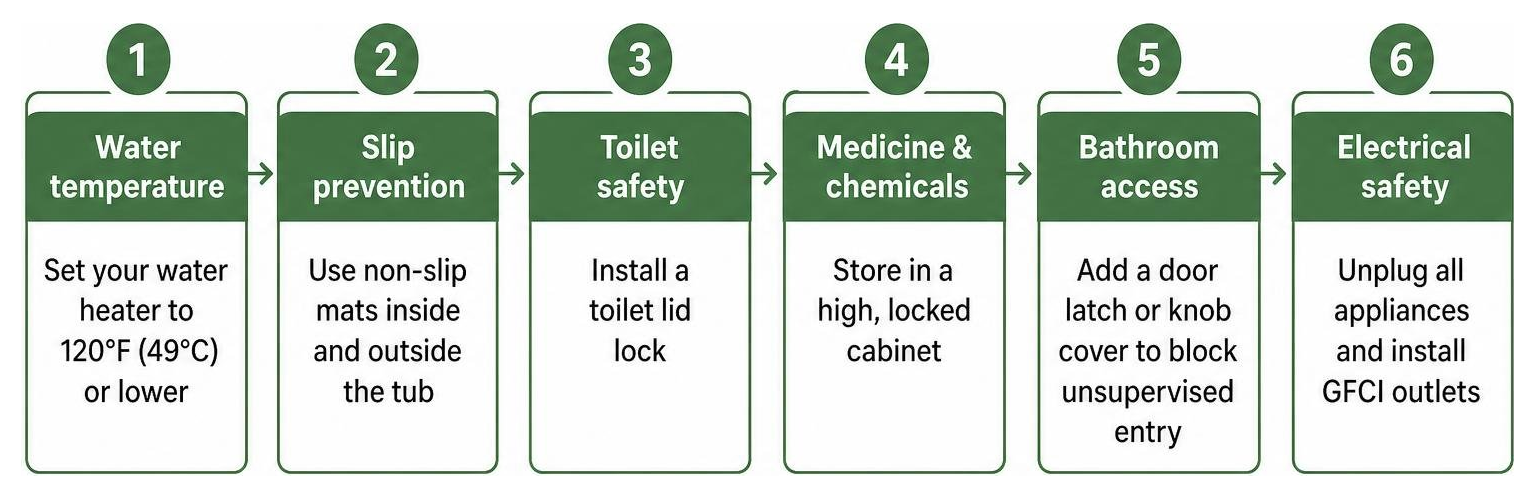
Here’s a quick overview of the most important things to do right now:
| Safety Priority | What to Do |
|---|---|
| Supervision | Never leave a toddler alone in the bath, even for one second |
| Water temperature | Set your water heater to 120°F (49°C) or lower |
| Slip prevention | Use non-slip mats inside and outside the tub |
| Toilet safety | Install a toilet lid lock |
| Medicine & chemicals | Store in a high, locked cabinet |
| Bathroom access | Add a door latch or knob cover to block unsupervised entry |
| Electrical safety | Unplug all appliances and install GFCI outlets |
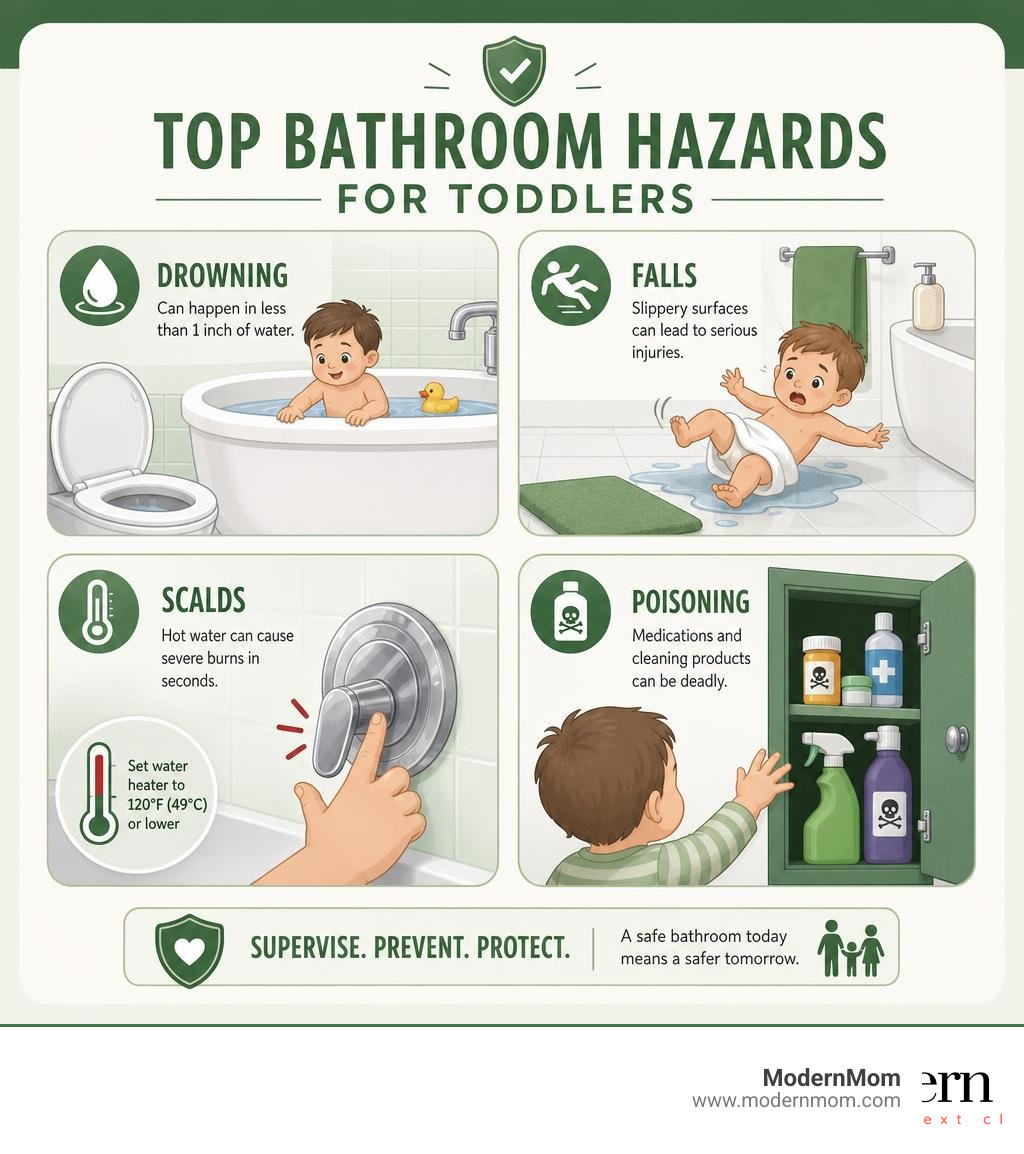
The bathroom might seem like an ordinary room, but for toddlers it’s full of hidden dangers. It’s the number one place injuries happen in the home — and more than 43,000 children end up in the emergency room every year for bathtub and shower-related injuries alone.
Drowning is the leading cause of death in children ages 1 to 4. And here’s the part that stops most parents cold: kids can drown in less than 1 inch of water. That’s not a full tub — that’s a toilet bowl, a bucket, or a few inches left standing after bath time.
The good news? Most of these accidents are completely preventable.
Why the Bathroom is the Most Dangerous Room in the House
We often think of the kitchen as the primary hazard zone in our homes, but injury statistics paint a very different picture. The bathroom is statistically the most hazardous room in any household. With more than 43,000 children receiving emergency treatment for bathtub- and shower-related injuries every year, we have to look closely at why this space is so risky.
More than half of all these injuries happen to children under the age of 5. Among them, 2-year-olds suffer the highest number of accidents. At this age, toddlers are incredibly curious, highly mobile, and physically “top-heavy.”
Because toddlers have a higher center of gravity and relatively little upper-body strength, they tend to fall head-first when they lose their balance. This physical reality is why slips in the bathroom so often lead to serious head and face injuries. To make our homes truly secure, we must understand how these physical developmental stages impact our children’s safety. For a deeper look into clinical guidelines on this topic, you can consult this Bathroom safety guide from MedlinePlus.
Essential Toddler Bathroom Safety Tips for Bath and Shower Time
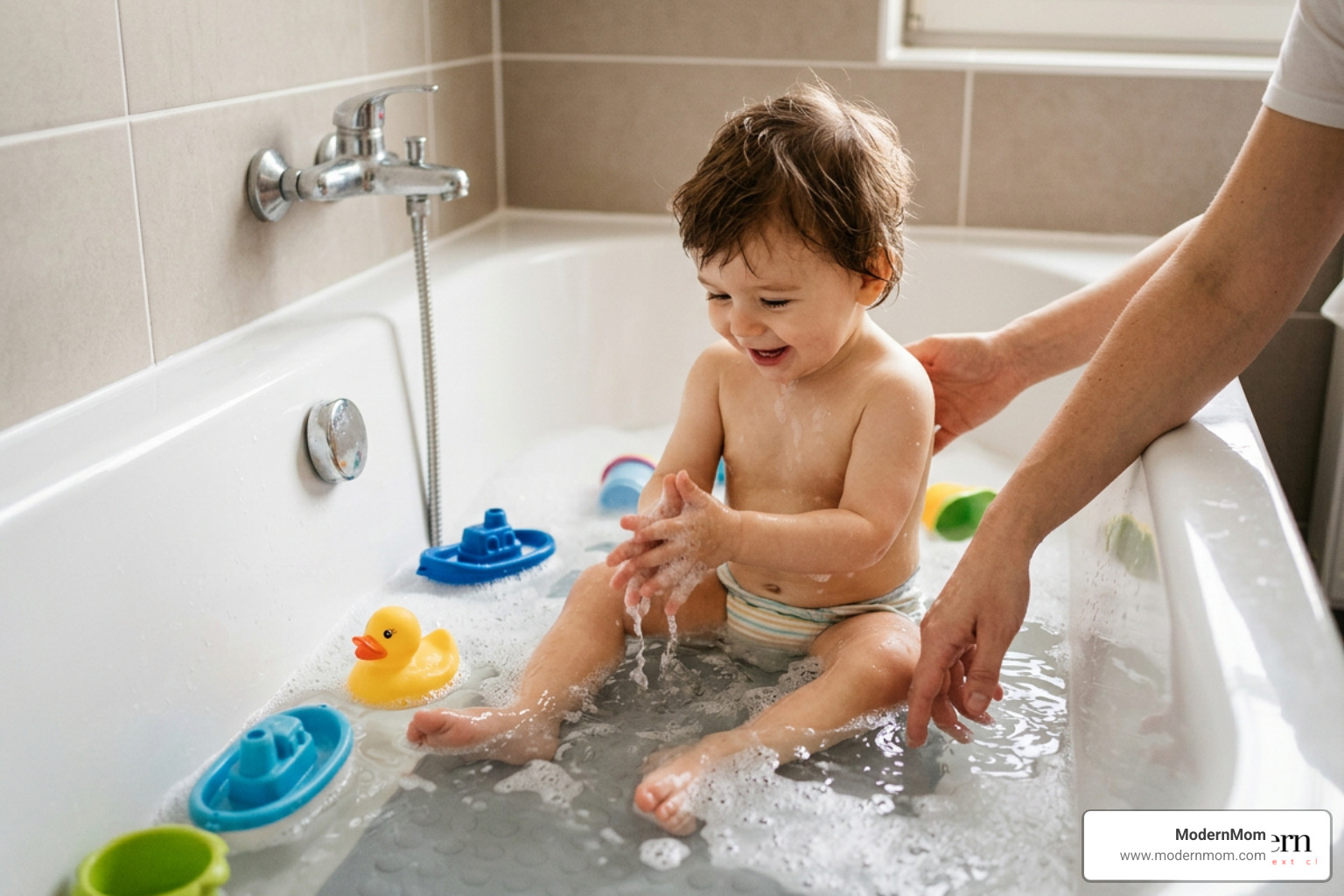
Bath time should be a sweet, splashy bonding experience, but it requires our absolute, undivided attention. The gold standard of water safety is “touch supervision.” This means that whenever your toddler is in or near the water, you are close enough to reach out and touch them at any moment.
We should never leave a child under the age of 6 unattended in a bathtub, even for a split second. And let’s put one common myth to bed: older siblings are not a substitute for adult supervision. It’s easy to think a mature older child can watch the baby while we run to grab a clean towel, but they simply do not have the developmental capacity to recognize and react to an emergency.
When preparing the bath, only fill the tub with 2 to 4 inches of water. Always gather all of your supplies—soap, shampoo, toys, and towels—before you even think about turning on the faucet. If the doorbell rings or another child cries in the other room, do not leave your toddler alone. Scoop them up in a towel and take them with you.
Water Safety and Preventing Scalds
A toddler’s skin is much thinner and more sensitive than ours, which means they can burn easily and quickly. To prevent accidental scalding, we recommend adjusting your home’s hot water heater to no higher than 120°F (48.9°C).
Before placing your child in the tub, always test the water temperature yourself. Don’t just use your hand, which is accustomed to hotter temperatures. Instead, use your wrist or your elbow to get an accurate feel for how the water will feel on your toddler’s sensitive skin.
Additionally, teach your child to sit facing away from the faucet. This simple trick prevents them from playing with the knobs and accidentally turning on the hot water while they splash around.
Preventing Slips and Falls in the Tub
Soap, water, and smooth acrylic or porcelain surfaces make the bathtub a literal slip-and-slide. To keep your little one upright, install a high-quality, non-slip rubber mat or adhesive grip decals across the entire bottom of the tub.
Another essential safety product is a cushioned faucet cover. Toddlers frequently slip or lean forward, and a soft silicone or foam cover over the hard metal spout can prevent painful head bumps and dental emergencies. If you are concerned about your child’s teeth after a bump, read our guide on 5 Signs Your Child Might Have a Dental Problem.
Enforce a strict “no standing” rule during bath time. If your toddler decides to stand up, gently but firmly sit them back down. If they continue to stand and treat it like a game, end the bath immediately to teach them that staying seated is non-negotiable.
Transitioning from Baths to Showers: Toddler Bathroom Safety Tips
As our little ones grow, they will eventually transition from baths to showers. This milestone can actually be a wonderful solution for toddlers who have developed a sudden fear of hair washing or dipping their heads in the bath.
To make this transition safe and fun, start by using a detachable shower head. This allows you to give them gentle “mini-showers” while they sit comfortably on the tub floor.
Even if they are confident standers, encourage them to sit down on a non-slip mat while showering. The rushing water and soap can easily throw off their balance. Finally, ensure that your shower features shatterproof glass doors, and keep all adult razors and heavy body washes on high shelves completely out of their reach.
Securing the Toilet Bowl, Cabinets, and Electrical Hazards
Our childproofing efforts shouldn’t stop at the bathtub. The rest of the bathroom is packed with enticing but dangerous items that require our attention. For a comprehensive look at water safety inside the home, check out these recommendations on Drowning Prevention from HealthyChildren.org.
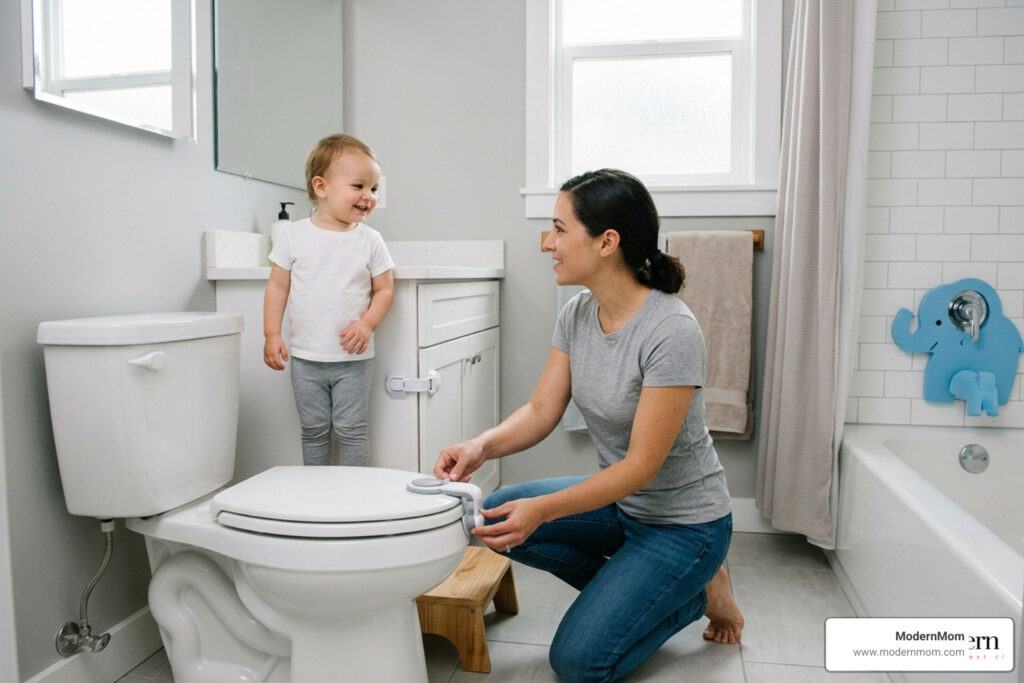
Toilets are a major drowning hazard for curious toddlers. Because they are top-heavy, a toddler leaning over to splash in the water or watch a toy flush can easily lose their balance and fall in head-first. Because of their physical proportions, they often cannot pull themselves back out.
Always keep the toilet lid closed and secure it with a safety lock. Additionally, never leave standing water in cleaning buckets, and empty them immediately after use.
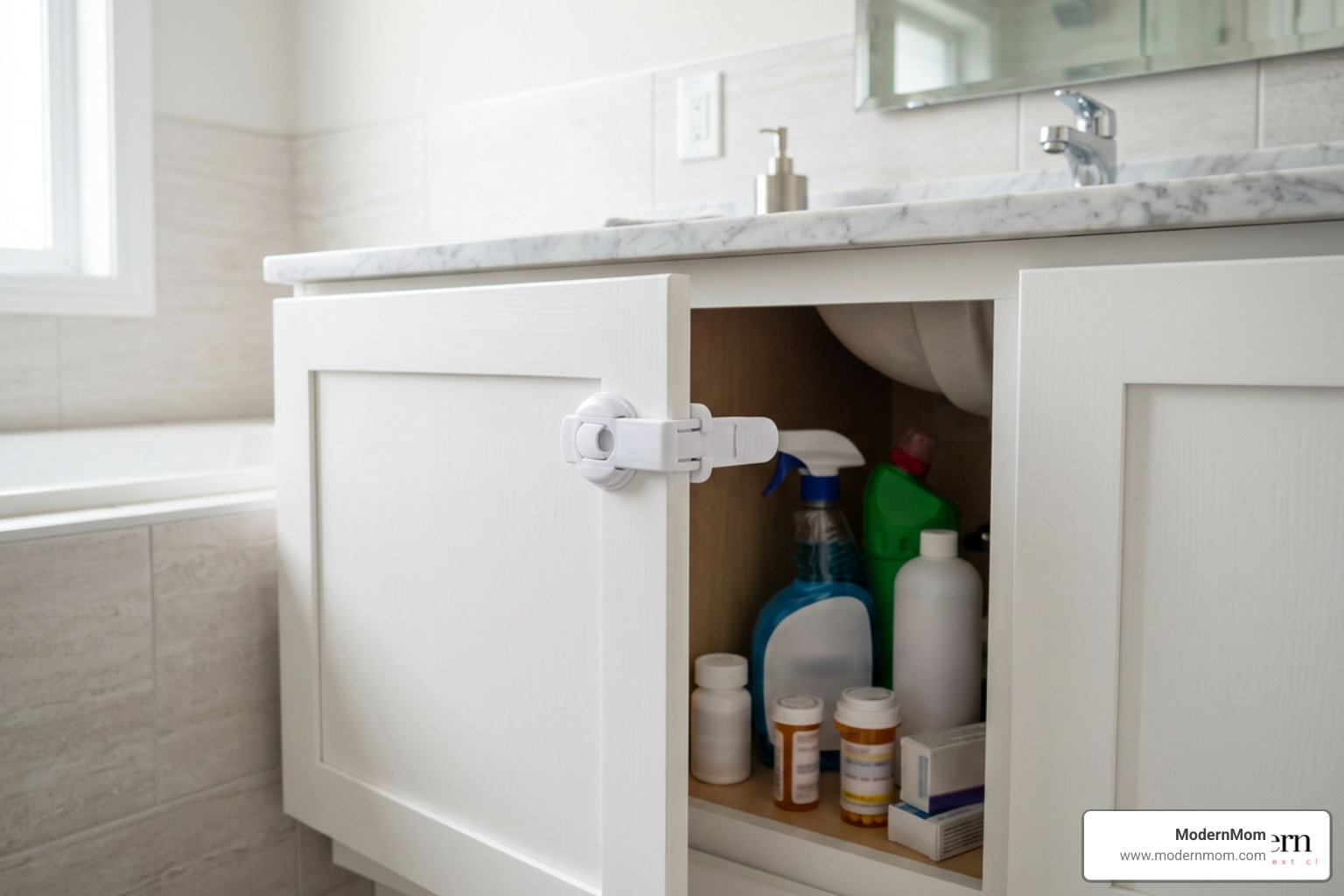
Keep all cleaning products, medications, and cosmetics stored in high cabinets secured with childproof latches. Never store daily toiletries like toothpaste in the same cabinet as prescription medications to avoid dangerous mix-ups.
For electrical safety, ensure your bathroom is equipped with Ground Fault Circuit Interrupter (GFCI) outlets. Always unplug hairdryers, straighteners, and electric razors immediately after use, and store them away in locked cabinets.
Potty Training and Toilet Locks: Toddler Bathroom Safety Tips
Potty training is an exciting milestone, but it brings new safety dynamics into play. While we want our toddlers to have access to the toilet when they need to go, we still need to keep the lid locked when it is not in use to prevent unsupervised play.
If your child is transitioning to the big toilet, use a secure, kid-sized toilet ring and a stable step stool with rubber, non-slip feet. This setup helps them feel physically grounded and relaxed, which is essential for successful potty training.
If you are navigating this milestone with a child who has sensory sensitivities, the loud sounds of flushing and cold plastic seats can be overwhelming. We have put together a helpful guide on How to Toilet Train a Child with Sensory Issues to make this transition smoother for your family.
Public Restroom Safety Rules for Toddlers
Using public restrooms with a toddler can feel like a high-stakes obstacle course. Public restrooms present unique safety risks because their architectural design—complete with privacy stalls, heavy doors, and blind corners—makes it difficult to keep an eye on fast-moving children.
As a general rule, children under the age of 8 should always be directly supervised in public restrooms. For older children, we can implement the “buddy system” to ensure they are never alone.
One practical tip for moms of toddlers: carry a pack of sticky notes in your diaper bag. Many toddlers are absolutely terrified of the loud, sudden noise of automatic flush toilets. Placing a sticky note over the sensor prevents the toilet from flushing while your child is still sitting down, saving you both from a potty-time meltdown.
Frequently Asked Questions About Toddler Bathroom Safety
What is the most common bathroom injury for toddlers?
Slips and falls are the most common bathroom injuries for toddlers. These are typically caused by wet, slippery tile floors or slick bathtub surfaces. We can prevent these falls by placing non-slip mats both inside and outside the tub, keeping a dry towel handy to mop up puddles immediately, and teaching our kids to dry their feet thoroughly before stepping onto the floor.
At what age can a child use the bathroom alone safely?
Most children can begin using the bathroom unsupervised around age 5 or 6, but this depends heavily on their individual maturity and your home’s setup. Before letting them go alone, ensure they can safely reach the sink, know how to regulate the water temperature, and understand basic safety rules like not touching electrical items or medicine cabinets.
Why is constant supervision critical during bath time?
Constant supervision is critical because drowning is silent and can happen in less than 1 inch of water in a matter of seconds. Toddlers do not splash or scream when they slip underwater; they simply slip under quietly. Maintaining active “touch supervision” is the single most effective way to keep your child safe.
Conclusion
At ModernMom, we know that keeping up with a busy, curious toddler can feel like a full-time cardio workout. By implementing these practical toddler bathroom safety tips—from installing toilet locks to setting your water heater to a safe 120°F—you can create a secure environment that gives you true peace of mind.
Childproofing is a continuous process that evolves as your child grows. Keep checking those cabinet latches, test your bath water every single time, and enjoy these sweet, splashy years. For more home safety advice, check out our ModernMom Baby Sleep Safety Guide or visit our homepage at ModernMom for daily parenting inspiration.