Why Your Old Jeans Deserve Better Than the Trash
Denim upcycle projects transform worn-out jeans into everything from stylish tote bags to cozy home decor—and they’re easier than you think. Whether you’re looking for quick no-sew crafts or creative sewing projects, old denim can become:
- Fashion accessories – tote bags, purses, headbands, and keychains
- Home decor – throw pillows, rugs, quilts, and wall organizers
- Kids’ items – stuffed animals, bean bags, toy roads, and bibs
- Practical goods – coasters, placemats, planters, and laptop sleeves
We’ve all been there—staring at that pile of jeans in the back of the closet. Maybe they don’t fit anymore, or they’re worn through at the knees, or you just can’t bring yourself to throw them away because they’ve been with you through so many memories.
Here’s the good news: Those old jeans are sitting on crafting gold.
Denim is one of the most versatile fabrics for upcycling. It’s durable enough to handle daily use, forgiving enough for beginners, and abundant enough that you can experiment without worry. Plus, every pair of jeans you transform instead of toss helps reduce the millions of textiles that end up in landfills each year.
Whether you’re completely new to crafting or you’ve got some sewing skills under your belt, there’s a denim project waiting for you. From five-minute no-sew ideas to weekend passion projects, upcycling denim offers a creative outlet that’s both sustainable and satisfying.
The best projects often start with what you already have—and denim upcycle projects are the perfect example of turning something overlooked into something valuable. At Modern Mom, we believe in practical solutions that fit into real life, and these projects deliver exactly that.
Why Upcycle Denim? (It’s More Than Just a Craft)
Let’s be honest—there’s something deeply satisfying about changing something old into something useful. But when it comes to denim upcycle projects, you’re doing more than just scratching that creative itch. You’re making choices that matter for your wallet, your home, and the planet.
Denim is basically the superhero of fabrics. It’s incredibly durable, which means whatever you create will actually last. That tote bag you sew from old jeans? It’ll handle grocery runs, library trips, and beach days without falling apart. The same toughness that made your favorite jeans survive years of wear makes them perfect for projects that need to withstand real life.
The versatility of denim is another huge bonus. It works for everything from delicate baby shoes to sturdy outdoor rugs. You can incorporate the existing pockets as design features, use the seams for visual interest, or even repurpose the hardware like zippers and buttons. And let’s talk about style—denim never goes out of fashion. Your upcycled creations will look timeless, whether you’re going for a rustic farmhouse vibe or a modern minimalist aesthetic.
Here’s where it gets even better: denim is everywhere. Your own closet probably has a few pairs waiting to be transformed. Thrift stores are overflowing with jeans for a dollar or two. Yard sales practically give them away. This abundance means you can experiment without worrying about wasting expensive materials, making upcycling one of the most cost-effective ways to create beautiful, functional items for your home.
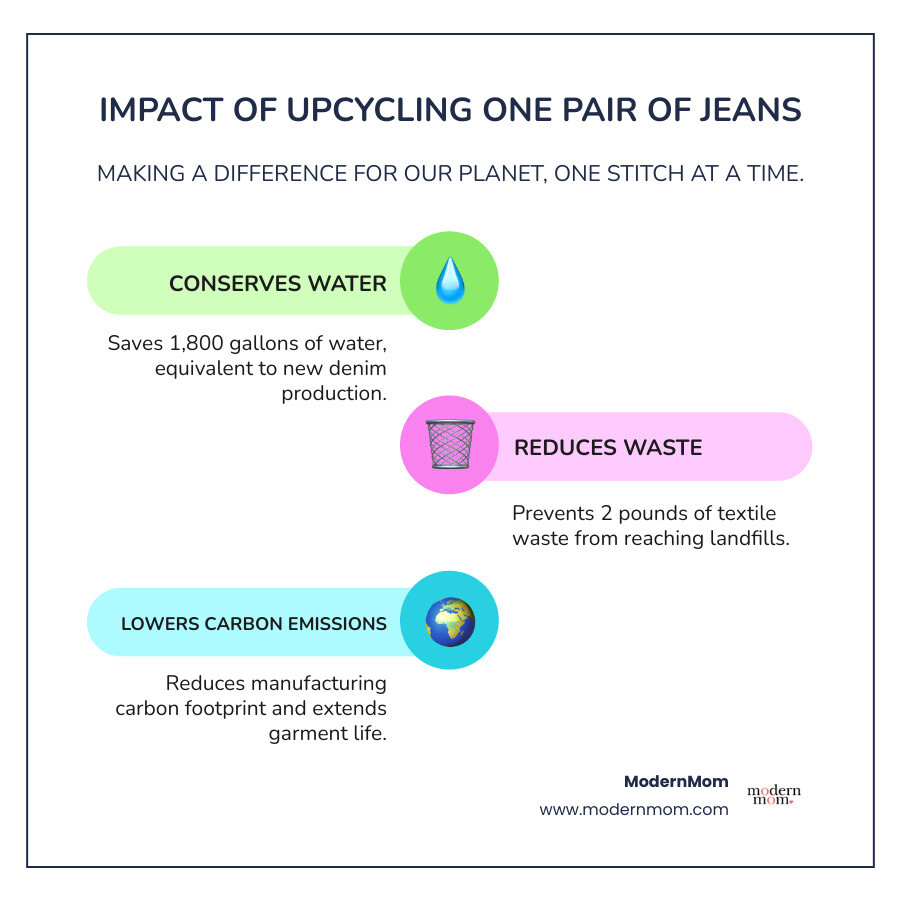
But the environmental impact is where denim upcycling really shines. Every year, millions of pairs of jeans end up in landfills, where they sit for decades without decomposing. The fashion industry uses enormous amounts of water—producing just one pair of new jeans can require up to 1,800 gallons. By choosing to upcycle instead of buying new, you’re reducing textile waste, conserving water, and cutting down on the pollution that comes from manufacturing new fabric.
It’s not about being perfect or saving the world single-handedly. It’s about making small, practical choices that add up. And when those choices also give you gorgeous throw pillows, sturdy bags, and fun kids’ crafts? That’s a win all around.
Getting Started: Essential Tools & Pro Tips
Ready to transform those old jeans into something amazing? The good news is that you don’t need a fancy craft studio or expensive equipment to start your first denim upcycle project. A few key tools and some helpful tricks will set you up for success with this wonderfully sturdy fabric.
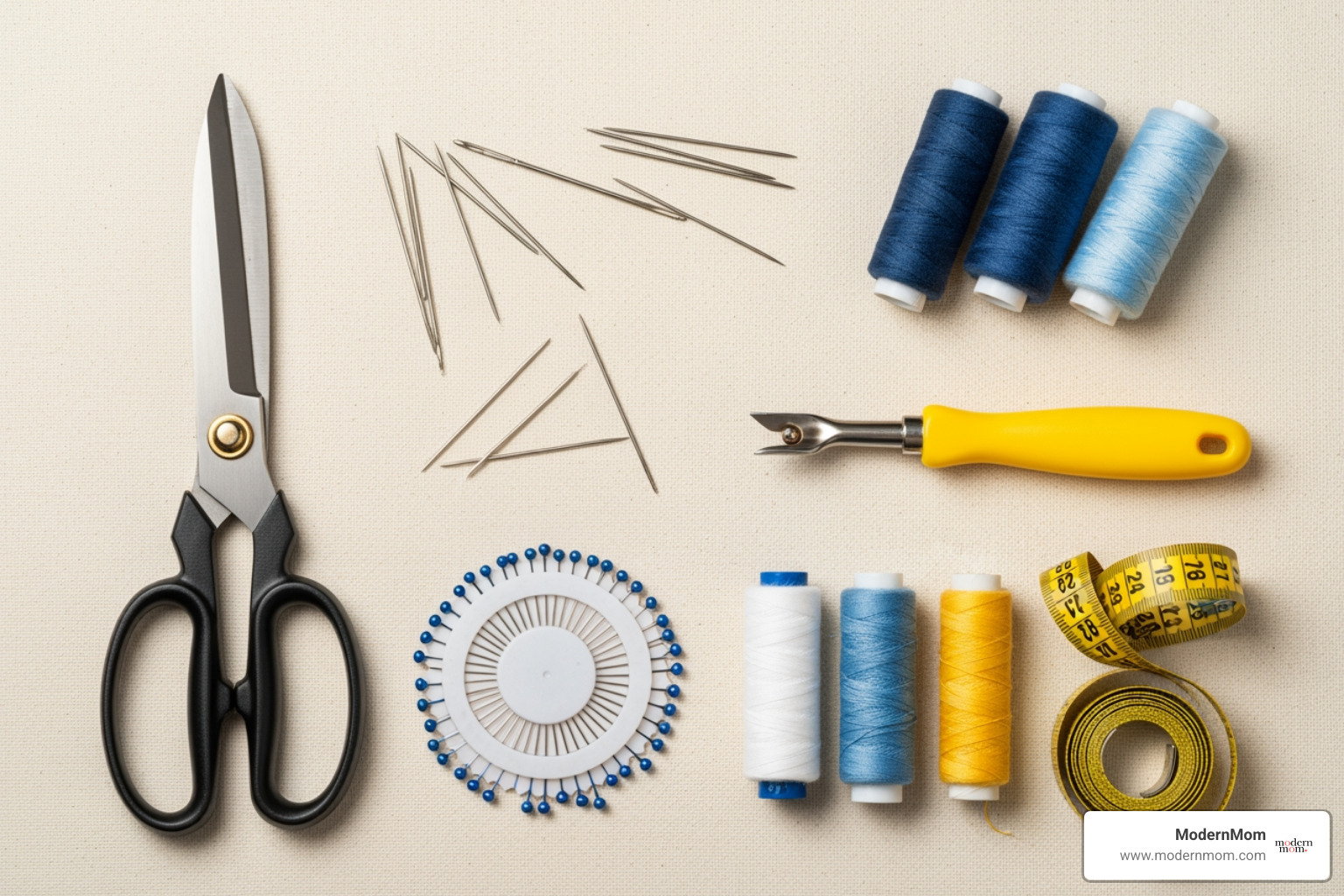
Let’s start with your basic toolkit. A sharp pair of heavy-duty fabric scissors is absolutely essential—dull scissors will fight you every step of the way when cutting through multiple layers of denim. You’ll also want a seam ripper, that tiny tool that becomes your best friend when you’re carefully taking apart jeans to maximize every bit of usable fabric. Pro tip: Take your time with seam ripping. Rushing leads to torn fabric and frustration.
If you’re planning any sewing projects, make sure your sewing machine is in good working order. But here’s the most important part: you absolutely need heavy-duty needles designed specifically for denim. Regular needles will bend or break when they hit those thick layers. A denim needle has a reinforced shaft and a sharp point that can punch through dense fabric without snapping. Trust us on this one—it’s not optional.
For quick projects or tricky spots, fabric glue can be a lifesaver. And if you’re working with stretch denim, grab some interfacing to stabilize the fabric. This is especially crucial when you’re mixing stretchy and non-stretchy denim or creating structured items like bags. Lightweight interfacing adhered to the wrong side of the fabric keeps everything in place and prevents that unwanted stretch.
Handling Thick Seams and Denim Types
Those incredibly thick seams running down the legs of jeans? They’re called felled seams, and they’re designed to tuck raw edges between layers to prevent fraying. It’s what makes jeans so durable—and what makes them a bit challenging to sew through. You can learn more about what a felled seam is and why they’re so strong.
When your machine hits those thick seam intersections, slow down. Seriously, just ease off the pedal or even use the handwheel to guide the needle through manually. Your machine will thank you, and you’ll avoid broken needles and skipped stitches.
Here’s a trick many home sewers use: create faux felled seams instead of trying to replicate the industrial version. Sew your seams normally, finish the raw edges with a zigzag stitch or serger, press everything to one side, and then topstitch. You get a similar professional look without fighting the bulk. You can also try grading seams by trimming the seam allowances to different widths, which reduces thickness in problem areas.
If you’re planning lots of denim projects, consider investing in a “hump jumper” tool. This small accessory levels your presser foot when you’re sewing over uneven thicknesses, preventing those annoying skipped stitches that happen when one side of the foot is higher than the other.
Stretch denim deserves special mention. While it’s fantastic for wearable projects where you want some give—like headbands or clothing—it can be tricky for structured items. That built-in elasticity works against you when you’re trying to make a crisp, stable tote bag. The solution? Stabilize it with interfacing. For stuffed animals, baby items, or anything that benefits from a little flexibility, stretch denim is perfect just as it is.
Incorporating Unique Features
Here’s where denim upcycle projects get really fun. Those original jean features you’ve been wearing for years? They’re design gold.
Don’t just cut off those pockets—use them! Original jean pockets add instant functionality and character to tote bags, wall organizers, or even standalone coasters. The seams themselves, especially those sturdy felled seams, can become intentional design elements that add both texture and strength to your projects. Even those side seams you might normally discard can be repurposed for interesting crafts like braided bracelets or decorative trim.
And don’t forget the hardware. Those zippers, buttons, snaps, and metal rivets can be carefully removed and given new life. Think adorable button eyes for a denim teddy bear, or decorative zipper accents on a crossbody bag. Every element of your old jeans has potential.
Preparing Your Jeans
Before you make that first cut, wash your jeans thoroughly. This simple step prevents color transfer to other fabrics (especially important if you’re mixing denim shades) and accounts for any shrinkage. Nobody wants a project that warps after its first wash.
Remove any buttons, zippers, or hardware that might get in your way—unless you’re planning to incorporate them into your design. A few minutes of prep work now saves frustration later and gives you a clean canvas for creating something new.
Awesome Denim Upcycle Projects for Every Skill Level
Here’s where the fun really begins. Whether you’ve never touched a sewing machine or you’re ready to tackle something ambitious, there’s a perfect denim upcycle project waiting for you. The beauty of working with denim is that it’s incredibly forgiving—if you make a mistake, just call it “distressed” and move on!
We’ve gathered more than fifteen ideas that span everything from five-minute crafts to weekend passion projects. Some require nothing more than scissors and glue, while others invite you to dust off that sewing machine and create something truly special.
Quick & Easy No-Sew Ideas
Let’s start with projects that require zero sewing skills. These are perfect for busy afternoons, craft time with kids, or when you just want to see quick results without threading a needle.
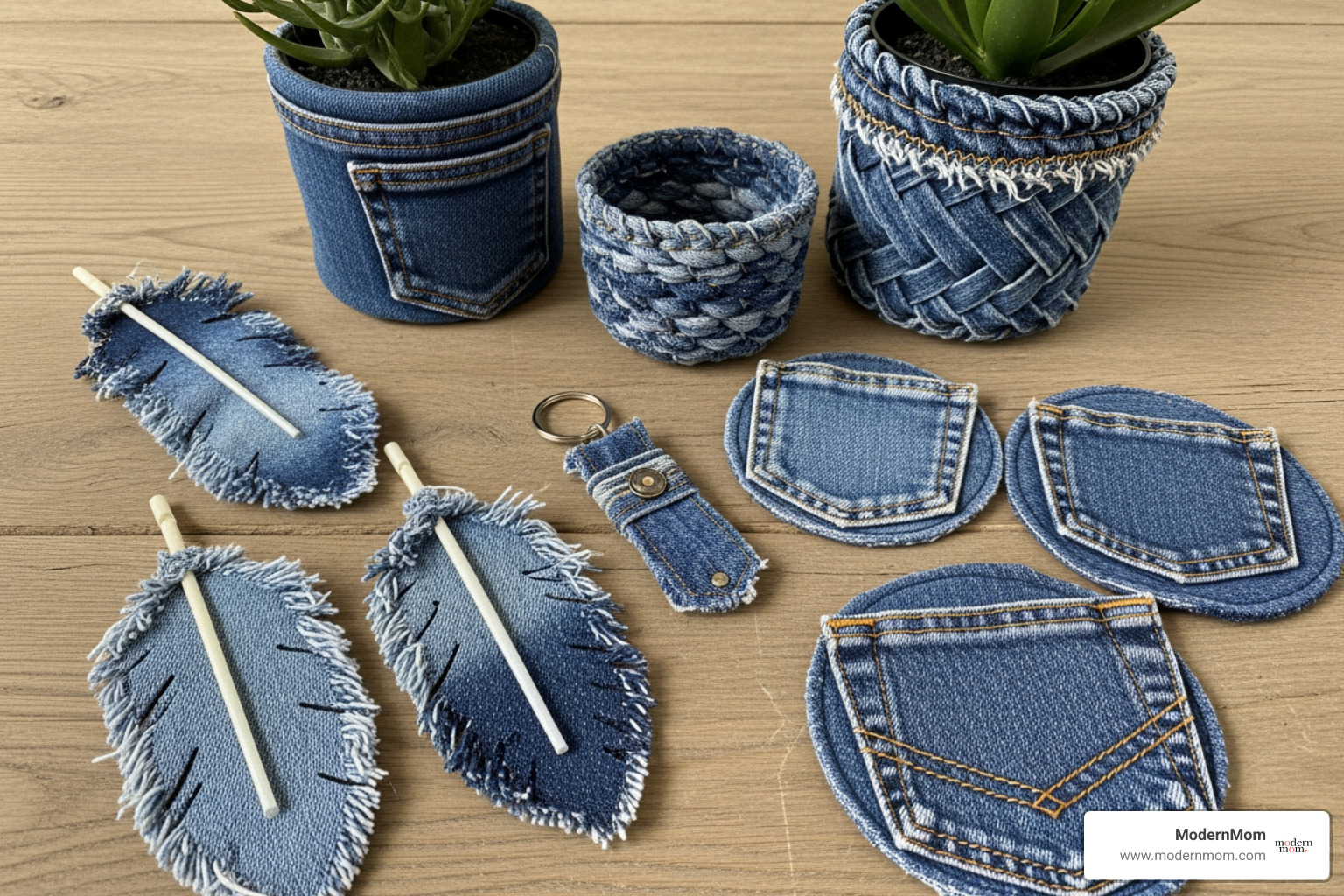
Frayed feather decor has become surprisingly trendy, and you can make these using nothing but denim scraps and scissors. Cut feather shapes from your fabric, fray the edges with your fingers, and arrange them into wall art or garlands. They add that perfect rustic-meets-modern vibe to any room.
Woven baskets are another clever way to use every last scrap of denim. These sturdy containers work beautifully for organizing craft supplies, toys, or bathroom essentials. The best part? They’re completely no-sew, made by weaving strips of denim into something genuinely useful.
Transform empty cans or small pots into denim-wrapped planters or bins with just fabric glue. Cut your denim to size, wrap it around your container, and secure it with strong fabric adhesive. Add a rope handle or leave it simple—either way, you’ve got instant organization or a charming planter.
For quick personal accessories, try making keychains from denim strips. Cut small shapes, add a keyring, and personalize them with fabric paint or simple embroidery. They make thoughtful handmade gifts, too.
And here’s a favorite: coasters made from jean pockets. Those back pockets are already perfectly sized and shaped. Simply cut around them, stitch or glue the opening closed, and you’ve got durable, machine-washable coasters that actually look intentional.
Chic Home Decor from Old Jeans
Ready to make a bigger statement in your home? These projects take a bit more time and effort, but the results are stunning pieces that will last for years.
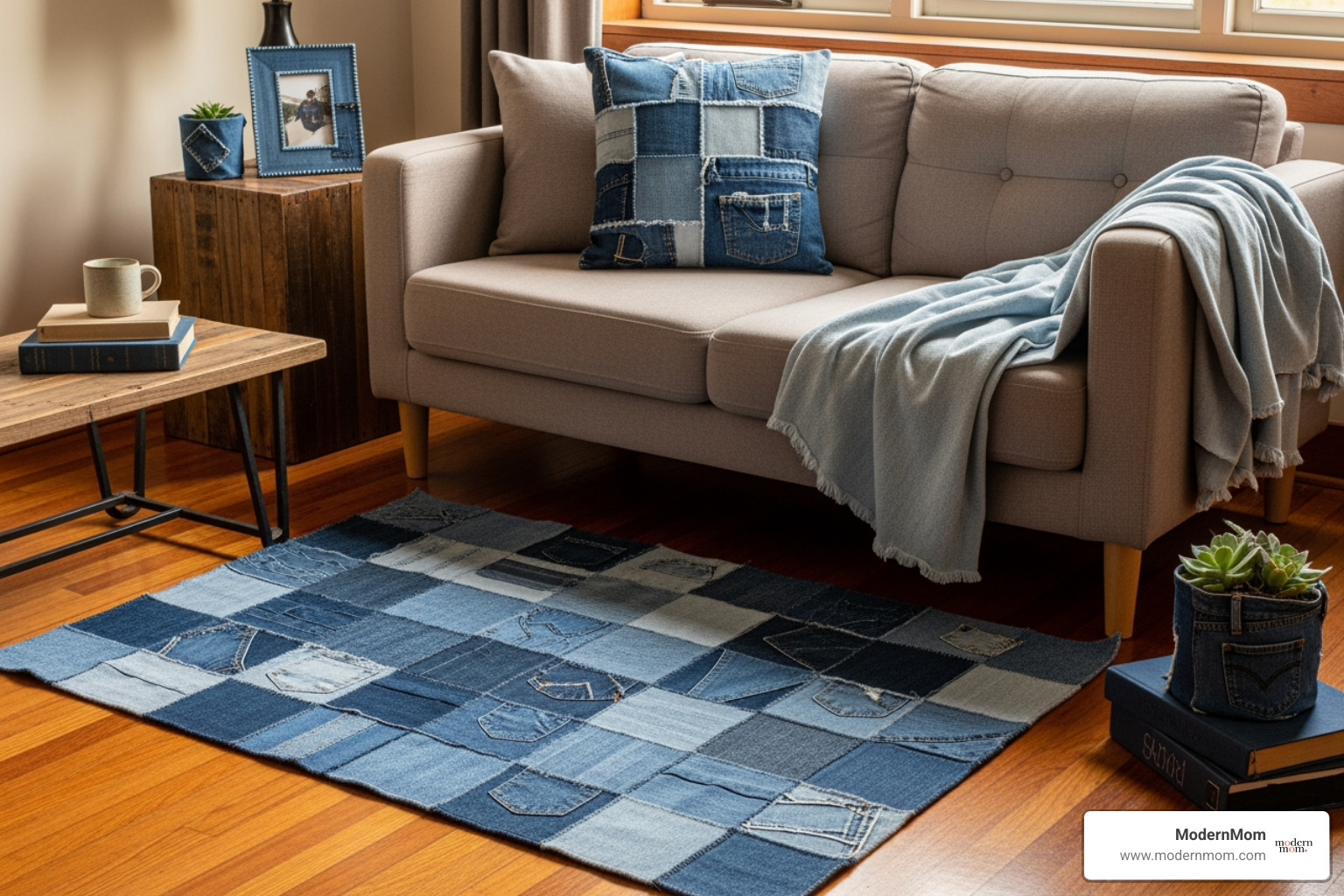
A patchwork quilt made from various shades of denim is the ultimate upcycler’s dream. Imagine a cozy throw that tells the story of your family’s favorite jeans, mixing light washes with dark indigos. Denim quilts are incredibly durable and only get softer with washing.
Denim rugs make a serious impact in any room. Because denim is naturally durable and washable, these rugs are perfect for high-traffic areas like entryways or playrooms. You can sew strips together for a durable rug, try a no-sew rag rug technique, or even create a woven style, depending on your preference.
For something geometric and eye-catching, try chevron throw pillows. With careful cutting and piecing, you can create pillows that look like they came from a boutique. The varying shades of denim create natural dimension without any extra effort.
Wall pocket organizers put those iconic jean pockets to perfect use. Mount them on a board or directly on the wall for storing mail, craft supplies, or small essentials. It’s functional art that solves real organizational problems.
Create unique placemats for your dining table—maybe even add a small pocket for cutlery. They bring rustic charm to everyday meals and hold up beautifully in the wash.
And don’t forget seasonal decor! Christmas decorations made from denim scraps add handmade warmth to your holiday setup. Try making denim Christmas tree ornaments or other festive shapes that you’ll treasure for years.
Stylish Wearables & Accessories
Give your wardrobe a sustainable refresh while creating pieces that reflect your personal style. These denim upcycle projects prove that fashion can be both creative and eco-conscious.
Tote bags are the gateway project for many denim upcyclers, and for good reason. They’re practical, surprisingly easy to make, and take full advantage of denim’s natural durability. Many tutorials show you how to incorporate the original jean pockets as clever design features.
Crossbody purses made from jean legs or back pockets are adorable and perfectly sized for essentials. They’re ideal for hands-free days at the farmers market or running errands. You can create a simple crossbody from a jean leg or a more polished fold-over clutch.
A frayed denim pouch is a beginner-friendly project that accepts denim’s casual, worn-in aesthetic. It’s perfect for makeup, chargers, or whatever you need to corral in your bag.
For the more ambitious, patchwork jackets are absolute showstoppers. Give an old denim jacket new life by adding patches from other jeans, or construct an entirely new jacket from pieced-together denim. Those mismatched pockets and varying washes become the best part of the design.
Quick accessories like headbands can be made from denim strips in minutes. Twist or braid them for a casual, stylish look that keeps hair out of your face. And for the tiniest family members, upcycled denim baby shoes are almost too cute to handle.
Transform jeans into upcycled skirts for a wardrobe refresh that costs nothing. Levi’s even offers DIY videos on repurposing denim, including skirt-making techniques.
Finally, cuff bracelets made from braided denim strips or repurposed seams add a unique touch to any outfit. These are just a few ideas for denim accessories that use every bit of your jeans.
Fun denim upcycle projects for Kids
Denim’s toughness makes it ideal for kid-friendly creations that can handle serious play. These projects result in toys and accessories that actually last.
Stuffed animals made from old jeans become instant favorites. The fabric holds up to hugging, dragging, and washing—all the things stuffed animals endure in the hands of children. You can incorporate frayed edges, original pockets, or patchwork designs. You can find many patterns online to sew a durable denim bear or other creatures, from small hand-held toys to large, huggable friends.
Bean bags for yard games are perfect for outdoor fun. Make a set of star-shaped bean bags for cornhole, toss games, or just creative play. They’re sure to survive seasons of backyard adventures.
For car-loving toddlers, toy car roads made from denim strips create portable play surfaces. Roll them up, toss them in a bag, and you’ve got entertainment for doctor’s appointments or visits to grandma’s house.
Bibs made from old jeans and t-shirts handle spills and frequent washing like champions. Denim doesn’t stain easily and gets softer with every wash—exactly what you want in baby gear.
And pencil cases constructed from sturdy denim keep school supplies organized through the chaos of backpacks and lockers. The same pattern that works for knitting needle cases adapts perfectly for holding pencils, markers, and art supplies.
Frequently Asked Questions about Upcycling Denim
As you’re getting ready to tackle your first denim upcycle projects, it’s totally normal to have a few questions. We’ve gathered the most common concerns we hear from crafters just like you, along with practical answers that’ll help you get started with confidence.
What are the easiest denim upcycle projects for a total beginner?
If you’ve never worked with denim before (or if you’re just looking for something quick and satisfying), start with no-sew projects or simple cutting crafts. These build your confidence without requiring fancy equipment or advanced skills.
Coasters from pockets are probably the easiest place to start. Just cut around a back pocket from an old pair of jeans, maybe add a quick stitch or dab of fabric glue to close the opening, and you’ve got yourself a sturdy, washable coaster. The pocket is already finished, so most of the work is done for you!
Frayed pouches are another beginner favorite. The intentionally frayed edges mean you don’t need to worry about perfect finishing—the “imperfect” look is actually the goal. Just cut, fray, and maybe add a simple zipper or button closure.
Denim-wrapped cans or jars transform everyday containers into stylish storage with nothing more than fabric glue and some cut denim. No sewing machine required, and you can finish one in about fifteen minutes.
For even smaller starter projects, try making keychains or simple patches from denim scraps. Cut shapes, add some embellishments if you’d like, and attach a keyring. Or create braided bracelets by cutting strips of denim and braiding them together for a chic, casual accessory.
The beauty of these projects is that they let you get comfortable working with denim’s thickness and texture before you move on to more complex creations.
How do I handle super thick denim seams on my sewing machine?
Those thick, bulky seams where multiple layers meet can feel intimidating, but your home sewing machine can absolutely handle them with the right approach.
First and most importantly, use a denim needle. This isn’t optional—it’s essential. A denim or jeans needle has a reinforced shaft and sharp point designed specifically for penetrating dense fabric without breaking.
Go slowly when you approach thick areas. There’s no prize for speed here! Reduce your machine’s speed and guide the fabric carefully. When you hit a particularly stubborn spot, don’t be afraid to use the handwheel to manually turn the needle through those layers one stitch at a time.
Grading seams after you sew them helps reduce bulk significantly. Just trim the seam allowances to different widths so they’re staggered rather than stacked directly on top of each other. This makes the seam lie much flatter.
A “hump jumper” tool (sometimes called a Jean-a-ma-jig) is a game-changer for crossing over thick seams. This small plastic tool levels your presser foot when you’re sewing over uneven thicknesses, preventing those frustrating skipped stitches.
And remember those faux felled seams we mentioned in the tools section? They’re much easier to achieve on a home machine than true felled seams and still give you that clean, durable finish that looks professional.
Can I upcycle stretch jeans?
Yes, you absolutely can! Modern jeans often contain spandex or elastane, giving them that comfortable stretch. While they work differently than traditional rigid denim, stretch jeans are perfect for many denim upcycle projects.
The key is knowing when and how to stabilize with interfacing. For structured projects like bags or baskets, you’ll want to iron lightweight interfacing onto the wrong side of the fabric. This prevents the denim from stretching out of shape during construction and keeps your finished project looking crisp.
Stretch denim really shines in projects that benefit from some give—think stuffed animals, baby clothes, or even certain wearable accessories where a bit of flexibility is actually an advantage. That slight stretch can make items more comfortable and forgiving.
Just avoid using stretch denim for rigid structures unless you’ve properly stabilized it first. An unstabilized stretch denim tote bag, for example, might gradually stretch and sag with use. But with the right interfacing? You can achieve nearly any look you want, whether you’re working with stretch or non-stretch denim.
Your Next Favorite Project is Waiting
There’s something almost magical about changing a worn-out pair of jeans into something completely new. That moment when you step back and think, “I made this from that?” It’s part pride, part surprise, and all satisfaction.
Denim upcycle projects bring together everything we value at Modern Mom—creativity that fits into real life, practical solutions that save money, and choices that help our planet. Every project you tackle, whether it’s a five-minute coaster or a weekend quilt, reduces textile waste and keeps resources out of landfills. That’s not just crafting; that’s making a difference.
But beyond the environmental impact, there’s the personal joy. You’re creating something unique that carries its own story—those jeans you wore on family vacations, the ones your teenager outgrew, the pair that saw you through countless adventures. Now they get a second chapter, maybe as a sturdy tote bag that holds groceries, a cozy throw pillow, or a beloved stuffed animal your little one will treasure.
The beauty of denim upcycling is that it welcomes everyone. Brand new to crafting? Start with a simple no-sew project. Already comfortable with a sewing machine? Challenge yourself with a patchwork jacket or a durable rug. There’s no pressure, no judgment—just the satisfaction of turning something old into something wonderful.
So pull out those jeans you’ve been meaning to donate, grab your scissors, and see where your creativity takes you. Your next favorite project is waiting in the back of your closet.
Looking for more hands-on inspiration? Find more creative ideas on our crafts page, where we share projects that fit into your real, busy life.