
Shelters play a vital role in providing safety, structure, and a second chance for abandoned or homeless animals. However, even well-managed facilities face challenges that can impact shelter dog health, particularly when intake numbers are high and resources are limited. Many shelters rely on veterinary teams with diverse backgrounds—including professionals transitioning from veterinary jobs to maintain consistent care despite these pressures.
Dogs entering shelters often arrive with unknown histories, existing medical issues, behavioral challenges, or high levels of stress. These factors make early assessment and proper management essential. When shelters apply consistent medical and behavioral protocols, they not only protect each dog but also safeguard the entire population.
Stress in Shelter Dogs: A Silent but Powerful Health Factor
Stress is one of the most influential—and most overlooked—factors affecting dogs in shelters. Entering a crowded, unfamiliar space filled with new sounds, smells, and people is overwhelming for many animals. Even emotionally stable dogs may develop stress responses when separated from their families or exposed to constant noise.
High stress levels can weaken the immune system, making dogs more likely to develop infectious diseases. This is why clinicians often observe conditions such as diarrhea, skin flare-ups, suppressed appetite, and elevated cortisol levels shortly after shelter intake. Dogs under pressure may also exhibit abnormal shelter dog behavior, such as pacing, shaking, excessive barking, or shutting down.
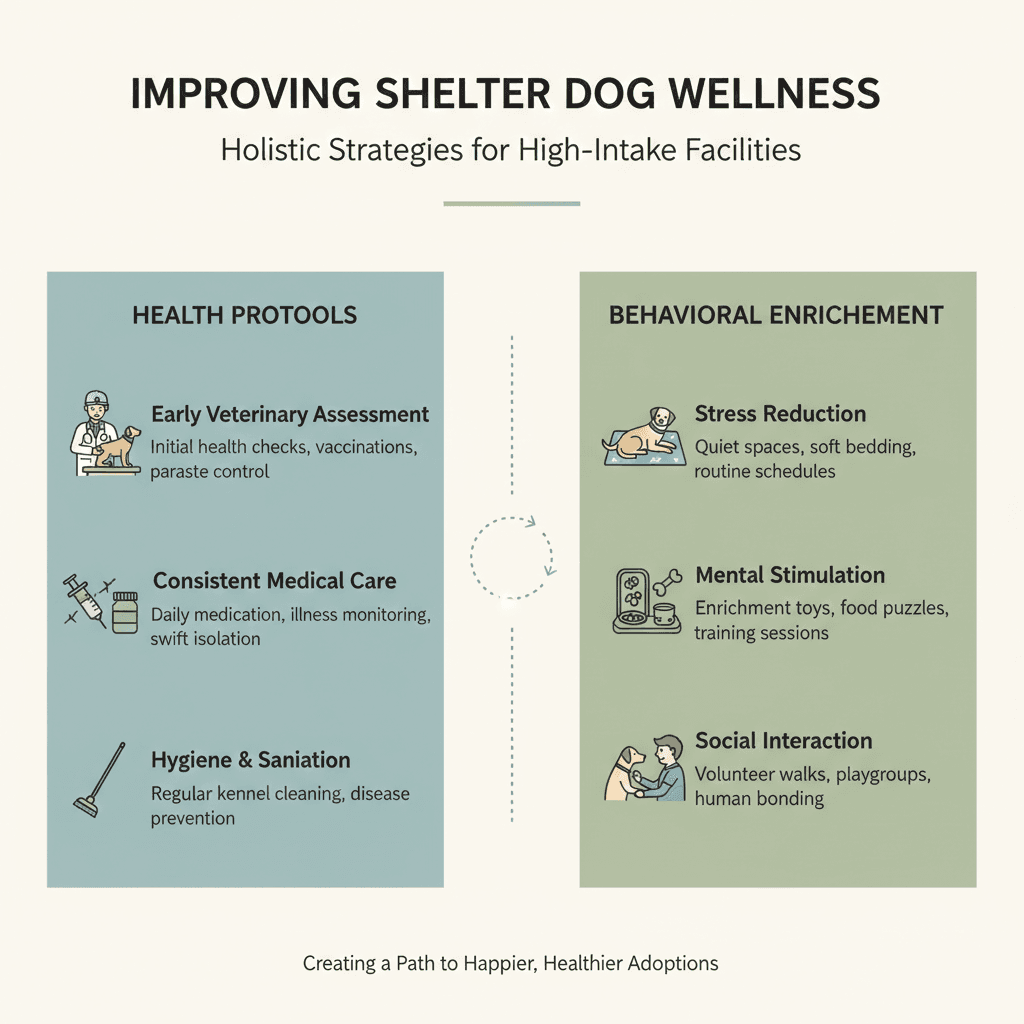
Simple adjustments—like quieter housing areas, enrichment toys, soft bedding, and regular human interaction—can drastically reduce stress and strengthen resilience. Many shelters now incorporate Fear Free or force-free handling strategies to create calmer environments.
Shelter Dog Behavior and the Impact of Confinement
Confinement is unavoidable in shelters, but it has predictable effects on behavior. Limited space and minimal social contact can worsen existing tendencies or create new problems. Dogs may show reactivity, resource guarding, or fear that they never displayed before intake.
Veterinarians working with behavior teams often emphasize early screening. Identifying fear, anxiety, or aggression early helps staff decide the right care plan. Enrichment activities—sniffing games, food puzzles, short training sessions, and brief outdoor walks—can positively influence mood and reduce frustration.
The ultimate goal is to maintain dogs’ psychological stability so they remain adoptable and transition smoothly into new homes.
Disease Transmission Risks: Why Shelters Need Strong Protocols
Shelters bring together animals of unknown backgrounds, incomplete vaccine histories, and varying immunity levels. This makes disease control one of the most important aspects of management. The fast pace of intake and movement requires structured shelter and medical protocols to minimize outbreaks.
Many shelters follow guidelines from the Association of Shelter Veterinarians (ASV), which recommend intake exams, immediate vaccination, isolation of symptomatic animals, and strong sanitation procedures. Consistency is critical: even minor lapses can allow pathogens to spread.
Kennel Cough Prevention: Protecting a Vulnerable Population
One of the most common illnesses in shelters is canine infectious respiratory disease complex (CIRDC), better known as kennel cough. It spreads easily through airborne droplets, shared spaces, and contaminated surfaces.
Prevention depends on several factors:
- proper ventilation
- reduced overcrowding
- routine cleaning
- mandatory vaccination at or before intake
- Isolation of coughing dogs
- stress reduction to support immune function
Shelters that follow these practices see far fewer cases and shorter recovery times. Although kennel cough is usually mild, it is still disruptive and can delay adoption.
Upper Respiratory Infections (URIs) in Shelter Cats: A Parallel Concern
Though the focus is often on dogs, shelters caring for cats also face disease challenges. URI in shelter cats is one of the most widespread issues. Similar to kennel cough in dogs, cat URIs often spread quickly in high-density environments.
Crowding, stress, and limited environmental enrichment can exacerbate symptoms. Proper airflow, separation of sick cats, early medical intervention, and good sanitation significantly reduce the prevalence of URIs.
Shelters that consider both species holistically create stronger population-wide health outcomes.
Vaccinations for Shelter Animals: The First Line of Defense
Immediate vaccination is one of the most important tools for protecting animal health in shelter settings. The ASV and many veterinary organizations recommend that vaccinations for shelter animals occur the moment they enter the facility—or even before intake when possible.
Core vaccines for dogs typically include the following:
- DHPP (distemper, hepatitis, parvovirus, parainfluenza)
- Bordetella (for respiratory protection)
- Rabies (when legally allowed/appropriate)
Vaccinating early helps reduce severe complications, lowers transmission, and protects vulnerable puppies with incomplete medical histories. Effective vaccine programs are the foundation of outbreak prevention.
How Shelter Layout and Resources Influence Disease and Behavior
Shelter design can dramatically shape animal health. Facilities with open-air kennels, natural light, reduced noise levels, and adequate ventilation generally report lower stress and illness rates. Conversely, older, cramped, or poorly ventilated buildings often struggle despite strong protocols.
Shelter resources also matter. A facility with consistent staffing, a veterinary partner, and trained volunteers can provide better care compared to one operating with minimal support. These differences highlight why many shelters strive for updated designs and improved layouts as funding becomes available.
Behavioral Support Programs Make a Measurable Difference
Shelters increasingly recognize that behavioral well-being is as important as physical health. Programs such as behavior observation logs, volunteer-led enrichment shifts, and structured training hours help dog health cope with the shelter environment.
Regular behavior assessments allow staff to track changes and intervene early. This proactive approach prevents minor stress behaviors from becoming long-term issues and helps promote faster, more successful adoptions.
Nutrition and Hydration: Basics That Matter in a Big Way
It may seem simple, but consistent feeding protocols are essential in maintaining shelter dog health. Sudden diet changes can cause gastrointestinal upset, especially in stressed animals. Many facilities try to feed the same brand or type of food consistently.
Access to fresh water, clean bowls, and individualized feeding—especially for dogs with allergies or medical conditions—reduces health complications. Good nutrition also supports immune system recovery for dogs arriving malnourished or neglected.
Spay-Neuter Policies and Their Health Considerations
Spaying and neutering animals before adoption is standard in many shelters. While generally beneficial, the push to sterilize very young puppies or kittens has sparked discussion among veterinarians. Some early spay-neuter policies aim to control overpopulation but may affect long-term bone, joint, or hormonal development.
Many shelters are adjusting protocols based on updated research. When procedures are timed appropriately and performed by trained veterinarians, outcomes improve and minimize long-term complications.
How Staff Training and Medical Oversight Protect Animal Health
Shelters thrive when they have well-trained teams who understand medical procedures, disease control, and behavioral assessments. Regular training reduces handling errors and improves safety for both staff and animals.
Veterinary oversight ensures that animals receive correct treatment plans, medication, and follow-up care. Telemedicine and part-time partnerships also help shelters lacking full-time vets maintain medical quality during busy periods.
Supporting Shelter Success Through Community and Veterinary Collaboration
The challenges shelters face—overcrowding, disease control, behavioral issues—require community involvement. Local veterinarians, trainers, volunteers, and rescue groups can all support shelters through shared expertise, donated supplies, or temporary foster homes.
Collaboration leads to healthier animals, reduced euthanasia, and more successful adoptions. When communities invest in shelter care, dogs receive a better chance at long-term well-being.
Conclusion
Shelter environments have a profound influence on canine physical and emotional health. By understanding how stress, crowding, behavior, disease transmission, and resources affect outcomes, shelter staff and veterinarians can create stronger, healthier systems. With proper protocols, veterinary guidance, and community support, dogs in shelters can transition to new homes with improved health and stability.
FAQs
1. Why do shelter dogs get sick more easily?
Crowding, high stress, and unknown vaccination histories make dogs more vulnerable to respiratory and gastrointestinal illnesses.
2. How can shelters reduce stress for dogs?
Quiet spaces, enrichment activities, predictable routines, and gentle handling significantly lower stress and improve health.
3. Are vaccines required for all shelter animals?
Most shelters vaccinate animals upon intake to reduce disease spread and protect vulnerable populations.
4. Can behavior issues seen in shelters improve after adoption?
Yes. Many stress-related behaviors resolve once dogs health moves to calm, stable homes with consistent routines.
5. Why do some shelter dogs develop kennel cough?
Kennel cough spreads easily in group settings, especially where airflow or sanitation is limited.