

Why Saving Money is Essential for Every Mom
With prices climbing on groceries, gas, housing, and everyday basics, trying to find the best ways to save can feel almost impossible. We get it – when the cost of living keeps rising, saving money may seem out of reach. But even in a tough financial moment, small, realistic changes can help you build breathing room, reduce stress, and slowly grow a safer, stronger family budget.
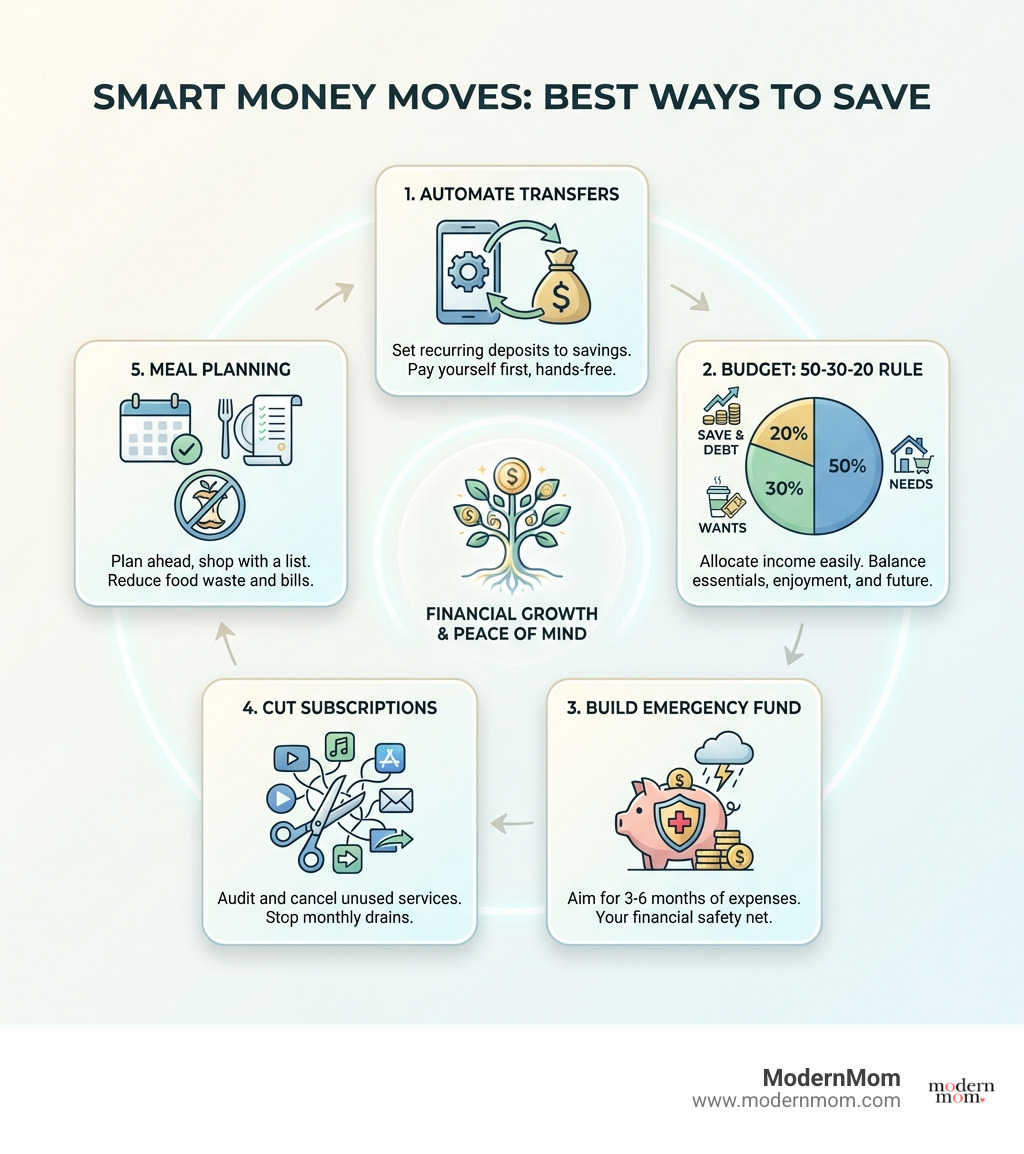
Here’s a quick look at the most effective strategies to boost your savings:
- Automate your savings: Set up regular transfers to “pay yourself first” without even thinking about it.
- Create a simple budget: Use the 50-30-20 rule to easily manage your income for needs, wants, and savings.
- Build an emergency fund: Aim for 3-6 months of essential expenses to create a strong financial safety net.
- Cut hidden costs: Audit and cancel unused subscriptions; the average American household spends around $219 per month on them.
- Save on groceries: Plan meals, use lists, and reduce food waste to significantly lower your weekly food bill.
- Maximize employer matches: Contribute enough to your 401(k) to get all the “free money” your employer offers.
It might seem overwhelming at first, but saving money is a skill you can improve with knowledge and practice. With the right strategies, you can take control of your family’s finances and achieve your goals.
Build Your Savings Foundation
We all want to feel secure in our finances, especially when we’re raising a family. The journey to financial peace starts with a solid foundation, and that means cultivating a savings mindset. It’s easy to feel overwhelmed by existing bills and the idea that saving money is a daunting task, but we promise, it doesn’t have to be!

Many moms might think that they need to put aside a significant amount every month to make a real difference. The reality is, you can start saving with a few simple steps and build from there. Saving any amount of money will allow you to improve your financial situation. Think of it as a skill that can be improved with knowledge and experience. Every little bit truly does add up over time, creating that cushion we all crave for whatever life sends our way.
How to Make Saving an Automatic Habit
One of the best ways to save money is to make it automatic. This simple strategy, often called “paying yourself first,” means treating your savings like any other bill – but one that benefits you directly! Instead of waiting to see what’s left at the end of the month, you proactively move money into your savings account as soon as you get paid.
We recommend arranging automatic transfers from your paycheck or checking account to your savings. Even starting with something small, like $5 a week, can build incredible momentum. The key here is consistency over the amount. Automating savings ensures you are consistently putting money away without manual intervention, often through features like rounding up purchases or regular small transfers. This method scales with your income too; as you earn more, a percentage-based transfer means your savings grow without you having to think twice.
To make saving even more engaging, why not try a weekly savings challenge? For example, you could save $1 in week one, $2 in week two, and so on, building up to $52 in week 52. By the end of the year, you’ll have saved over $1,000! These challenges gamify the saving process, making it fun and achievable. It doesn’t have to be difficult or complicated; saving money is easier to do than you think, and it doesn’t require a ton of time on your end.
Create a Simple Budget That Actually Works
A budget isn’t about restricting yourself; it’s about giving every dollar a job and understanding where your money is going. This knowledge is incredibly empowering for busy moms! One of the most popular and effective budgeting strategies is the 50-30-20 rule. It’s wonderfully simple:
- 50% of your income goes towards Needs: These are your essential expenses like housing, utilities, groceries, transportation, and minimum debt payments.
- 30% goes towards Wants: This includes dining out, entertainment, hobbies, shopping, and subscriptions.
- 20% goes towards Savings and Debt Repayment: This is where you build your emergency fund, save for future goals, and make extra payments on high-interest debt.
To make this rule work for you, start by tracking all your spending for at least one month. This will help you identify any “spending leaks” – those little purchases that add up without you realizing it. Budgeting apps can be a huge help here, as many link directly to your bank accounts and categorize spending automatically.
A critical step in identifying spending leaks is to audit your subscriptions. You might be surprised to learn that the average American household spends $219 per month on subscriptions! Many people unknowingly spend money on unused services. Go through your bank statements, identify all recurring charges, and cancel anything you don’t actively use or need. You can even rotate streaming services monthly to catch up on shows, then switch to another, saving a significant amount. Annual payment plans for services often provide 10% to 20% discounts compared to monthly billing, so consider those for your must-haves.
The Best Ways to Save on Everyday Family Expenses
Once you’ve got your savings foundation set, we can start looking at the daily costs that impact our household budgets. Smart shopping and reducing waste are fantastic ways to free up more money for your savings goals.

Many of us are surprised by just how much we spend on groceries, utilities, and entertainment. But with a few clever adjustments, we can significantly cut down these expenses without feeling deprived. Did you know that Americans waste 92 billion pounds of food each year, costing close to $473 billion annually? That’s nearly 38% of all food in America! By tackling waste and making smarter choices, we can reclaim some of that money for our families.
Slash Your Grocery Bill Without the Stress
Grocery shopping is a significant expense for most families, and with prices expected to increase by 3.2% in 2025 (higher than the 20-year historical average), finding the best ways to save here is more important than ever.
Here are our top tips:
- Meal Planning is Your Superpower: Before you even step foot in the store, plan your meals for the week. This prevents impulse buys and ensures you only purchase what you need. Involve the whole family in this process – even kids can help choose meals, which makes them more invested!
- Stick to a Grocery List: This seems obvious, but it’s crucial. Going to the grocery store without a list often leads to buying items you already have or things you don’t need. Make a list and stick to it religiously. Avoid shopping when hungry, as this can lead to even more impulse buys.
- Accept Store Brands: Generic brands have come a long way. Many offer high-quality ingredients that rival name brands but for an average of 30% less. Compare ingredients and nutrition labels side-by-side; you’ll often find they’re nearly identical.
- Reduce Food Waste: This is huge! Americans waste nearly $473 billion in food annually. Plan meals, use up leftovers creatively, and freeze extras before they spoil. For example, a roasted chicken can be repurposed into burritos, sandwiches, or a stir-fry later in the week.
- Limit Pre-Prepared Foods and “Treats”: While convenient, pre-cut vegetables can cost up to $60 to $120 more per month than cutting them yourself. Similarly, limit purchases of “treat” foods like chips, frozen appetizers, sweets, and sugary drinks as they rarely provide enough nutritional value to be worth their cost.
- Cook at Home: Prepping most of your meals at home rather than spending money on takeout or restaurants can make a significant difference. Just think, one cup of coffee at home costs approximately $0.25, versus $4 to $6 at a coffee shop!
- Involve the Kids: Make saving a family effort! Setting goals together can make budgeting feel like a team sport. Let your children compare prices at the grocery store, help plan meals on a set budget, and even track spending. This teaches them valuable financial literacy skills from a young age.
Cut Costs on Household Bills and Entertainment
Beyond groceries, our household bills and entertainment expenses offer fertile ground for finding the best ways to save. These are often fixed costs that we don’t think about much, but a quick review can uncover significant savings.
- Boost Energy Efficiency: Small changes at home can lead to big savings on utilities. The EPA estimates you can save 15% on heating and cooling costs just by making sure your home is well insulated.
- Switch to LED Bulbs: The U.S. Department of Energy estimates that switching to LED bulbs can save the average household around $225 annually.
- Seal Air Leaks: Weather-stripping around doors and windows, along with sealing air ducts, can reduce heating and cooling costs by 10-20%.
- Use a Programmable Thermostat: Setting your thermostat back 7 to 10 degrees Fahrenheit for eight hours a day can save up to 10% on annual energy bills.
- Review Your Insurance Plans: Insurance is a necessity, but are you getting the best deal? Americans spend an average of $2,388 on auto insurance per year and $2,285 on homeowners insurance for a $300,000 policy. That’s over $4,500 annually! Make it a habit to shop around for insurance annually. Bundle your policies, ask about available discounts, and pursue qualifying home upgrades that might lower your premiums.
- Optimize Entertainment Expenses: We love our shows and music, but these costs can sneak up on us. Americans spend billions on books and music each year.
- Audit Subscriptions (Again!): We mentioned this earlier, but it’s worth revisiting. If you’re paying for multiple streaming services, consider rotating them monthly. Watch everything you want on one, then cancel and switch to another. You can also opt for ad-supported tiers or family plans to cut costs.
- Accept Your Local Library: Your public library is a treasure trove of free entertainment! You can borrow books, audiobooks, movies, and music for free. Many libraries also offer digital access through apps like Hoopla and Overdrive, giving you 24/7 streaming access to their collections. Some even provide free passes to local museums and attractions.
- Seek Free Local Fun: Look for free or low-cost local attractions. Many cities have beautiful parks, free festivals, or community events. Your bank might even offer free access to attractions – for example, Bank of America’s Museums on Us program provides complimentary access to over 225 cultural institutions for cardholders.
Level Up Your Financial Strategy
Once you’ve mastered the daily savings hacks, it’s time to lift your financial game. These strategies are some of the best ways to save and build long-term financial security, giving you peace of mind and the ability to achieve bigger goals for your family.
This involves strategic planning for bigger financial milestones like building an emergency fund, tackling high-interest debt, and saving for retirement. These steps are crucial for changing your finances from just “getting by” to thriving.
One of the best ways to save: Build Your Emergency Fund
An emergency fund is your financial safety net, designed to cover unexpected costs like medical bills, car repairs, or job loss. It’s truly one of the most critical components of a healthy financial plan. We recommend building an emergency savings fund to cover 3 to 6 months of your committed monthly expenses – that means housing, utilities, food, and transportation.
The statistics are a wake-up call: only 46% of U.S. adults have enough emergency savings to cover three months of expenses, and 27% have no emergency savings at all. This highlights how vital it is to prioritize this fund.
Where should you keep this money? It needs to be easily accessible but separate from your everyday spending account. This is where a high-yield savings account shines. Online banks, for instance, can offer savings accounts with annual percentage yields (APYs) of more than 4%, compared to the national average of 0.6% at traditional banks. Moving $10,000 from a traditional savings account to a high-yield account could earn you an additional $400 annually – that’s real money! Keep your emergency savings in an insured bank or credit union account for safety.
Another one of the best ways to save: Tackle High-Interest Debt
While building your emergency fund is paramount, tackling high-interest debt is equally important for long-term savings. High debt balances, especially from credit cards, can really eat up your budget. With the average APR for credit cards is over 21%, paying only the minimum balance means you’re spending a ton on interest, money that could be going into your savings.
Prioritizing high-interest debt is, counterintuitively, one of the strongest ways to save long-term. By aggressively paying off these debts, you reduce the amount lost to interest, freeing up more cash flow for your savings goals.
Two popular strategies for debt repayment are:
- Debt Snowball Method: You pay off your smallest debt first, then roll that payment into the next smallest debt. This method provides psychological wins that keep you motivated.
- Debt Avalanche Method: You pay off the debt with the highest interest rate first, regardless of the balance. This method saves you the most money on interest over time.
We encourage you to be aggressive about paying off debt and careful not to let your credit cards spiral out of control.
Find “Free Money” Through Work and Side Hustles
Who doesn’t love free money? There are often opportunities right under our noses to boost our income and savings, especially through work benefits and side hustles.
- Employer 401(k) Match: If your employer offers a 401(k) with a matching contribution program, this is essentially “free money” for your retirement. We always advise contributing at least enough to receive your employer’s full match. For example, if your employer matches 100% of the first 6% you contribute, then aim to contribute that full 6%. Leaving this money on the table is like saying no to a raise!
- Side Hustles for Moms: Finding a side hustle can be a fantastic way to increase your income and accelerate your savings goals. Whether it’s turning a hobby into cash, offering freelance services, or participating in event-timed gigs, there are many flexible options for busy moms. Think about skills you already have or things you enjoy doing. This extra income can be channeled directly into your savings, helping you reach your goals faster. For inspiration on managing your time effectively while pursuing new ventures, check out 10 tips for busy moms to save time and energy.
Frequently Asked Questions about Saving Money
We know you have questions, and we’re here to help! Here are some common dilemmas and our expert advice on the best ways to save.
How much should I have in an emergency fund?
We recommend aiming for 3 to 6 months of essential living expenses in your emergency fund. This covers your committed costs like housing, utilities, food, and transportation. This amount provides a solid financial safety net, giving you peace of mind in case of unexpected events like job loss, medical emergencies, or car repairs.
If 3-6 months seems overwhelming right now, don’t worry! Start small. Even saving $500 or $1,000 for immediate emergencies is a fantastic first step. The key is to build it over time, consistently contributing until you reach your goal. Only 46% of U.S. adults have enough emergency savings to cover three months of expenses, so any progress you make puts you ahead.
Is it better to pay off debt or save money first?
This is a common question, and the answer often depends on the interest rate of your debt. Our general guidance is to first build a small starter emergency fund (around $1,000) to cover minor unexpected expenses. This prevents you from going further into debt if a small emergency pops up.
Once you have that small cushion, we advise aggressively tackling high-interest debt, especially credit card balances. As we mentioned, credit card APRs can be over 21%, meaning you’re losing a lot of money to interest. Paying off this debt quickly is one of the best ways to save money in the long run.
After the high-interest debt is gone, you can focus on fully funding your 3-6 month emergency fund. While saving is crucial, paying off high-interest debt first often saves you more money in the long run. Being aggressive about it is key.
How can I save money when I feel like I have nothing left after bills?
We hear you, mom! It’s easy to feel like there’s nothing left at the end of the month, especially with rising costs. But even when it feels like every dollar is accounted for, there are almost always opportunities to find small savings. The most important thing is to start, no matter how small.
Here are some practical steps:
- Track Your Spending: For one month, write down or use an app to track every single dollar you spend. You might be surprised to find “spending leaks” – small, unnecessary purchases that add up.
- Try a “No-Spend” Challenge: Challenge yourself to a “no-spend” day, weekend, or even a week. During this time, you only spend money on absolute necessities. This helps reset your spending habits and reveals what you can truly live without.
- Focus on One Area: Instead of trying to overhaul everything at once, pick one area to tackle. For example, focus solely on cutting food waste for a month, or commit to canceling just one unused subscription. Small wins build confidence!
- Delay Purchases: If you see something you want, wait 24-48 hours before buying it. This “pause button” strategy often helps curb impulse buys and ensures you truly need the item.
- Every Dollar Counts: Saving any amount will allow you to improve your financial situation. Even making minor adjustments, like brewing coffee at home instead of buying it out, can add up quickly over time. The goal is to be intentional about your spending rather than feeling deprived.
Conclusion
Saving money is definitely a journey, not a destination. But as busy moms, we know you’re up for the challenge! We hope these best ways to save have provided you with clear, actionable strategies to boost your family’s finances.
Small steps truly lead to big results. By building a solid savings foundation, smartly managing everyday expenses, and strategically planning for the future, you’re not just saving money – you’re building financial empowerment for yourself and your family. You’ve got this, Modern Mom!
For more money-saving tips and financial advice custom for your family’s needs, find more money-saving tips and financial advice.