
The Science of Calm: Why Your Body Needs a Reset
Easy relaxation techniques are simple, science-backed practices that help calm your nervous system, lower stress hormones, and bring your body back to a state of rest — no special equipment or experience needed.
Here are the most effective easy relaxation techniques to start with:
- Deep breathing – Inhale for 4 counts, hold for 4, exhale for 4. Do this anywhere, anytime.
- Progressive Muscle Relaxation (PMR) – Tense and release muscle groups from your toes to your head.
- 5-4-3-2-1 Grounding – Name 5 things you see, 4 you can touch, 3 you hear, 2 you smell, 1 you taste.
- Mindfulness meditation – Sit quietly, focus on your breath, and gently return your attention when your mind wanders.
- Visualization – Close your eyes and picture a calm, peaceful place using all your senses.
- Body scan – Slowly move your attention from your toes to your head, noticing tension without judgment.
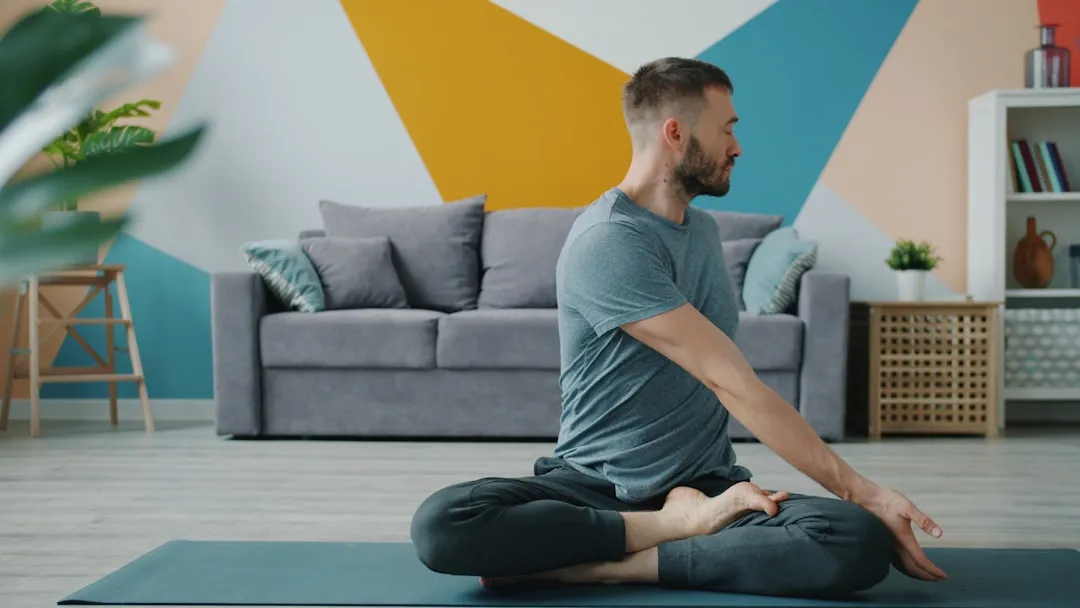
- Gentle movement – A short yoga stretch, tai chi, or even a walk can reset your nervous system fast.
If you’re a mom, you already know the feeling. The to-do list never ends. The mental load is heavy. And somewhere between school pickups, work deadlines, and making sure everyone else is okay — your own stress quietly stacks up.
Here’s the thing: stress isn’t just a feeling. It’s a physical response. Your heart rate climbs, your muscles tighten, and your body floods with cortisol. Over time, that chronic tension takes a real toll — on your sleep, your mood, your health, and your ability to show up for the people you love most.
The good news? You don’t need an hour at the spa or a silent retreat to feel better. Research shows that even a few minutes of intentional relaxation can begin to reverse those stress effects — lowering blood pressure, easing muscle tension, and improving your mood.
This guide is your stress-busting toolkit: practical, proven techniques you can actually fit into a real life with real demands.
Renee Kemper is a digital strategist and entrepreneur who has spent years researching wellness habits and the science of sustainable self-care — including easy relaxation techniques that work for busy people with packed schedules. She brings that same practical, no-fluff approach to everything she shares here at Modern Mom.
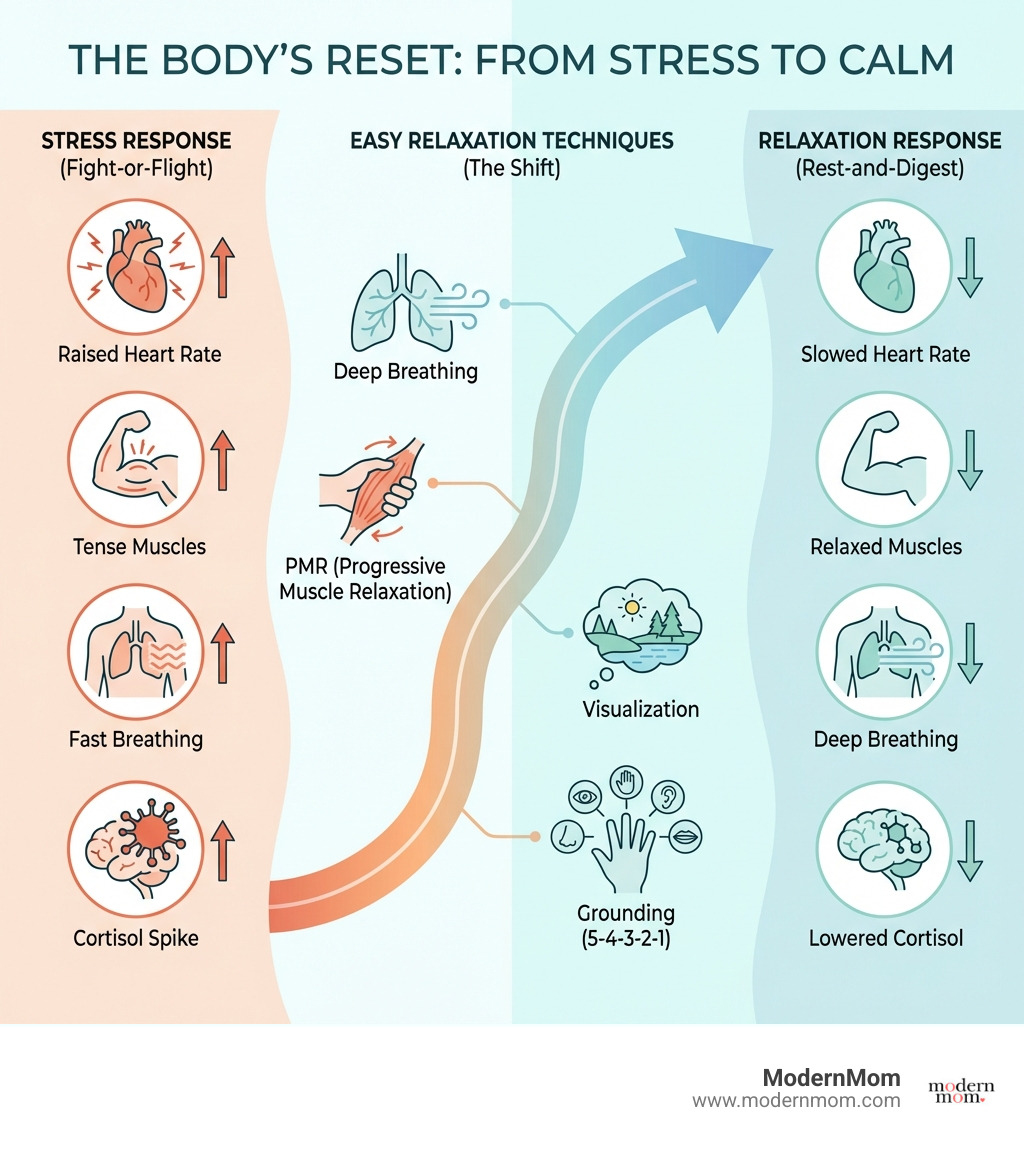
We often think of relaxation as a luxury or something we’ll get to “eventually,” but biologically, it’s a necessity. When we face a stressful situation—whether it’s a toddler’s tantrum or a looming work deadline—our bodies trigger the “fight-or-flight” response. This evolutionary survival mechanism floods our system with hormones like adrenaline and cortisol. While this was great for outrunning sabertooth tigers, it’s less helpful when the “threat” is just a sink full of dirty dishes.
In the 1970s, Dr. Herbert Benson of Harvard Medical School identified what he called the “relaxation response.” This is the physiological opposite of the stress response. By using easy relaxation techniques, we can intentionally signal our nervous system to slow down. Our heart rate drops, our blood pressure stabilizes, and our muscles finally stop mimicking a tightly coiled spring.
According to this Scientific research on mindfulness and psychological health, regular practice of relaxation doesn’t just make us feel better in the moment; it actually improves our long-term psychological health. It helps reduce symptoms of anxiety and depression and boosts our immune system. For us moms, that means fewer stress-induced headaches and more energy to tackle the day.
Chronic stress is like keeping your car engine revving in neutral for hours—eventually, something is going to break. By practicing these resets, we’re giving our “engines” a chance to cool down.

Finding the Best Easy Relaxation Techniques for Your Routine
One of the biggest hurdles we face as moms is the “all-or-nothing” mentality. We think if we can’t do a 60-minute yoga class, there’s no point. But the most effective routine is the one you actually do. Personalization is key. Some of us find peace in silence, while others need rhythmic movement to quiet their minds.
We recommend a “trial and error” approach. Try one technique for a few days and see how it feels. If you find yourself dreading it, move on to the next one! To make these habits stick, we love the concept of habit stacking—attaching a new relaxation technique to something you already do. For example, practice deep breathing while the coffee is brewing or do a quick body scan while you’re waiting in the school pickup line.
As we discuss in our guide on how to Think tiny goals for big long-term impact, small shifts lead to massive changes over time. Even finding Top ten ways to feel sexy as a mom of small kids often starts with simply lowering your cortisol enough to feel like yourself again.
Master the Art of Breathing: Easy Relaxation Techniques for Instant Relief
Breathing is the only part of our autonomic nervous system that we can consciously control. When we’re stressed, our breathing becomes shallow and fast, which tells the brain to stay in “panic mode.” By switching to diaphragmatic breathing (or “belly breathing”), we reverse that signal.
Here are three simple methods to try:
- The 4-7-8 Technique: This is often called a “natural tranquilizer” for the nervous system. Inhale quietly through your nose for a count of 4. Hold your breath for a count of 7. Exhale forcefully through your mouth, making a “whoosh” sound, for a count of 8.
- Box Breathing: Imagine a box. Inhale for 4, hold for 4, exhale for 4, and hold the empty breath for 4. It’s a favorite for athletes and Navy SEALs because it provides instant focus.
- Belly Breathing: Place one hand on your chest and the other on your belly. As you breathe in, try to make the hand on your belly rise while the hand on your chest stays relatively still. This ensures you’re getting oxygen deep into your lungs.
You can find more Sample breathing exercises for stress to keep in your back pocket for those moments when the house feels a little too loud.
Micro-Self-Care: Easy Relaxation Techniques for Busy Moms
We’ve all heard the “oxygen mask” metaphor: you have to put yours on before you can help your children. But let’s be real—sometimes we only have 60 seconds before someone starts yelling for a snack.
Micro-self-care is about those 60-second rituals that keep your frustration tolerance from hitting zero. It’s the difference between responding with patience and losing your cool.
- The Power of Touch: Hugging a loved one (or even yourself) for a full 20 seconds releases oxytocin, the “bonding hormone” that naturally lowers cortisol.
- Pet Therapy: Spending a minute petting your dog or cat can significantly lower your blood pressure.
- The “Squeegee” Breath: Imagine a window squeegee starting at the top of your head and pushing all the “muddy” thoughts down and out through your feet as you exhale.
- Fresh Air Reset: Stepping outside for just 40 seconds has been shown to sharpen mental acuity and reset your mood.
While we’re working on our own resets, it’s also helpful to look at the family environment. Learning How to set healthy screen time limits for your kids can reduce the overall “digital noise” in your home, making it easier for everyone to stay calm.
| Relaxation Type | Time Required | Best For… |
|---|---|---|
| Quick Reset | 1-2 Minutes | High-stress moments, work breaks, “emergency” calm |
| Deep Dive | 10-20 Minutes | Before bed, early morning, scheduled self-care |
| Sensory Fix | 30 Seconds | Grounding when feeling overwhelmed or “floaty” |
| Movement | 5-10 Minutes | Releasing physical tension and “stuck” energy |
Physical Shifts: Tensing, Releasing, and Moving
Sometimes, our stress is so “stuck” in our muscles that we need a physical way to let it out. This is where Progressive Muscle Relaxation (PMR) comes in. PMR involves systematically tensing and then releasing different muscle groups.
To try this, find a quiet spot and start at your toes. Curl them tightly for five seconds, then “flash” them open and relax for 30 seconds, noticing the difference in sensation. Work your way up to your calves, thighs, stomach, hands, shoulders, and finally your face. Many moms find this is the best way to “unclench” after a long day. For a detailed guide, check out How to do progressive muscle relaxation for anxiety.
If you prefer movement, Yoga and Tai Chi are incredible for “moving” stress out of the body. These practices focus on the mind-body connection and rhythmic breathing, which releases endorphins—the body’s natural mood lifters. Even if you’re just doing a few Stability ball exercises for children alongside your kids, that movement counts!
Another great tool is foam rolling. If you carry your stress in your neck or shoulders (the “mom hunch”), spending five minutes on a low-density foam roller can act like a mini-massage, breaking up tension and improving circulation.
Sensory Grounding and Visualization
When your mind is racing with “what-ifs,” grounding techniques pull you back into the present moment. The 5-4-3-2-1 method is a favorite because it uses all five senses to anchor you:
- Acknowledge 5 things you see.
- Acknowledge 4 things you can touch.
- Acknowledge 3 things you hear.
- Acknowledge 2 things you can smell.
- Acknowledge 1 thing you can taste.
Visualization (or guided imagery) is like taking a mini-vacation in your mind. Close your eyes and imagine a place where you feel completely safe and relaxed—perhaps a quiet beach or a sun-drenched garden. Don’t just “see” it; imagine the smell of the salt air, the sound of the waves, and the warmth of the sun on your skin. You can follow along with a Guided imagery session if you find it hard to focus on your own.
Aromatherapy is another powerful sensory tool. Research suggests that sniffing rosemary oil can actually lower cortisol levels. Lavender is a classic for a reason—it’s incredibly effective at signaling the brain to wind down. Keep a small bottle of essential oil in your purse for a quick “whiff” of calm during the day.
Finally, there is Autogenic Training. This is a form of self-hypnosis where you repeat specific phrases to your body, such as “My right arm is very heavy” or “My heartbeat is calm and regular.” It sounds simple, but it’s a powerful way to teach your body to relax on command. You can find a list of Autogenic training phrases to help you get started.
Frequently Asked Questions about Relaxation
Which techniques are best for quick relief at work?
When you’re at your desk, you need techniques that don’t require lying down or closing your eyes for long periods. Deep breathing is your best friend here because no one even knows you’re doing it! You can also try “desk stretches”—roll your shoulders back, stretch your neck from side to side, or do a seated spinal twist.
Micro-meditations (taking just 60 seconds to focus on a single word like “peace” or “calm”) can also help you transition between stressful meetings. If you feel a wave of anxiety, the 5-4-3-2-1 grounding method is a discreet way to settle your nervous system without leaving your chair.
How can I use these exercises to fall asleep faster?
The “tired but wired” feeling is a common struggle for moms. To combat this, we recommend a screen-free wind-down routine at least 30 minutes before bed. Once you’re in bed, try a body scan. Start at your head and mentally “check in” with every part of your body, consciously relaxing each muscle as you go down to your toes.
Progressive muscle relaxation is also excellent for sleep because it physically exhausts the muscles, making them more likely to stay relaxed. For more ideas, the Sleep Foundation offers several Relaxation exercises to help fall asleep.
Are there any precautions I should take?
While easy relaxation techniques are generally safe, there are a few things to keep in mind. If you have a history of trauma, some techniques like deep meditation or body scans can occasionally trigger uncomfortable emotions. If that happens, it’s okay to stop and try a more “external” technique like grounding or movement.
If you have physical injuries or chronic pain, be careful with yoga or PMR. Always listen to your body and don’t push into pain. For those starting a physical practice, reviewing Yoga for health safety guidelines is a smart move. As always, if your stress or anxiety feels overwhelming, don’t hesitate to reach out to a healthcare professional.
Conclusion
At ModernMom, we know that you are the heart of your home. But even the strongest hearts need a moment to beat a little slower. Incorporating these easy relaxation techniques isn’t about adding another chore to your list; it’s about giving yourself the grace to pause and recharge.
Whether it’s a 4-7-8 breath during a chaotic morning or a five-minute yoga stretch before bed, these small acts of self-care build a “well of calm” you can draw from when life gets loud. You don’t have to be perfect at it—you just have to start.
We’re here to support you every step of the way. Explore more lifestyle and self-care tips on our site, and remember: you aren’t alone in this journey. Filling your own cup isn’t selfish; it’s the best thing you can do for yourself and your family.