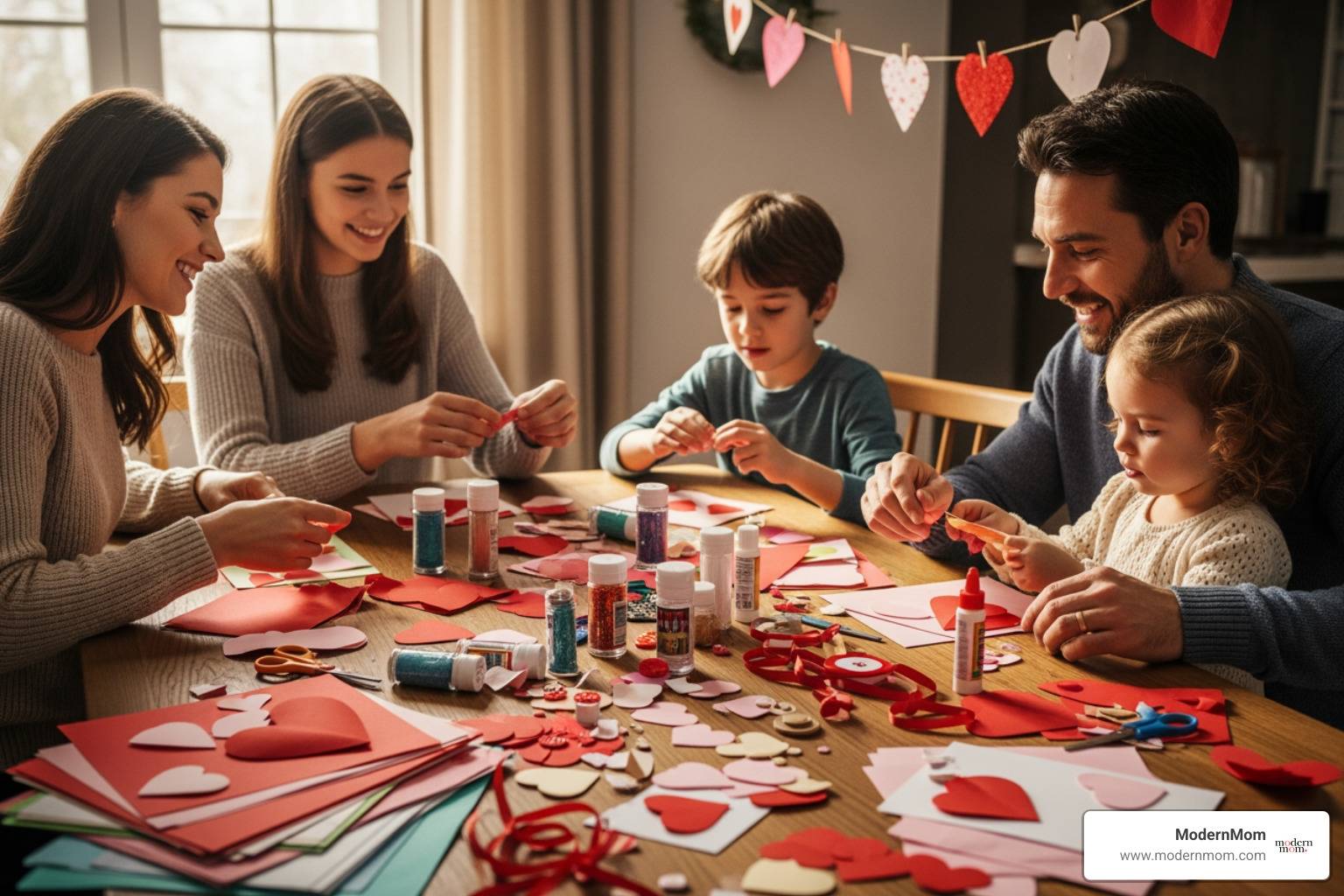
Why Valentine’s Day Crafting Creates Lasting Family Memories
Easy Valentine’s Day Crafts the Whole Family Will Love aren’t just about making cute decorations—they’re about slowing down, getting a little messy, and creating memories together. Whether you’re looking for quick 10-minute projects or something more involved, we’ve got you covered with crafts for every age and skill level.
Quick Answer: Top Valentine’s Day Crafts by Age
- Toddlers (1-3 years): Salt dough handprints, Q-tip painting, mess-free finger painting, paper heart collages
- Preschoolers (3-5 years): Heart stamps from toilet paper rolls, bubble wrap painting, coffee filter suncatchers, paper heart chains
- School-Age Kids (6+): Friendship bracelets, melted crayon hearts, seed paper valentines, DIY garlands
- Whole Family: Paper heart chains, mason jar votives, handprint cards, collage-art valentines
Most of these crafts take 10 to 30 minutes and use materials you probably already have at home—construction paper, glue, paint, and scissors. The best part? They’re designed to encourage creativity and imagination, not perfection.
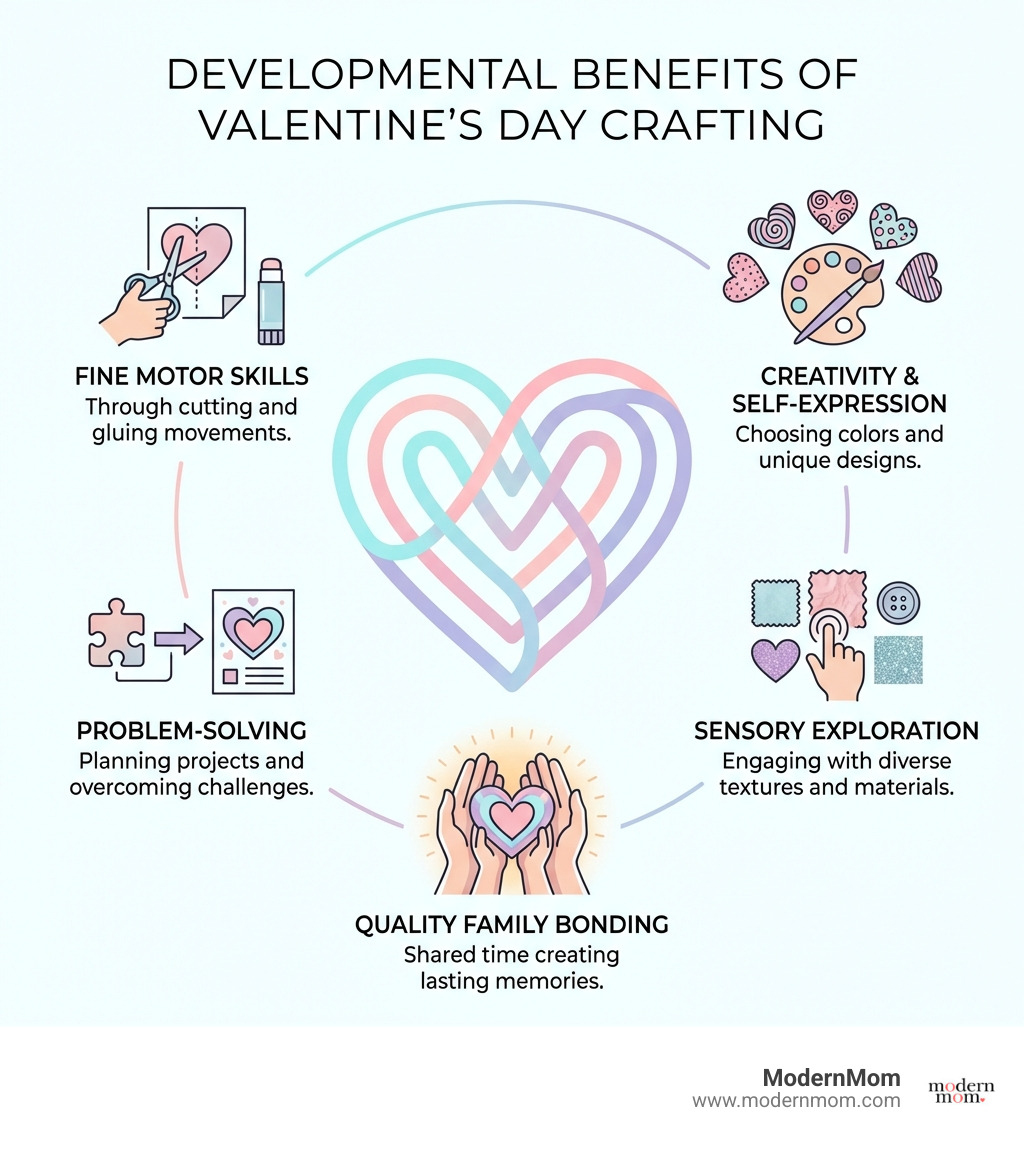
Valentine’s Day is the perfect excuse to break out the craft supplies and spend quality time together. According to research, the average consumer spends over $175 on Valentine’s Day, but handmade crafts offer something store-bought gifts can’t: personal connection and the joy of creating together. Plus, crafting with kids helps develop fine motor skills, encourages sensory exploration, and builds confidence—all while making your home feel festive and loved.
Here at ModernMom, we believe in the power of hands-on activities to bring families closer. Juggling work and family life is a challenge, but we’ve learned that Easy Valentine’s Day Crafts the Whole Family Will Love don’t have to be Pinterest-perfect to be meaningful. The real goal is simply to spark joy and togetherness.
Getting Started: Your Guide to a Fun and Stress-Free Craft Day
Crafting with kids can feel like a big undertaking, but it doesn’t have to be! A little preparation goes a long way in making the experience enjoyable for everyone. We’re here to help you set up for success, ensuring a fun and low-stress crafting session. The goal is bonding and creativity, not perfection.

Common Craft Supplies You Probably Already Have
One of the beautiful things about Easy Valentine’s Day Crafts the Whole Family Will Love is that they often don’t require a trip to a specialty store. Many of the materials you need are likely already tucked away in your craft bin or kitchen pantry. We’re talking about simple, accessible items that can be transformed into heartfelt creations.
Here’s a list of common household craft supplies that are perfect for Valentine’s Day projects:
- Construction Paper: Red, pink, white, and purple are classic Valentine’s colors, but any colors work!
- Crayons & Markers: Essential for drawing, coloring, and writing sweet messages.
- Glue: Both liquid school glue and glue sticks are handy.
- Scissors: Kid-safe scissors are a must for little hands.
- Paper Plates: Great for painting, making masks, or creating heart shapes.
- Cotton Balls: Perfect for painting with unique textures or adding fluffy accents.
- Recycled Items: Don’t toss those empty toilet paper rolls or paper bags! They’re crafting gold.
- Coffee Filters: Surprisingly versatile for suncatchers and decorative flowers.
- Yarn & Ribbon: Add a decorative touch to garlands, cards, or gifts.
- Paint: Tempera or acrylic paints are great for a variety of projects.
- Glitter & Pom-poms: For that extra sparkle and texture.
Having these basics on hand means you’re always ready for a spontaneous crafting session!
Taming the Craft-pocalypse: Tips for Easy Cleanup
Let’s be honest, the thought of glitter spreading to every corner of the house can be daunting. But a little planning can minimize the mess and keep crafting fun for everyone, including you! We want you to cherish the memories, not dread the cleanup.
Here are our top tips for managing craft time mess:
- Designate a Craft Zone: Cover your table with a craft mat or an old tablecloth. Even a large piece of cardboard works wonders.
- Dress for Success: Have kids wear old clothes or art smocks to protect their outfits.
- Prep Ahead: Lay out all materials before you start. This prevents frantic searching mid-craft, which often leads to spills.
- Wet Wipes are Your Friend: Keep a pack of baby wipes nearby for quick hand and surface cleanups.
- Contain the Glitter: Work with glitter over a tray or a box lid to catch any fallout. Once done, simply fold the tray and pour the excess back into the container.
- One Messy Project at a Time: If you’re doing multiple crafts, tackle the messiest one first, then clean up before moving to the next.
- Designated Drying Area: Have a clear, out-of-the-way spot where creations can dry undisturbed. A cookie sheet works well for small items.
- Involve the Kids: Teach children to help with cleanup from a young age. Even toddlers can help put caps on markers or throw away paper scraps.
For more inspiration on keeping things simple and sweet, check out our tips on Keeping Valentines Day Simple and Sweet.
The Benefits of Crafting Together
Beyond the adorable end products, crafting with your family offers a wealth of developmental and emotional benefits. It’s more than just an activity; it’s an investment in your child’s growth and your family’s bond.
- Fine Motor Skills: Activities like cutting, gluing, drawing, and manipulating small objects (like pom-poms or beads) are fantastic for developing precise hand-eye coordination and strengthening the small muscles in fingers and hands. As Amy Jackson, PhD, chief early learning strategy officer at Primrose Schools, notes, while kids don’t typically develop the motor skills for precise tasks like using scissors until age 3, even younger children can benefit from creative play.
- Sensory Exploration: From the squishiness of paint to the texture of glitter and the feel of different papers, crafts engage multiple senses. This sensory input is crucial for cognitive development, especially in toddlers.
- Building Confidence: Completing a craft, no matter how simple, gives children a sense of accomplishment and pride. It’s an opportunity for them to see their ideas come to life.
- Quality Time & Bonding: Crafting together creates a shared experience, fostering communication, laughter, and connection. It’s a chance to unplug and focus on each other.
- Creating Traditions: Family crafting sessions can become cherished holiday traditions, building anticipation and creating lasting memories year after year.
- Creativity & Problem-Solving: Children learn to think outside the box, experiment with materials, and find solutions when a craft doesn’t go exactly as planned. This nurtures their imagination and resilience.
Crafts for the Littlest Valentines: Toddlers & Preschoolers
Engaging our youngest family members in Valentine’s Day crafts is a wonderful way to introduce them to the holiday of love while also nurturing their developing skills. We know that toddlers and preschoolers have shorter attention spans and are still refining their fine motor control, so our focus here is on simple, quick, and sensory-rich activities.
Sensory Crafts for Curious Hands
Sensory play is incredibly important for young children, helping them explore the world through touch, sight, and even smell. These crafts are perfect for little ones who love to get hands-on and enjoy different textures.
- Salt Dough Handprints: This is a classic for a reason! Salt dough is easy to mix and safe for kids, allowing you to create adorable, enduring keepsakes. Press your child’s hand or foot into the dough, cut around it, bake it, and then let them paint it once cooled. It’s a beautiful way to capture their tiny hands at this fleeting age.
- Colorful Rice Bins: Dye rice with food coloring (think pink, red, and white!) and add scoops, small cups, and heart-shaped cookie cutters. This simple activity can keep kids playing and exploring for a long time, engaging their sense of touch and encouraging imaginative play.
- Valentine Slime: Slime is always a hit with kids, and a Valentine’s version is even better! Add pink or red food coloring, heart-shaped glitter, or small plastic hearts to the mix. It’s a fantastic sensory experience that also helps develop hand strength.
- Homemade Playdough: Making your own playdough is surprisingly easy, and kids love helping to mix and knead it. Dye it festive colors and let them use cookie cutters to make heart shapes. It’s wonderful for developing fine motor skills and creativity.
- Sensory Bags: For a mess-free sensory experience, fill a Ziploc bag with hair gel, glitter, water, and small plastic hearts. Seal it tightly with strong tape, and let your toddler squish and explore the contents without any cleanup worries.
Easy Stamping and Painting Projects
Painting and stamping are fantastic for creative expression, and we’ve found some wonderfully simple ways to do it with your littlest ones, often with minimal fuss.
- Toilet Paper Roll Heart Stamps: This is a genius idea! Simply bend a cardboard toilet paper roll into a heart shape, secure with tape, and dip it in paint. Kids can then stamp hearts onto paper to create cards or wrapping paper. It’s a project with minimal prep and supplies that yields adorable results.
- Q-tip Painting: All you need are heart-shaped paper, paints, and Q-tips. Your tot can dip the Q-tip into paint and dot away. It’s excellent for fine motor development and allows for creative expression without the need for brushes.
- Bubble Wrap Painting: This is a unique and fun texture experience! Paint a piece of bubble wrap (or wrap it around a rolling pin), then press paper onto it to create a textured heart design. It’s a simple way to make unique patterns.
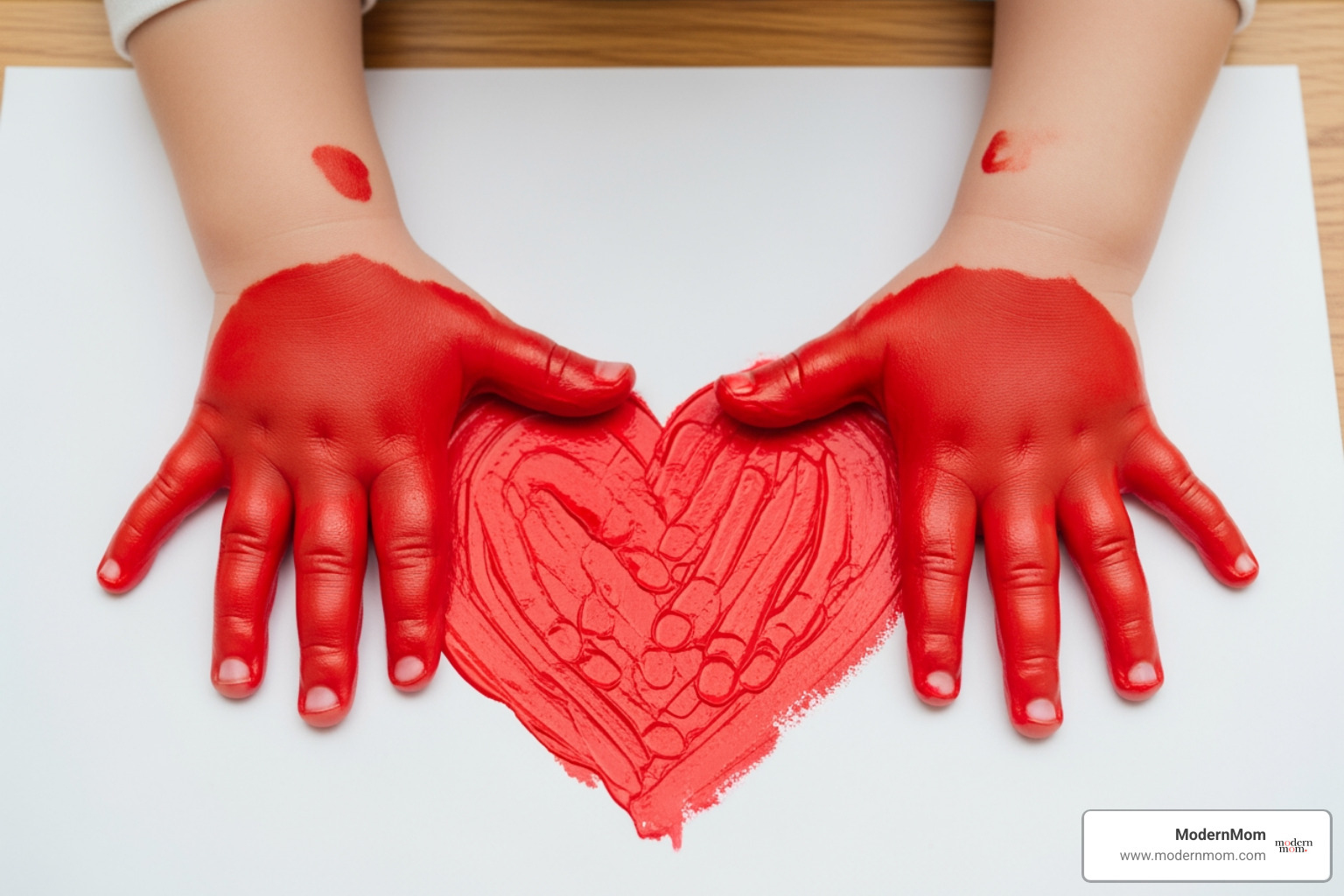
- Mess-Free Finger Painting: For toddlers who love to finger paint but you dread the mess, place a few blobs of paint inside a large Ziploc bag, add a piece of paper (or draw a heart shape on the bag), seal it, and let them squish and spread the paint. No mess, all fun!
- Handprint Cards: A classic for a reason. Paint your child’s hand (or just their palm) and press it onto a card. Once dry, you can turn the handprint into a heart or add a sweet message. Handprints are always a great gift and easy to send to loved ones.
Simple Paper Crafts for Tiny Fingers
Paper crafts are often the go-to for young children because the materials are readily available and safe. These ideas focus on tearing, gluing, and simple assembly to keep little hands busy and happy.
- Coffee Filter Heart Suncatchers: These are so pretty and let the light shine through! Kids can color coffee filters with markers, spray them with water to blend the colors, then cut them into heart shapes. Kids love using a spray bottle to watch the colors blend together magically. Hang them in windows for a beautiful Valentine’s display.
- Tissue Paper Collage: Provide various colors of tissue paper (red, pink, white), glue, and paper heart cutouts. Children can tear or cut the tissue paper into small pieces and glue them onto the heart shapes, creating vibrant, textured collages. This is a wonderful way to explore colors and textures.
- Paper Plate Hearts: Cut the center out of a paper plate to create a ring. Kids can then decorate the ring with paint, glitter, or by gluing on smaller paper hearts. Punch a hole and add a ribbon for hanging.
- Heart Tear Art: This requires zero prep time and is fantastic for fine motor skills. Simply provide different colored paper scraps and glue. Encourage kids to tear the paper into small pieces and glue them onto a larger paper to form a heart shape or a collage. It always comes out super cute!
Big Kid Creations: Easy Valentine’s Day Crafts the Whole Family Will Love
As children grow, their fine motor skills and capacity for more complex tasks expand, opening up a world of crafting possibilities. These Easy Valentine’s Day Crafts the Whole Family Will Love are perfect for school-age kids and can even become collaborative family projects, resulting in beautiful decorations or heartfelt gifts.
How to Make Your Easy Valentine’s Day Crafts More Meaningful
Personalization is key to making any craft truly special. When we infuse our creations with personal touches, they transform from simple objects into cherished keepsakes.
- Personalization is Power: Encourage kids to add names, dates, or special messages to their crafts. Whether it’s a personalized card for a grandparent or a framed button heart, these details make a huge difference. For example, a button heart craft can be made even more meaningful by framing it and adding a date.
- Adding Photos: Incorporate family photos into frames, cards, or even small decorative boxes. This makes the gift instantly more personal and nostalgic. You can even use a DIY Spray Painted Mason Jars to hold a small photo or a rolled-up message.
- Dating Keepsakes: Always encourage adding the date to any craft that might become a keepsake. Seeing how much their hand has grown or their drawing style has evolved over the years is a treasure.
- “Mail a Hug” Craft: This is a truly heartwarming idea for distant family. Have your child lie on a large sheet of paper with their arms outstretched. Trace their outline, then let them decorate it. Cut out the “hug” and fold it up to fit in an envelope with a sweet note. It’s a wonderful way to send love across the miles.
- Creating Gift Tags: Even store-bought gifts can feel more special with a handmade touch. Kids can design unique Valentine’s Day gift tags using paper, markers, and glitter.
Decorative Crafts to Brighten Your Home
Holiday decorations don’t have to be expensive or store-bought. Creating your own festive decor is a fantastic way to involve the whole family and infuse your home with love and personality.
- Paper Heart Chains: These are incredibly easy and festive, perfect for decorating stairwells, doorways, or mantels. Cut strips of red, pink, and white construction paper, then link them together with staples or glue to form a beautiful chain. You can even make a countdown calendar with a Paper Chain Countdown. This is a fun family activity that can get everyone involved.
- Paper Bag Heart Air Balloons: How cute and clever is this?! Use paper bags to create adorable heart-shaped air balloons. Decorate them and hang them from the ceiling or in windows. This is paper bag crafting at its finest!
- DIY Yarn Garland: A cozy and charming addition to your Valentine’s decor. Kids can wrap yarn around cardboard cutouts or pom-poms to create a soft, tactile garland. A yarn and pom-pom garland offers a rustic, cozy feel.
- Mason Jar Votives: Mason jars are incredibly versatile! Kids can paint them, decorate them with paper cutouts, or fill them with sand and a tea light for a warm, romantic glow. Creating a heart cut-out votive is a sweet idea, or you can try a marbled paint effect for a unique look.
- Felt Heart Trees: If you miss your Christmas trees, these are a fantastic replacement! Cut hearts from felt and stick them onto cone-shaped foam or cardboard trees. You can also make felt heart trees or yarn-wrapped trees for a cozy look.
Upcycled & Giftable Crafts for Friends and Family
Handmade gifts carry a special weight, showing the recipient just how much you care. These crafts are not only fun to make but also perfect for gifting to friends, family, or classmates. We even have some ideas that use recycled materials!
- Melted Heart Crayons: Gather all those broken crayon nubs, remove the paper, and place them in silicone heart-shaped molds. Melt them in the microwave (with adult supervision) or oven, let them cool, and pop out colorful new crayons! They make fantastic classroom gifts.
- Friendship Bracelets: Older kids will love creating personalized friendship bracelets using colorful string, beads, and charms. This is a great way to express affection for friends and develop fine motor skills. DIY Valentine’s Day bracelets are customizable and a fabulous way for kids to show affection for their friends.
- DIY Heart Wire Earrings: For teens or older family members, creating delicate wire earrings in heart shapes can be a stylish and thoughtful gift. You can find simple tutorials online for these sweet accessories.
- Seed Paper Hearts: An activity that teaches kids to reduce, reuse, and recycle! These ingenious seed paper hearts can be planted, and flowers will grow in their place. It’s a gift that keeps on giving.
- Pipe Cleaner Heart Rings: These are simple, adorable, and perfect for gifting to friends or wearing as a fun accessory. Kids can twist red or pink pipe cleaners into heart shapes to create festive rings. They’re simple to twist into shape and fun to wear.
- Personalized Mugs: Using permanent markers, kids (with supervision) can draw designs, write messages, or create patterns on plain white mugs. Bake them in the oven to set the design, making them dishwasher-safe. These make cherished gifts for parents or teachers.
Frequently Asked Questions about Family Valentine’s Crafts
We know you might have some questions as you start on your family crafting adventure. Here, we address some common concerns to help make your experience as smooth and enjoyable as possible.
What are the best easy Valentine’s Day crafts for toddlers that help with fine motor skills?
Toddlers are constantly developing, and crafting is an excellent way to support their fine motor skill development. The key is to choose activities that allow for manipulation and repetition.
- Q-tip painting: Holding the Q-tip and making small dots or strokes is fantastic for the pincer grasp. This simple yet effective activity is great for toddlers.
- Tearing paper for collages: The act of ripping paper, especially tissue paper or construction paper, helps strengthen hand muscles and improve bilateral coordination.
- Playing with playdough: Rolling, squeezing, pulling, and cutting playdough with cookie cutters builds hand strength and dexterity.
- Using stamps: Holding and pressing stamps (like the toilet paper roll heart stamps) helps with hand-eye coordination and pressure control. You can find many tutorials for DIY stamps online.
- Sensory bins: Activities involving scooping, pouring, and picking up small objects (like beans or rice) in a sensory bin refine finger movements and coordination.
Children typically don’t have the motor skills to use scissors, string beads, or paint precisely until around age 3, so focus on process-oriented crafts that are safe and engaging.
How can I adapt one craft for different age groups?
Adapting crafts for various age groups within the family ensures everyone can participate and feel successful, from your littlest one to your pre-teen. This fosters a sense of collaboration and shared joy.
- Simplifying for toddlers: For a craft like paper heart people, toddlers can focus on tearing or scribbling on paper for the “clothes” or “hair,” and you can do the cutting and assembly. For a paper chain, they can help choose colors and hand you strips to staple.
- Adding complexity for older kids: If you’re making a paper heart chain, older children can be responsible for cutting precise strips, creating intricate patterns, or even writing personalized messages on each link. For a salt dough project, they might sculpt more detailed shapes or help with baking and painting.
- Assigning age-appropriate tasks: In a collage-art project, the youngest can rip paper and glue, while preschoolers arrange pieces, and older children cut specific shapes or add fine details like glitter. For example, collage-art valentines are a great project that’s easily adaptable for a range of ages.
- Family collaboration: Encourage everyone to contribute to a larger piece, like a “love wall” filled with individual heart art. This way, each family member’s unique contribution forms a beautiful whole.
What are some tips for managing craft time mess with multiple kids?
Managing mess with multiple kids can feel like herding cats, but it’s absolutely doable with a few smart strategies. The goal is to minimize stress and maximize fun.
- Preparation is key: As we mentioned earlier, setting up a designated craft area with an old tablecloth or craft mat is crucial. Lay out all supplies beforehand, portioning out paint or glitter to prevent overuse.
- The “one messy project at a time” rule: If you have several messy crafts planned, do them sequentially. Clean up one completely before moving on to the next. This prevents a chaotic mix of materials.
- Use craft trays: Individual trays or cookie sheets for each child can contain spills, glue, and glitter, keeping their workspace tidy and preventing materials from mixing.
- Involve kids in cleanup: Make cleanup part of the activity. Even young children can help by putting caps on markers, wiping down surfaces, or throwing away scraps. Make it a game!
- Accept imperfection: Sometimes, despite your best efforts, messes happen. Take a deep breath, laugh it off, and remember that the joy and memories created are far more important than a spotless floor.
Cherish the Mess and Make the Memories
As we wrap up our guide to Easy Valentine’s Day Crafts the Whole Family Will Love, we hope you feel inspired and ready to dive into some creative fun. Valentine’s Day is a beautiful reminder to celebrate love in all its forms, and what better way to do that than by creating something with those you cherish most?
The process of crafting together is often more valuable than the finished product. Those sticky fingers, splattered paint, and quirky creations are all part of building lasting memories and traditions. At ModernMom, we believe in embracing the beautiful chaos of family life and finding joy in shared experiences. So, gather your supplies, put on some festive music, and get ready to spread some love, one craft at a time.
Happy Valentine’s Day from our family to yours!
Find the perfect Valentine’s Day gifts for everyone you love