
Why a Spring Cleaning Declutter Changes Everything
Spring cleaning declutter is the practice of removing unwanted items from your home before you start deep cleaning. It’s the secret to making the whole process less exhausting and more effective.
Quick Answer: How to Spring Cleaning Declutter
- Declutter first, clean second – Remove excess items before scrubbing or organizing.
- Start small – Begin with one drawer or a 10-minute task to build momentum.
- Sort everything – Use a 4-box system: Keep, Donate, Trash, Relocate.
- Focus on high-traffic areas – Tackle kitchen counters, closets, and entryways first.
- Remove donations immediately – Don’t let sorted items become new clutter.
You know that feeling when you finally clear a messy drawer and the whole room feels lighter? That’s the power of decluttering. Over time, our homes fill up. Research shows that 11.3 million tons of textile waste end up in U.S. landfills annually, and our homes can become overwhelmed with everything from old clothes to expired pantry items.
Here’s what most spring cleaning guides get wrong: cleaning a cluttered space is inefficient. You end up just moving piles around and dusting things you don’t even use.
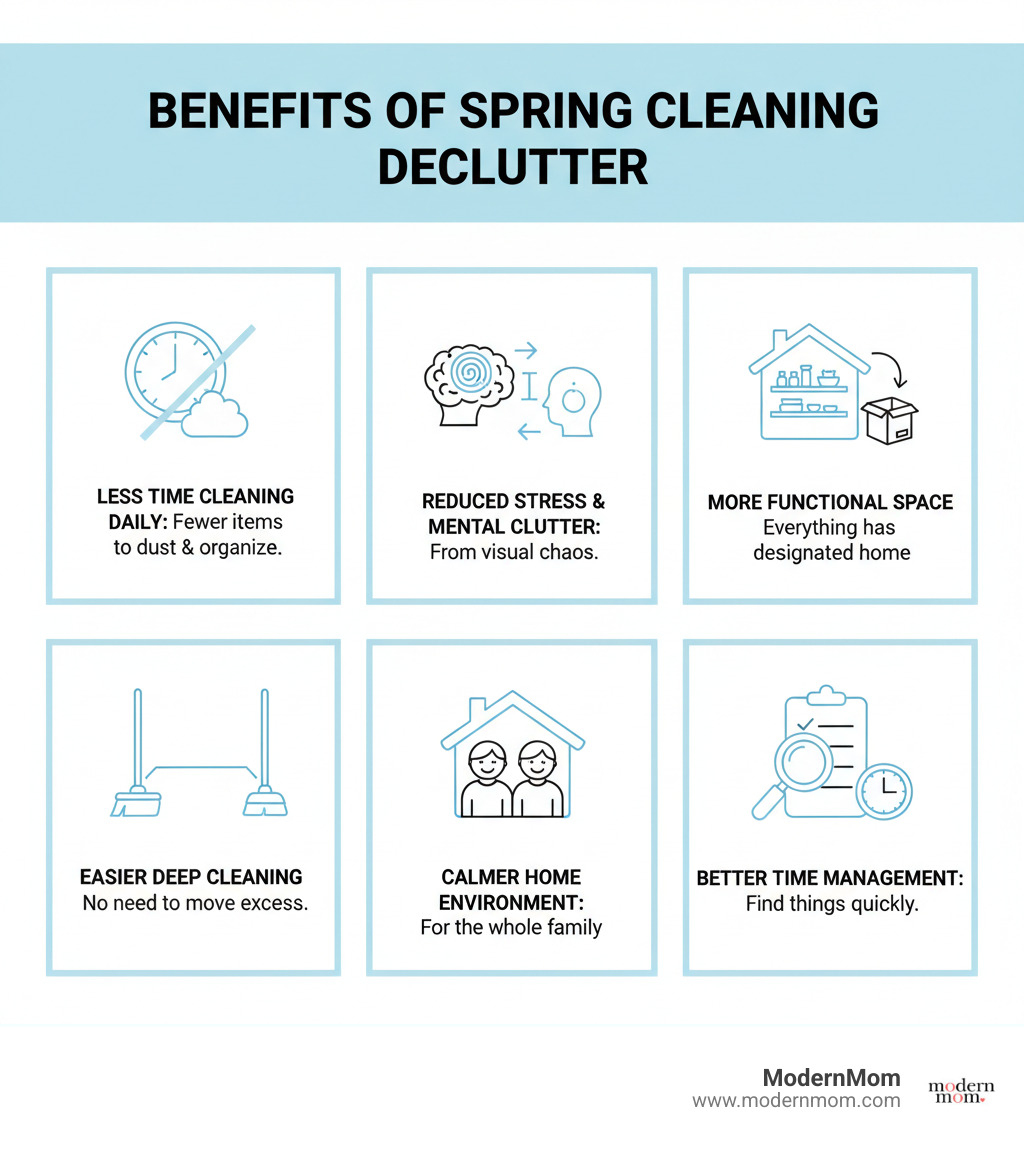
When you declutter before you clean, everything changes. You’ll spend less time shuffling stuff, your surfaces will stay clear, and deep cleaning becomes genuinely easier. The benefits go beyond a tidy home—a decluttered space reduces stress and gives you back precious time. For busy moms, that mental clarity is priceless.
This guide will walk you through exactly how to declutter your home this spring, without the overwhelm.
Why Decluttering is the Secret to a Successful Spring Clean
Picture this: you’re ready to spring clean, but you spend more time moving piles of stuff than actually cleaning. Sound familiar? The truth is, spring cleaning declutter works best when you flip the script: declutter first, then clean.
Declutter First, Clean Second
Trying to wipe down a counter covered in mail, gadgets, and receipts isn’t really cleaning—it’s shuffling clutter. When you remove the excess first, the whole process becomes easier and more efficient. You’re not dusting knickknacks you forgot you owned or vacuuming around piles of toys.
Professional organizers have said it for years: the less you own, the less there is to clean. It’s simple math. Fewer items mean less to dust, organize, and move when you’re trying to deep clean. The mental clarity that comes with this approach is huge, too. Instead of feeling overwhelmed, you can focus on the task at hand.
The Lasting Benefits of Letting Go
Decluttering is a gift you give your family and yourself. A cluttered home is mentally exhausting; studies show that visual clutter creates stress and makes it harder to focus. When you let go of the excess, your home becomes more peaceful.
You’ll also find you spend less time cleaning long-term because there’s simply less to maintain. No more digging through overstuffed drawers or reorganizing the same closet every few months.
A decluttered space can even boost your creativity and mental well-being. When your environment is calm, your mind has room to breathe. The goal isn’t perfection, but a functional space that works for your family—where you can find things easily and enjoy your home instead of constantly managing it.
Your Game Plan: How to Start Decluttering Without the Drama
The thought of decluttering your entire home can be paralyzing. But you don’t have to tackle it all at once. Small, manageable steps are what get real results.
Feeling Overwhelmed? Start Here.
The biggest obstacle to a successful spring cleaning declutter is not knowing where to begin. So, let’s make it easy.
Start with just 10 minutes. Pick one tiny area—one drawer, one shelf, one countertop—and set a timer. When it goes off, you’re done. This approach builds momentum without burnout. Clearing a single messy drawer feels good, and that small win gives you the energy to tackle another small space tomorrow.
The Simple 4-Box Sorting Method
Once you’ve chosen your area, you need a system. Enter the 4-box method. It’s simple and eliminates decision fatigue.
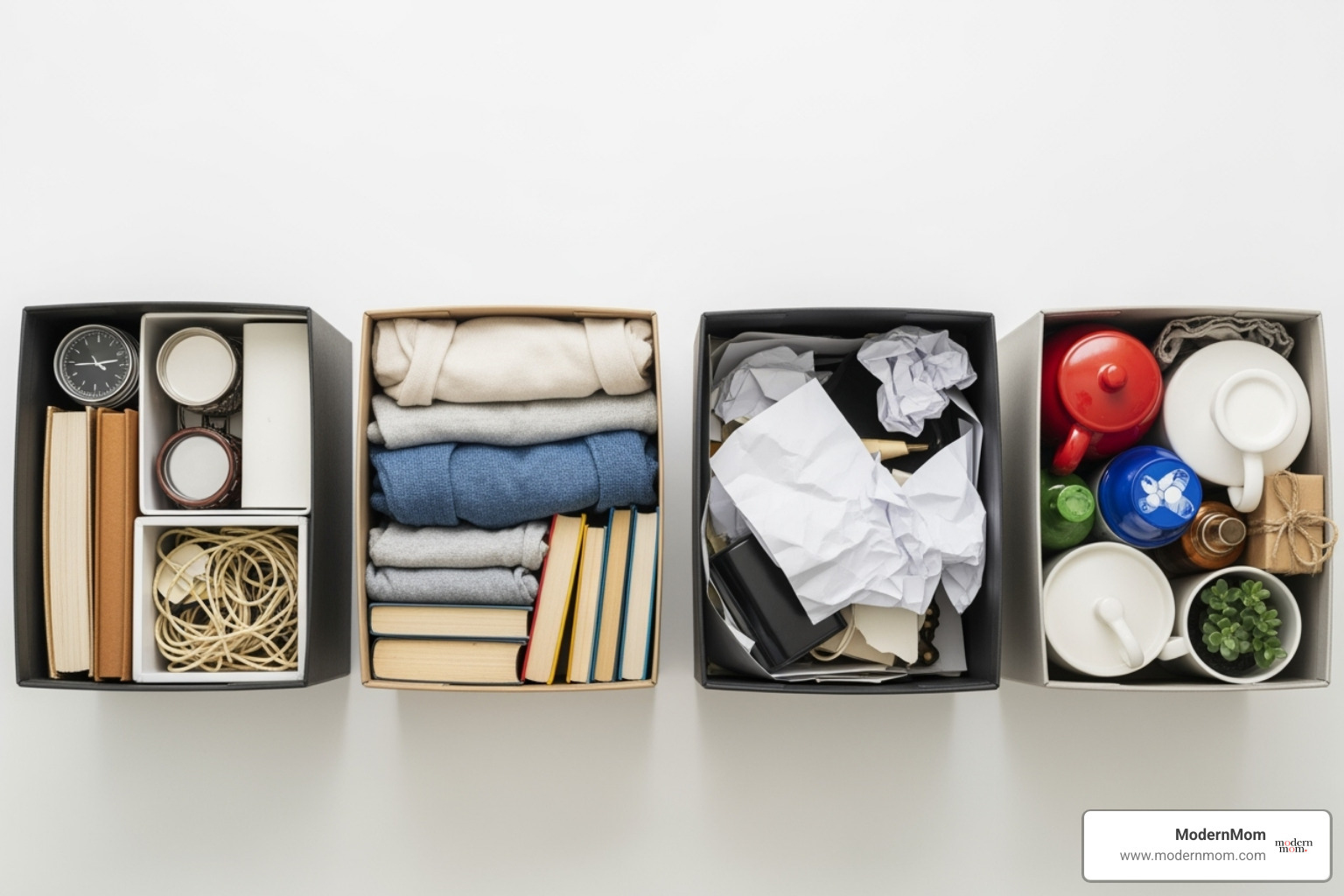
Grab four boxes and label them: Keep, Donate, Trash, and Relocate. Every item you touch goes into one of these boxes. No “maybe” pile.
- Keep: Items you love, use, and need.
- Donate: Items in good condition that no longer serve you.
- Trash: Broken, expired, or irreparable items.
- Relocate: Things that belong in another room.
As you sort, ask yourself: Do I need this? Why do I have it? This helps you make quick decisions. Once a box is full, deal with it immediately. Put the donation box in your car, take out the trash, and return relocated items to their homes.
Common Mistakes That Sabotage Your Spring Cleaning Declutter
Avoid these common traps to make your decluttering smoother and more effective:
- Buying organizers before you declutter. You might buy the wrong things or end up organizing clutter. Declutter first, then assess your storage needs.
- Trying to do everything at once. This leads to burnout and a bigger mess. Slow and steady wins this race. Start small.
- Starting with sentimental items. Build your decluttering muscles on easy things like expired food or old magazines before tackling emotionally charged items.
- Letting donations linger. That bag by the door is still clutter. Get it out of your house within a day or two before you second-guess your decisions.
- Not having a plan. Decide which area you’ll tackle, gather your boxes, and set a timer. A clear plan keeps you focused and action-oriented.
A Room-by-Room Guide to Your Spring Cleaning Declutter
You’ve got your game plan. Now it’s time to roll up your sleeves. Let’s walk through the main areas of your home, one at a time.
The Kitchen & Pantry: Clear Counters, Clear Mind
The kitchen is the heart of the home, but it’s also a clutter magnet. Here’s how to start your spring cleaning declutter:
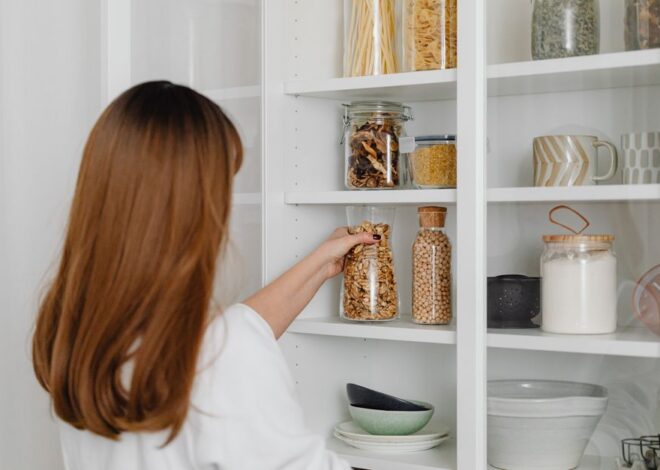
- Toss expired food. Check your pantry, fridge, and spice rack. This alone frees up a surprising amount of space.
- Assess gadgets and cookbooks. If you haven’t used that panini press in over a year, it’s time to donate it.
- Tackle food storage containers. Match lids to bases and get rid of any orphans or warped containers.
- Organize what’s left. Use clear bins and shelf dividers to group similar items. When everything has a home, your pantry stays organized longer.
- Clear the junk drawer. Empty it completely, toss the trash, and relocate items that belong elsewhere.
The Closet: Curate a Wardrobe You Actually Love
Your closet should make getting dressed easy, not stressful. A decluttered wardrobe can change your daily routine.

- Try the hanger trick. Turn all your hangers backward. As you wear an item, return it with the hanger facing forward. In six months, donate anything still on a backward hanger.
- Be honest about fit. Holding onto clothes that don’t fit just takes up space. Keep your current size and donate the rest.
- Adopt the one-in-one-out rule. When you buy something new, one old item has to go. This prevents your closet from overflowing again.
- Keep a donation bag in your closet. As you realize something no longer works for you, toss it in the bag immediately.
The Bathroom: Create a Spa-Like Sanctuary
Transform your bathroom from a storage unit into a calm retreat.
- Purge expired products. Check makeup, skincare, and medications for expiration dates. Old cosmetics can cause infections, so when in doubt, throw it out.
- Get rid of samples and duplicates. Consolidate half-used bottles and donate any unopened hotel toiletries you won’t use.
- Organize under the sink. Empty the space, wipe it down, and use small bins to keep essentials organized and accessible.
- Assess your towels. Donate frayed or scratchy towels to an animal shelter and treat yourself to fresh ones if needed.
Family Spaces: Reclaiming Calm in the Chaos
Living rooms and playrooms are where life happens, but they don’t have to be chaotic.
- Rotate toys. Keep a portion of toys accessible and store the rest. Rotate them every few weeks to keep things feeling new.
- Set limits on books and media. Donate books kids have outgrown and organize DVDs, games, and cables in one spot.
- Create designated zones. Use a basket for throw blankets or a tray for remotes. When things have a home, they’re less likely to create clutter.
- Manage kids’ artwork. Display a few favorites, take photos of the rest for a digital album, and keep only the most special pieces in a keepsake box.
Decluttering helps you create a home that tells your family’s story. When you remove the excess, the items you truly love can shine.
Finishing Strong: Smart Ways to Dispose, Digitize, and Maintain
You’ve sorted and purged. Now for the final step: getting items out of your home and keeping the clutter from coming back.
What to Do with All the Stuff You’ve Purged
Don’t let donation bags sit for months. Move items out of your life responsibly.
- Prioritize donating. Selling items online can be stressful and time-consuming. Unless an item is highly valuable, donating to a local charity is faster and feels great.
- Check donation guidelines. Animal shelters often need old towels, while thrift stores take clothing and household goods. Always check what an organization accepts.
- Remember tax deductions. Keep a list of your donations for tax time. The Salvation Army has a helpful Donation Value Guide to estimate values.
- Try the Buy Nothing Project. This is a great way to give items directly to neighbors in your community.
- Recycle electronics responsibly. E-waste contains harmful materials and shouldn’t go in the trash. Check with your local municipality or stores like Best Buy for recycling programs.
The golden rule: Get items out of your home within 48 hours. Put bags in your car immediately to drop off on your next errand run.
Go Digital to Reduce Physical Clutter
Use technology to preserve memories without the physical footprint.
- Digitize photos and documents. Scan old photos, important papers, and medical records to a cloud service. Opt for paperless bills and receipts to stop future clutter.
- Preserve kids’ artwork. Photograph or scan your favorite pieces to create a digital album. You can keep a few special items without saving every single drawing.
- Convert old media. VHS tapes and home movies degrade over time. Transfer them to a digital format to preserve those memories and reclaim space.
How to Maintain Your Spring Cleaning Declutter All Year
A spring cleaning declutter lasts when you have a maintenance plan. Consistency is key.
- Do a daily reset. Spend 5-10 minutes each evening putting things back where they belong. This prevents small messes from becoming big ones.
- Schedule a weekly tidy-up. Dedicate 30 minutes once a week to tackle any clutter hotspots.
- Stick to the one-in-one-out rule. For every new item that comes in, an old one must go out.
- Practice mindful purchasing. Before buying, ask: Do I need this? Where will it live? This stops clutter at the source.
- Do seasonal check-ins. Twice a year, do a quick review of closets and storage areas to catch clutter before it gets overwhelming.
Frequently Asked Questions about Decluttering
It’s normal to have questions on your spring cleaning declutter journey. Here are some of the most common ones.
How do I declutter sentimental items without regret?
Sentimental items are tough. The key is to curate your mementos, not collect them all. You don’t need to keep everything to honor a memory.
- Choose a few favorites. Select the pieces that bring you the most joy and display them.
- Take a photo. For items you’re ready to let go of, taking a high-quality picture can ease the process. You’re preserving the memory, just in a different format.
- Use a “maybe” box. If you’re truly stuck, put the item in a box and store it for three months. If you haven’t needed or thought about it, you can likely let it go.
What’s the best way to get my family on board with decluttering?
Getting everyone involved makes the process faster and teaches kids valuable life skills.
- Make it fun. Set a timer and challenge everyone to a 10-minute tidy-up. Offer small rewards, like picking the family movie.
- Lead by example. When kids see you decluttering your own things, they learn it’s a normal part of household life.
- Create clear, accessible homes for things. Label bins with pictures for younger kids so they know exactly where toys and supplies go.
- Involve them in decisions. For their own items, ask guiding questions like, “Which toys haven’t you played with in a while?” This gives them ownership over their space.
I decluttered, but the mess came back. What did I do wrong?
First, you didn’t do anything wrong! Clutter creep is normal, especially in a busy family home. Decluttering is a practice, not a one-time project.
The real question is what systems need adjusting. Are you doing your daily resets and weekly tidy-ups? These small habits are what keep clutter from returning.
Also, take an honest look at your shopping habits. The one-in-one-out rule is a powerful tool against clutter accumulation. Finally, don’t be afraid to re-evaluate your organization systems as your family’s needs change.
Be kind to yourself. Every home gets messy. The important thing is to recognize when it feels overwhelming and take action again. A quick reset can restore order faster than you think.
Conclusion: Enjoy Your Fresh, Clutter-Free Start
You did it! Take a moment to look around and appreciate what you’ve accomplished. That clearer counter and organized closet represent a shift toward a calmer, more functional life.
This guide showed you why a spring cleaning declutter starts with letting go. You’ve learned that removing excess items before you clean makes everything easier and that simple habits can prevent clutter from creeping back.
A decluttered space means reduced stress, more functional living areas, and time saved for what truly matters. Maintaining it isn’t about perfection; it’s about creating a space that supports your family and brings you peace.
At ModernMom, we’re here to support you through the beautiful mess of motherhood. If you’re navigating the unique challenges of creating calm spaces for children with sensory needs, you can learn more about managing home and family life with our additional resources.
Now go enjoy that fresh, clutter-free start you’ve created. You’ve earned it!