
The Ultimate Guide to Weekly Household Management: Tips, Tricks, and Sanity Savers
Why Household Management Tips Can Transform Your Daily Life
Feeling like you’re always one step behind — the laundry’s piling up, dinner’s a mystery, and your brain is running a never-ending to-do list? You’re not alone. Good household management tips can be the difference between drowning in daily chaos and actually feeling at home in your own house.
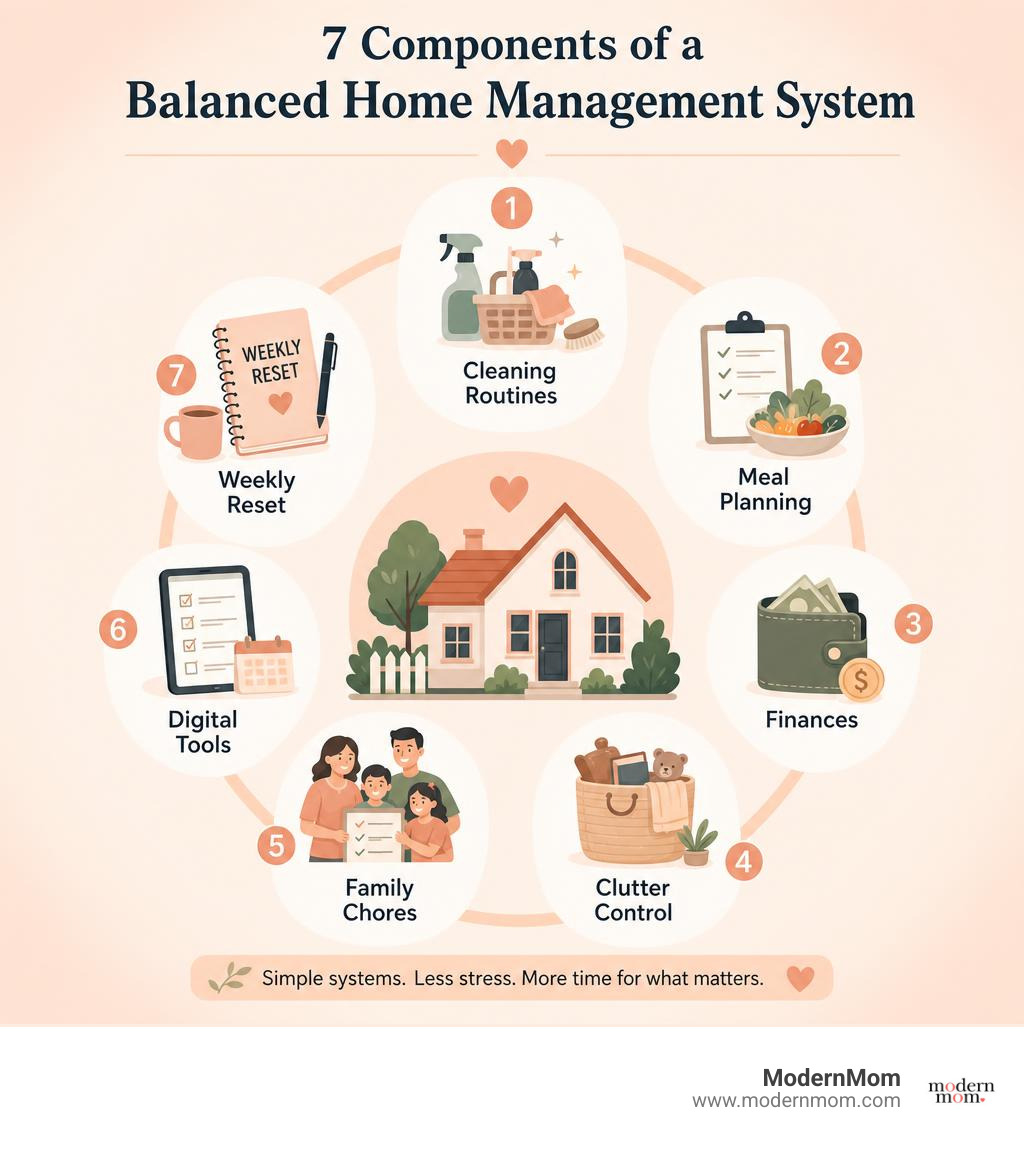
Here’s a quick snapshot of the most effective household management strategies:
| Area | Key Tip |
|---|---|
| Cleaning | Split tasks into daily, weekly, and monthly routines |
| Meal planning | Build a master dinner list and plan weekly |
| Finances | Automate bill payments and track spending weekly |
| Clutter | Use the “one in, one out” rule consistently |
| Family involvement | Assign age-appropriate chores to every household member |
| Mental load | Document routines so one person doesn’t carry everything |
| Organization | Create a centralized family command center |
The numbers tell a real story. Americans spend an average of 2.1 hours every day on household tasks — and parents of young children spend even more. The average family wastes $1,500 in food each year, and $120 in unnecessary late fees. That’s not a time problem or a money problem. That’s a systems problem.
Managing a home without a clear system is like running a business without a plan. Everything falls on one person’s memory, energy, and bandwidth. And when that person is stretched thin — which, let’s be honest, is most of the time — things fall through the cracks.
The good news? Small, consistent systems change everything. You don’t need to overhaul your entire home in a weekend. You just need a starting point.
More household management tips:
What is a Home Management System (and Why Do You Need One)?
A home management system is simply the way your household runs on purpose instead of by panic. It includes the routines, lists, calendars, chores, meal plans, budgets, and storage systems that keep daily life moving.
Think of it as your family’s operating manual. It answers questions like:
- What needs to happen every morning?
- Who is responsible for laundry?
- What are we eating this week?
- When are bills due?
- Where do important papers go?
- When does the garbage go out?
- What happens when we run out of toilet paper, dog food, or sanity?
Without a system, everything lives in one person’s brain. That creates decision fatigue, resentment, and the classic “Why am I the only one who knows we’re out of paper towels?” moment.
If you’re starting from total overwhelm, begin with one tiny area. We love this approach in How to Get Organized When You’re Overwhelmed: pick one problem, create one repeatable solution, and build from there.
For a deeper systems-first mindset, How to Be More Organized makes a helpful point: organization isn’t about trying harder forever. It’s about building structures that make the right thing easier to do.
Shifting from Chaos to Calm with Household Management Tips
The real goal isn’t a perfect house. It’s a calmer home.
The “mental load” of home life includes noticing, remembering, planning, and following up on all the invisible tasks that keep a family going. It’s not just doing the dishes. It’s knowing the dishwasher detergent is almost gone, remembering the school spirit day, and realizing someone’s favorite leggings are needed by tomorrow morning.
Simple systems reduce that mental load because they move tasks out of our heads and into visible routines. For more on that, see How to Reduce the Mental Load at Home.
Start with daily anchors:
- A morning launch routine
- An after-school drop zone routine
- A dinner routine
- An evening reset
These anchors turn “What now?” into “We know what comes next.” That’s where the calm begins.
7 Essential Household Management Tips for Busy Families
The best household management tips are the ones you’ll actually use when everyone is tired, the toddler is sticky, and someone just remembered they need poster board by morning.
So instead of complicated systems, we’re focusing on practical habits that work in real homes.
1. Establish Daily Anchors and Micro-Routines
Daily anchors are small routines attached to moments that already happen. They work because they don’t require a fresh burst of motivation every day.
Try these:
- Morning: Make beds, start one load of laundry, unload the dishwasher.
- After school: Shoes on the mat, backpacks on hooks, papers in the tray.
- Dinner: Clear counters, load dishes, pack tomorrow’s lunches.
- Evening: Ten-minute family reset before screens or bedtime.
We’re big fans of “habit stacking,” which means pairing a new task with something you already do. While coffee brews, wipe counters, sort mail, or start laundry. Need ideas? Try 5 Things to Tidy Up While Your Morning Coffee is Getting Ready.
Also use the two-minute rule: if it takes less than two minutes, do it now. Hang the coat. Toss the junk mail. Put the shoes away. Tiny tasks become giant piles when they’re ignored.
2. Create a Weekly Reset Routine
A weekly reset is your household’s “catch-up without chaos” ritual. It’s not a six-hour cleaning marathon. It’s a focused check-in that gets the next week ready.
A simple Sunday reset might include:
- Review the family calendar.
- Choose meals for the week.
- Make a grocery list.
- Reset the fridge.
- Wash key laundry loads.
- Tidy entryways and bathrooms.
- Check school forms, sports gear, and appointments.
Batching similar tasks saves mental energy. Instead of doing laundry in random panic cycles, create a laundry loop: wash, dry, fold, put away. Yes, the “put away” part counts. Sadly, laundry does not finish itself. We’ve checked.
Weekly cleaning should include bathrooms, floors, sheets, surfaces, and high-use zones. Monthly chores can include vents, baseboards, blinds, appliances, and specialty cleaning like How to Clean Exercise Mats.
3. Build a Centralized Family Command Center
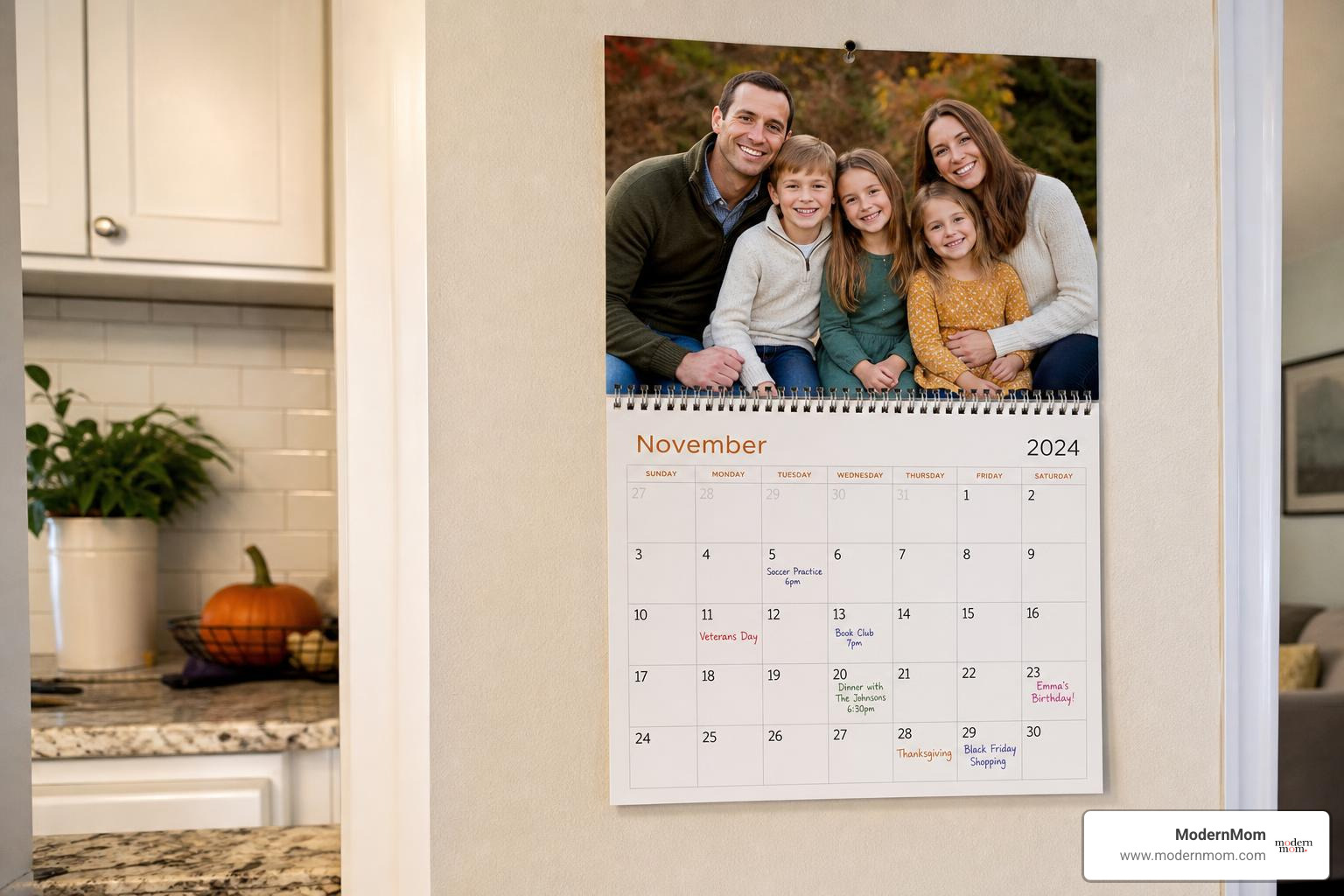
A family command center is one place where household information lands. It can be a wall calendar, paper planner, digital dashboard, fridge station, or a mix.
Include:
- Shared calendar
- Meal plan
- School papers
- Mail sorter
- Chore chart
- Grocery list
- Important reminders
- Drop zone for keys, wallets, and backpacks
The goal is communication flow. Everyone should know where to look before asking, “What time is soccer?” for the fourth time.
A simple command center near the kitchen or entryway works well because those are the traffic zones of family life. Add hooks, trays, labels, and a visible weekly calendar.
4. Master the Art of “Set It and Forget It” Meal Planning
Meal planning doesn’t have to mean gourmet recipes and perfectly portioned containers. It can be much simpler.
Start with a master dinner list of 20 to 30 meals your family actually eats. Not aspirational meals. Real meals. The tacos, pasta, breakfast-for-dinner, sheet pan chicken, and “everyone will survive” quesadillas.
Then build your week from that list.
Try theme nights:
- Monday: Pasta
- Tuesday: Tacos
- Wednesday: Slow cooker
- Thursday: Leftovers
- Friday: Pizza or takeout
- Saturday: Grill or sheet pan
- Sunday: Soup, roast, or prep meal
This reduces decision fatigue and food waste. Since the average family wastes about $1,500 worth of food per year, even a basic meal plan can protect the budget.
Time-saving meal habits:
- Shop from your pantry first.
- Use grocery pickup when possible.
- Prep ingredients, not always full meals.
- Thaw meat one to two days ahead.
- Double recipes and freeze half.
- Keep a running grocery list everyone can access.
5. Automate and Track Your Household Finances
Money management is home management. Bills, subscriptions, groceries, school fees, sports costs, medical expenses, and household repairs all affect family stress.
Start with three systems:
- Automate fixed bills.
- Track spending weekly.
- Review goals monthly.
Automation helps prevent late fees, but don’t “set it and forget it” completely. The average American pays around $120 per year in unnecessary late fees, and forgotten subscriptions can quietly drain a budget.
A weekly money check-in can take 15 minutes:
- Review recent purchases.
- Check upcoming bills.
- Update budget categories.
- Look at grocery spending.
- Confirm automatic payments cleared.
- Adjust for upcoming events or repairs.
Research shared in the household management space suggests that households that track spending weekly save significantly more over the year than those that don’t. Even if the exact amount varies by family, the habit is powerful because it keeps money visible.
6. Implement the “One In, One Out” Clutter Rule
Clutter is not just stuff. It’s visual noise. It constantly reminds us there is more to do.
The “one in, one out” rule is simple: when something new comes into the house, something similar leaves.
Use it for:
- Clothes
- Toys
- Water bottles
- Shoes
- Kitchen gadgets
- Books
- Beauty products
- Kids’ art supplies
Before buying another storage bin, declutter first. Otherwise, we’re just giving clutter a cute little apartment.
For quick wins, focus on high-impact zones:
- Kitchen counters
- Entryway
- Bathroom sink
- Laundry area
- Nightstands
- Kids’ backpack station
Need more ideas? Start with Home Organization Hacks or Hack Your Home Quick Easy Decluttering Secrets.
7. Use Smart Digital Tools to Consolidate Tasks
Digital tools can be wonderful, but too many apps can create another kind of clutter. The best system is the one your family will actually check.
Useful tools include:
- Shared calendar
- Shared grocery list
- Notes app or digital binder
- Budget tracker
- Task app
- Cloud folder for important documents
- Recurring reminders for bills, refills, and appointments
Create digital files for:
- Medical information
- School contacts
- Insurance documents
- Pet records
- Emergency contacts
- Home maintenance notes
- Babysitter instructions
The key is consolidation. If your grocery list is in one app, appointments in another, chores on paper, and bills in someone’s inbox, the system depends on memory again.
Sharing the Load: How to Divide Chores Fairly

Household management should not belong to one person by default. A home is shared, so the work of running it should be shared too.
Fair doesn’t always mean 50/50. Fair may change based on paid work hours, commute, health, pregnancy, newborn stages, caregiving for aging parents, or intense work seasons.
What matters is that everyone understands the workload and owns real responsibilities.
| Traditional Chore Division | Domain Ownership |
|---|---|
| “Can you help with dinner?” | “You own Tuesday and Thursday dinners.” |
| One person reminds everyone | Each person tracks their own area |
| Tasks are assigned randomly | Responsibilities are clear and recurring |
| One partner manages the list | The system manages the list |
| Help can feel optional | Ownership includes planning, doing, and follow-up |
Practical Household Management Tips for Partner Collaboration
Start with a 15-minute weekly meeting. Keep it short and practical.
Use this script:
- What worked this week?
- What felt stressful?
- What’s coming up next week?
- What supplies do we need?
- Who owns which tasks?
Give each adult full ownership of a domain. For example, one person owns school forms from email to backpack. Another owns meal planning from list to groceries. Ownership means no hovering, no micromanaging, and no redoing someone else’s work because they folded towels “wrong.” Towels are not a moral issue.
If your relationship is under strain, household stress can make everything feel heavier. ModernMom also has supportive relationship guidance, including making your marriage work after separation.
Getting the Kids Involved with Age-Appropriate Chores
Kids can help earlier than many of us think. Research has linked regular chores starting around ages three or four with stronger self-sufficiency, better relationships, and later academic success.
Age-appropriate ideas:
- Ages 3-5: Put toys in bins, match socks, wipe small spills, feed pets with help.
- Ages 6-8: Make bed, clear dishes, sort laundry, pack backpack.
- Ages 9-12: Take out trash, load dishwasher, help prep food, vacuum.
- Teens: Cook simple meals, do laundry, manage pet care, help with errands.
Keep chores specific and visible. “Clean your room” is vague. “Put dirty clothes in hamper, books on shelf, and trash in bin” works better.
Praise effort, not perfection. The goal is life skills, not showroom-level baseboards.
Frequently Asked Questions About Household Management
How do I start a home management system when I’m completely overwhelmed?
Start with three daily tasks. That’s it.
Choose the three that will make tomorrow easier, such as:
- Run the dishwasher at night.
- Start one load of laundry.
- Review tomorrow’s calendar.
Once those feel automatic, add one weekly reset habit. Grace over perfection is the whole game.
How much time do these systems actually save?
It depends on your household, but the biggest win is often mental freedom. When routines are visible and repeated, you spend less time deciding, reminding, searching, and recovering from forgotten tasks.
Batching errands, laundry, meal planning, and admin work can also reduce wasted transition time. Even saving 20 to 30 minutes a day adds up quickly over a week.
What are the best tools for digital home organization?
The best tools are simple, shared, and easy to update.
Look for:
- Calendar syncing
- Shared lists
- Recurring reminders
- File storage
- Task assignments
- Notes or templates
A digital binder can work beautifully for emergency contacts, school info, medical details, babysitter notes, and home maintenance records. Pair it with one visible family calendar so everyone stays in the loop.
Conclusion
Household management isn’t about becoming a perfect homemaker, a productivity robot, or the kind of person who alphabetizes the spice drawer for fun. It’s about creating a home that supports the people living in it.
Start small. Pick one routine, one list, one command center, or one weekly reset. Let your systems grow with your family.
And remember: if the laundry is clean but unfolded, dinner is simple, and everyone knows where tomorrow’s shoes are, we’re calling that a win.