

Why Your Family Morning Routine Is Making or Breaking Your Day
A morning routine family can follow doesn’t have to feel like a daily battle — but for most tired parents, it does.
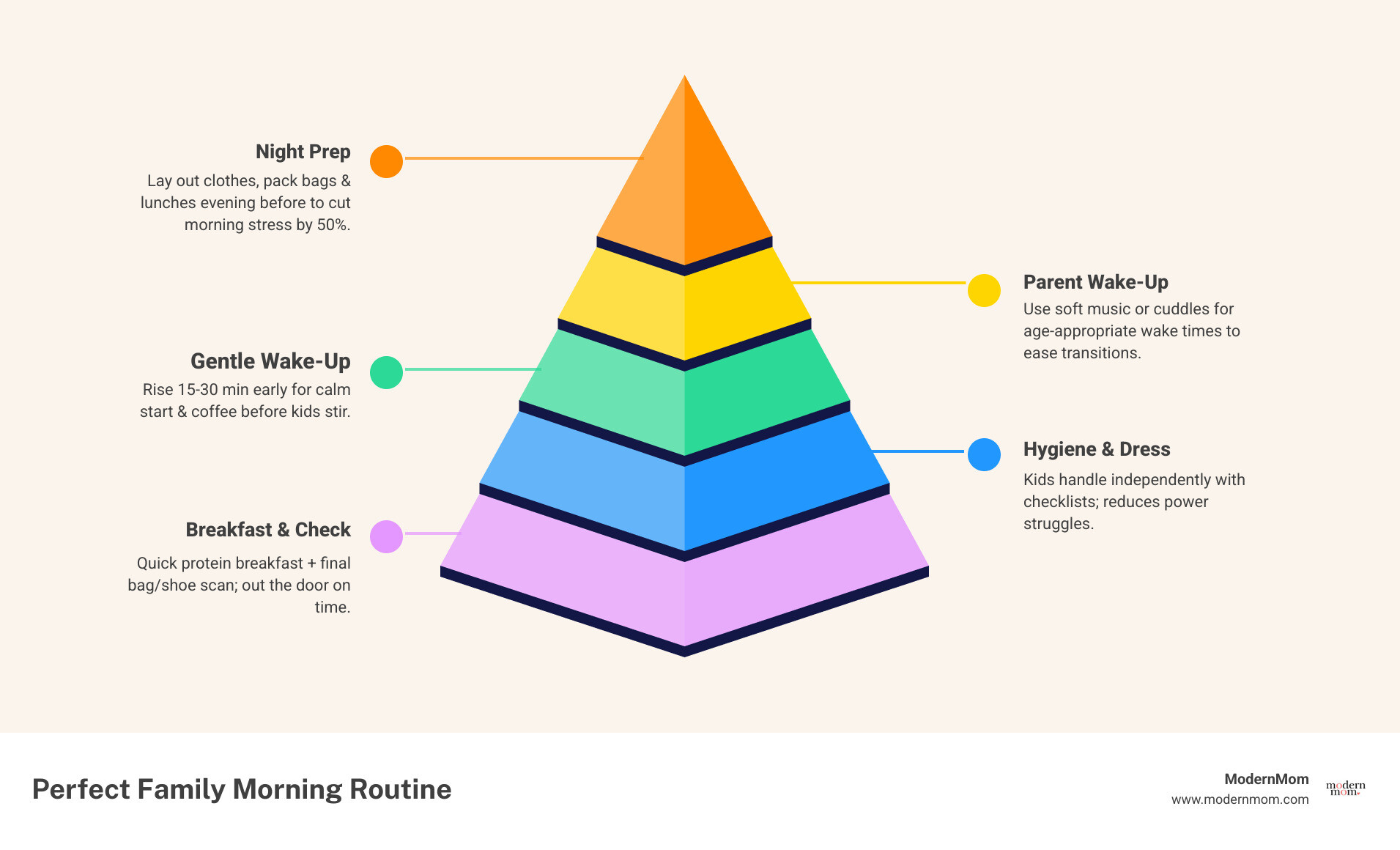
Here’s a quick snapshot of what an effective family morning routine looks like:
| Step | When | Who |
|---|---|---|
| Night-before prep (bags, clothes, lunches) | Evening | Parents + older kids |
| Parent wakes up first | 15–30 min before kids | Parent |
| Gentle wake-up for kids | Age-appropriate time | Parent |
| Hygiene + getting dressed | Right after waking | Kids (with help if needed) |
| Quick, healthy breakfast | Before leaving | Whole family |
| Final check (bags, shoes, lunch) | 5 min before door | Everyone |
| Out the door — on time | Target departure time | Whole family |
Sound familiar? You set the alarm with good intentions, but somehow one missing shoe, one slow-moving toddler, or one forgotten permission slip turns everything sideways. Research backs up what you already feel in your bones: cortisol — the stress hormone — spikes within 30 to 45 minutes of waking up. When mornings are chaotic, that stress ripples through everyone’s entire day.
The good news? A few simple, consistent habits can completely change how your mornings feel. Not perfect — just calmer.
This guide is here to help you build a morning routine that actually works for your family, whether you’re wrangling toddlers, tweens, or both at the same time.
Why a Consistent Routine Matters for Your Sanity
We’ve all been there: standing in the kitchen, coffee-less, while a toddler refuses to put on socks and a teenager can’t find their laptop charger. It’s exhausting. But establishing a morning routine family members can count on isn’t just about logistics; it’s about mental health.
Experts note that routines bring predictability and security into our lives. For children, knowing exactly what comes next reduces anxiety. When a child knows that “breakfast comes after dressing,” they feel more in control of their environment. This sense of order helps minimize those “power struggle” meltdowns that happen when kids feel rushed or blindsided by transitions.
Furthermore, a smooth morning sets the emotional tone for the next eight hours. If we start the day yelling, we carry that guilt into our workday, and our kids carry that stress into their classrooms. By slowing down and creating predictable habits, we foster emotional regulation. It’s one of the 7 habits of highly successful moms for a reason—it protects your peace.
The Secret Sauce: Preparation the Night Before
If you want a calm morning, you have to win the night before. Think of your evening as setting up a “launch pad” for the next day. The less decision-making you have to do at 7:00 AM, the better.
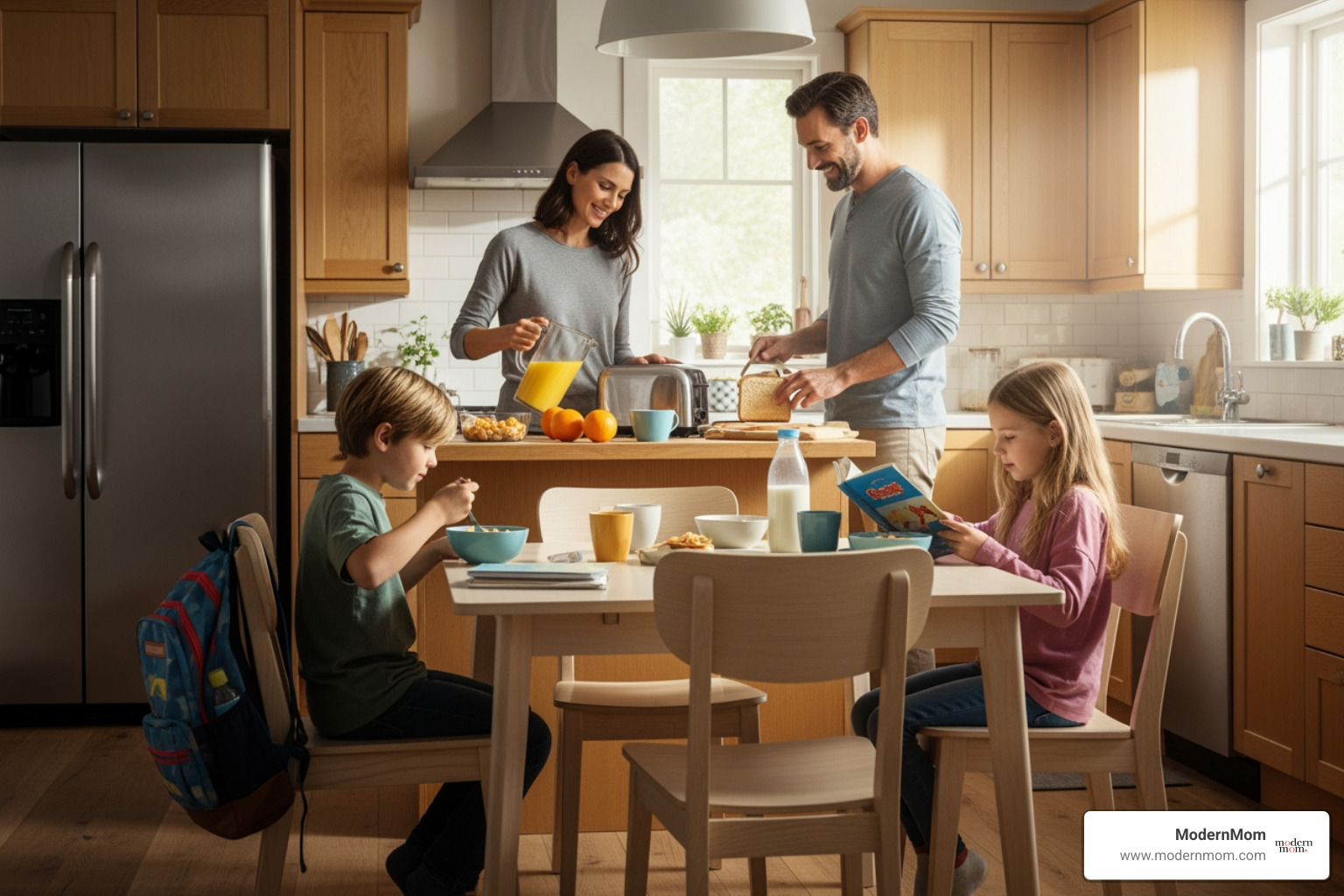
One of the most effective strategies we’ve found is the “10-minute tidy.” Before you head to bed, do a quick sweep of the common areas. Clear the kitchen counters and ensure the “launch pad”—a designated spot by the door for backpacks, shoes, and coats—is ready to go.
Here are a few night-before essentials to include in your morning routine family plan:
- The Outfit Bin: Avoid the “I have nothing to wear” drama by having kids pick out their full outfit (down to the socks and underwear) the night before. Some moms swear by hanging organizers that hold five days of outfits at once.
- Lunch Prep: Pack the non-perishables at night. If you’re feeling fancy, use bento boxes to keep things organized and fun.
- Device Check: Ensure tablets and laptops are plugged in and charging in a central location—not in the bedrooms—to avoid morning battery panics.
- The “When-Then” Menu: Decide what’s for breakfast. Eliminate the “What do you want?” “I don’t know” cycle by setting a fixed menu (e.g., Oatmeal Tuesdays, Smoothie Fridays).
Essential Steps for a Smooth morning routine family
The way we wake our children up matters. Instead of shouting from the hallway, try a gentler approach. Neuroscientists suggest waking kids a few minutes earlier than necessary to allow their brains to transition slowly. A soft rub on the shoulder or a few minutes of quiet snuggling can prevent the immediate cortisol spike that comes with a “hurry up!” greeting.
Once they are awake, the goal is independence. We want our kids to feel competent. This is where a morning routine family checklist becomes your best friend. For younger kids, use a visual chart with pictures showing them brushing teeth, getting dressed, and making their bed.
Experts point out that checking off these tasks builds a child’s confidence. They stop being “bossed around” and start taking ownership of their day.
Fueling Up with Quick Breakfasts
The American Academy of Pediatrics (AAP) is clear: students who eat breakfast have better concentration and more energy. However, “breakfast” doesn’t have to mean a three-course meal.
Focus on protein and fiber to keep blood sugar stable. Some of our favorite go-to ideas include:
- morning coffee (for you, obviously!) and a small oatmeal with collagen protein and blueberries.
- Easy Breakfast Smoothies: Prep the fruit bags in the freezer over the weekend so you just have to add milk or yogurt and blend.
- Overnight Oatmeal: Mix oats, chia seeds, and milk in a jar the night before. It’s ready the moment they wake up.
- Make-Ahead Breakfast Sandwiches: Spend one Sunday morning making a batch of egg and cheese muffins, freeze them, and pop them in the microwave for 60 seconds.
Customizing the morning routine family for Different Ages
As your kids grow, your morning routine family needs to evolve. Self-Determination Theory (SDT) tells us that for kids to be motivated, they need to feel a sense of competence and autonomy.
- Toddlers (Ages 2-4): Focus on “Relatedness.” They need lots of connection. Give them simple choices: “Do you want the blue bowl or the green bowl?”
- School-Age (Ages 5-10): Focus on “Competence.” Teach them how to make their own toast or pack their own water bottle. Use a morning routine chart to let them track their progress.
- Tweens and Teens (Ages 11+): Focus on “Autonomy.” Let them set their own alarms. Their job is to manage their time; your job is to be the safety net, not the drill sergeant.
Troubleshooting Your morning routine family
Even the most perfect plan will hit a snag. Maybe the toddler is having a meltdown over the “wrong” dinosaur shirt, or the dog threw up on the rug. When things go south, remember: connection over correction.
One of our favorite tools is the “When… Then” approach. It structures the morning so the “yucky” stuff happens before the “fun” stuff. For example: “When your teeth are brushed and your shoes are on, then you can have five minutes of iPad time before we leave.” This removes the need for nagging and puts the responsibility on the child.
If you find yourself yelling, stop and whisper. It sounds crazy, but whispering often gets a child’s attention faster than shouting, and it forces you to regulate your own emotions. If the morning is a total train wreck, give yourself grace. You can always hit the “reset” button in the car with a favorite “pump-up song” or a quick joke.
The Foundation of Success: Quality Sleep
You cannot have a successful morning routine family if everyone is sleep-deprived. It is the literal foundation of a happy home. According to the Centers for Disease Control and Prevention (CDC), kids between 6-12 years old need at least nine hours of sleep, while teens need eight to ten.
To ensure a good night’s rest:
- Set a Digital Sunset: All screens should go off at least one hour before bed.
- Cool and Dark: Keep bedrooms slightly cool and use blackout curtains.
- Consistency: Keep the same bedtime even on weekends (within an hour) to keep the internal clock steady.
If you’re struggling with a little one who won’t stay in bed, look for gentle baby and toddler sleep solutions that focus on comfort and consistency. Better sleep for them means a much easier wake-up call for you!
Frequently Asked Questions about Family Mornings
How can I find “me time” in the morning?
We know it sounds impossible, but waking up just 15–30 minutes before your kids can change your entire perspective. Use this time for morning coffee, reading your Bible, or writing in a gratitude journal. Starting the day with your “cup full” allows you to pour into your family without resentment. For more tips, see our guide on top-ten-ways-to-sneak-in-some-me-time.
What if I’m managing morning sickness and kids?
Oh mama, we feel for you. Morning sickness is a misnomer—it can last all day! If you’re in the thick of it, this is the time to delegate. Ask your partner to handle the breakfast and school run. Keep crackers by your bed and move slowly. If you’re wondering if that queasiness is the real deal, read up on how-soon-after-conception-does-morning-sickness-start.
How do I motivate a child who refuses to get dressed?
Choice is the antidote to rebellion. Instead of saying “Put on your pants,” try “Do you want the jeans or the soft joggers today?” If they still refuse, use natural consequences. “If we don’t get dressed now, we won’t have time for your favorite music in the car.” Most importantly, stay calm. If you escalate, they will too.
Conclusion
At ModernMom, we know that parenting is a journey filled with grace, flexibility, and intentional living. Creating a morning routine family that works for you isn’t about having a Pinterest-perfect home or kids who never whine. It’s about finding a rhythm that brings a little more calm and connection to your days.
Some mornings will be beautiful, filled with laughter and hot coffee. Others will involve spilled milk and a lost left shoe. Both are okay. The goal is to build a foundation of habits that support your family’s well-being so you can focus on what really matters: the people inside your home.
You’ve got this! And remember, sometimes the best routine is the one that allows for a little extra snuggling on a rainy Tuesday. For more on navigating the ups and downs of family life, explore our resources on how to make marriage work after separation.