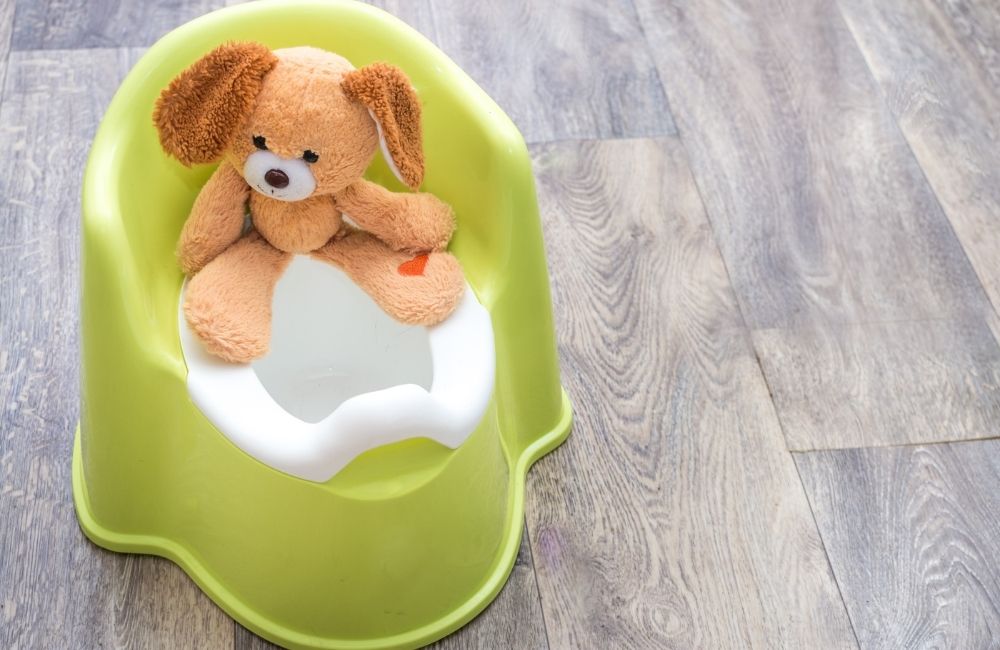
Learning to use the potty is a complicated process, and many families run into potty training problems along the way. Children have to be physically and emotionally ready to use the potty, be willing to try, and be in a stable environment that supports the independence needed for successful potty training. While these problems can cause minor setbacks, most are common and fairly easy to overcome with patience and consistency.
Readiness
When a parent wants to potty train a child that isn’t ready, it can result in problems. Most children are ready to begin potty training between the ages of 2 and 3, but the child’s age shouldn’t be the only reason potty training is started. A child who is ready to being potty training shows interest in using the potty, stays dry for a few hours at a time, can dress and undress herself with minimal assistance, and can express when she has to use the potty or when she has just eliminated in her diaper. Potty training a child who isn’t ready can lead to frustration and failure. It can also prolong the potty training process. If a child isn’t ready to potty train, stop the process and try again when she displays the signs of readiness.
Refusal
During potty training, it’s not uncommon for a child to refuse to sit on or use the potty. Children can control two things–what goes into their little bodies, and what comes out of them. When a child is pressured to use the potty, he’ll often refuse because he doesn’t want to do what he is being told to do. Since most potty training children are toddlers who are learning about independence and about the power that comes with saying “no,” this makes perfect sense. To avoid engaging in a power struggle, offer the child a small reward for sitting on the potty. Having an assortment of candy, plastic toys or other items that will greatly interest the child and allowing him to pick his own reward, can help the child feel like he has some control of the potty training process. When the child feels like he has control, he is less likely to refuse to use the potty.
Regression
Potty training can be stressful in and of itself. Introducing anything new into a child’s routine while potty training or immediately after is bound to cause regression. Children are more likely to successfully potty train if their home life is stable and they have a consistent daily routine. If potty training is started just prior to the birth of a new baby, a move, a change in caregiver or any other major change that will directly impact the child, regression is likely. To avoid this problem, choose a time to potty train when no other big transitions are on the horizon.
Working through Potty Training Problems takes Patience
Potty training problems can feel frustrating in the moment, but they are a normal part of the learning process for many children. Readiness issues, refusal, accidents, and regression do not necessarily mean that potty training has failed. In many cases, they simply mean that a child needs more time, more consistency, or a calmer approach. Parents can make the process easier by watching for signs of readiness, avoiding pressure, keeping potty routines predictable, and offering encouragement when a child makes progress. If a child refuses to use the potty or suddenly starts having accidents again, it may be worth looking at what else is happening in the child’s life. A new sibling, a move, a change in daycare, or even a disrupted routine can affect potty training. Instead of turning the situation into a power struggle, take a step back, reassure your child, and return to the routine when things feel more settled. Most children eventually learn to use the potty successfully, especially when they feel supported rather than rushed. With patience, flexibility, and a positive attitude, parents can work through common potty training problems and help their child build confidence one small step at a time.