
The Ultimate Guide to Postpartum Exercise: What Every New Mom Needs to Know
Your Body After Baby: Why a Post Partum Workout Matters
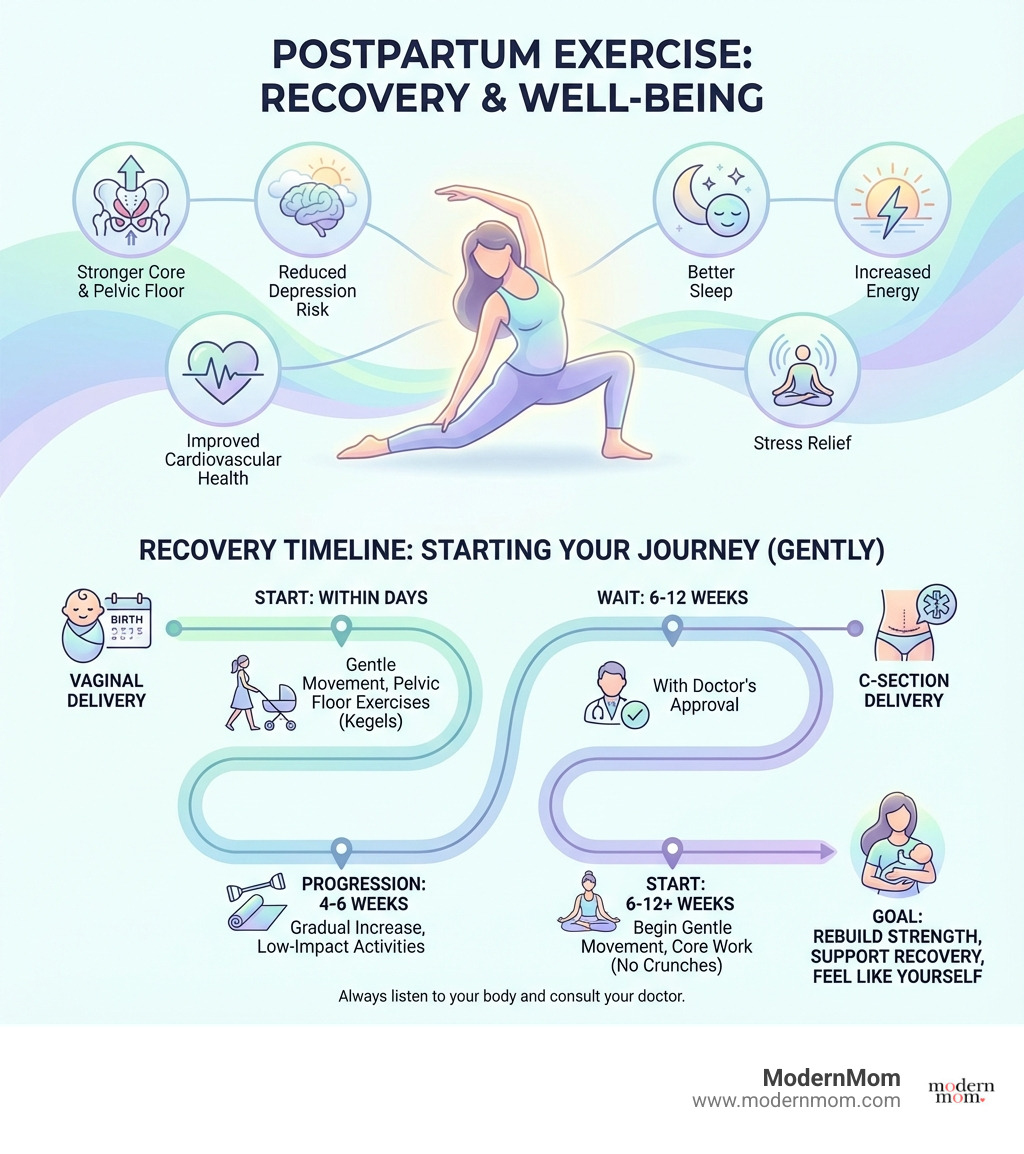
A post partum workout is safe to start a few days after a healthy vaginal delivery, or 6-12 weeks after a C-section with your doctor’s approval. The goal isn’t to “bounce back” — it’s to rebuild strength, support your recovery, and feel like yourself again.
Quick Guide to Getting Started:
- When to start: Gentle movement (walking, pelvic floor exercises) can begin within days of vaginal delivery; wait 6-12 weeks after C-section
- How much: Aim for 20-30 minutes daily, building up to 150 minutes of moderate activity per week
- What to do: Start with walking, pelvic floor exercises (Kegels), gentle core work, and low-impact activities
- What to avoid: High-impact exercise, traditional crunches, and heavy lifting for at least 12 weeks
- Warning signs: Stop if you experience pain, increased bleeding, dizziness, or pelvic pressure
Your body just did something incredible. It grew and delivered a baby. Now it needs time to heal — and the right kind of movement can help.
You might feel pressure to “get your body back.” Social media doesn’t help. But here’s the truth: postpartum fitness isn’t about looking a certain way. It’s about feeling strong enough to carry your baby, managing stress, sleeping better, and reducing your risk of postpartum depression.
This guide will walk you through everything you need to know about a post partum workout — when to start, which exercises are safe, how to rebuild your core and pelvic floor, and how to fit it all into your new (very full) life. We’ll keep it practical, realistic, and focused on what actually matters: your health and well-being.
At Modern Mom, we’ve gathered expert advice from obstetricians, physical therapists, and real moms who’ve been through this journey. Whether you’re fresh out of the hospital or several months postpartum, you’ll find actionable steps you can take today — at your own pace, on your own terms.
The “When” and “Why”: Your Postpartum Recovery Timeline
Starting on a post partum workout journey offers a wealth of benefits that extend far beyond physical appearance. Regular exercise can significantly improve your overall well-being during this transformative time.
Physically, moving your body helps with weight management, strengthens and tones abdominal muscles, and improves cardiovascular fitness. These changes help you regain strength to handle the daily demands of motherhood, like carrying your growing baby, hauling car seats, and getting through those long days on little sleep.
Mentally, exercise is a powerful mood booster. Physical activity during the postpartum period can improve mental well-being by reducing stress and may even reduce the risk of postpartum depression, as studies have shown. It can feel like a reset button on a demanding day. Many new moms also notice that even moderate exercise can lead to better sleep quality, a precious commodity in those early months.
The Department of Health and Human Services recommends at least 150 minutes a week of moderate-intensity aerobic activity for most healthy women after pregnancy, preferably spread throughout the week. The American College of Obstetricians and Gynecologists (ACOG) echoes this, suggesting 20-30 minutes a day to reach that weekly goal.
When to Start Exercising
The timing for starting a post partum workout largely depends on your individual recovery and the type of birth you experienced. For women who had a healthy pregnancy and normal vaginal delivery, it’s usually safe to begin very gentle exercise a few days after giving birth or as soon as you feel ready. In those early days, that might simply mean slow walks around your home, light stretching, or basic pelvic floor engagement.
However, if you had a C-section, extensive vaginal repair, or a complicated birth, your recovery timeline will be longer. A C-section is major abdominal surgery, and your body needs adequate time to heal. In these cases, it’s crucial to talk to your healthcare provider about when you can safely start an exercise program. Generally, most women can begin gentle movement around 6 weeks postpartum, once they’ve been cleared by their doctor or midwife. Avoid high-effort activity for the first 12 weeks after giving birth, regardless of delivery method.
Always listen to your body. It’s a journey of gradual progression, not a race. Your mental and physical health are far more valuable than any number on a scale or how quickly you fit into old clothes. For more detailed guidance, you can always consult the ACOG recommendations on exercise after pregnancy.
Warning Signs to Slow Down
Your body sends clear signals when it needs more time to recover or when you’re pushing too hard. It’s important to pay attention to these signs and adjust your post partum workout accordingly.
Stop exercising immediately and consult your doctor if you experience any of the following:
- Pain or discomfort: Any sharp, persistent, or increasing pain during or after exercise is a red flag.
- Increased bleeding (lochia): If your vaginal bleeding becomes heavier, turns bright red, or restarts after having stopped, it’s a sign you need to rest.
- Dizziness or lightheadedness: This could indicate dehydration, low blood pressure, or overexertion.
- Pelvic pressure or heaviness: A feeling of pressure or something “falling out” in your pelvis could be a sign of pelvic floor dysfunction or prolapse.
- Incontinence during exercise: Leaking urine or stool, or struggling to control gas, means your pelvic floor might not be ready for the activity.
- Excessive fatigue or prolonged muscle soreness: While some muscle soreness is normal, feeling utterly exhausted or having soreness that lasts for days can indicate overtraining.
- Lifted morning resting heart rate: If your resting heart rate in the morning is significantly higher than usual (for example, more than 10 beats per minute above what’s normal for you), it might be a sign your body needs more rest.
It’s okay to slow down or take extra rest days. Giving yourself grace and listening to your body are key components of a healthy postpartum recovery.
The Foundation First: Core and Pelvic Floor Healing
After pregnancy and childbirth, our bodies have undergone immense changes, particularly in the core and pelvic floor. Before diving into intense workouts, focus on healing and strengthening these foundational areas. The deep core, which includes the transverse abdominis, multifidus, diaphragm, and pelvic floor muscles, plays a crucial role in stability, posture, and preventing common postpartum issues.
The pelvic floor muscles support major organs, help with continence, and are vital for sexual function. Pregnancy and birth can significantly weaken or damage these muscles. This is why pelvic floor exercises are essential for postpartum recovery.
One common concern for new moms is diastasis recti, where your rectus abdominis muscles (your “six-pack” abs) may separate during pregnancy. This can result in a visible ridge running down the middle of your stomach, paired with a feeling of weakness in the core, and can cause lower back pain or pain during sex. Addressing diastasis recti early can improve core stability and reduce pain.
It’s a good idea to perform a self-check for diastasis recti before resuming core exercises.
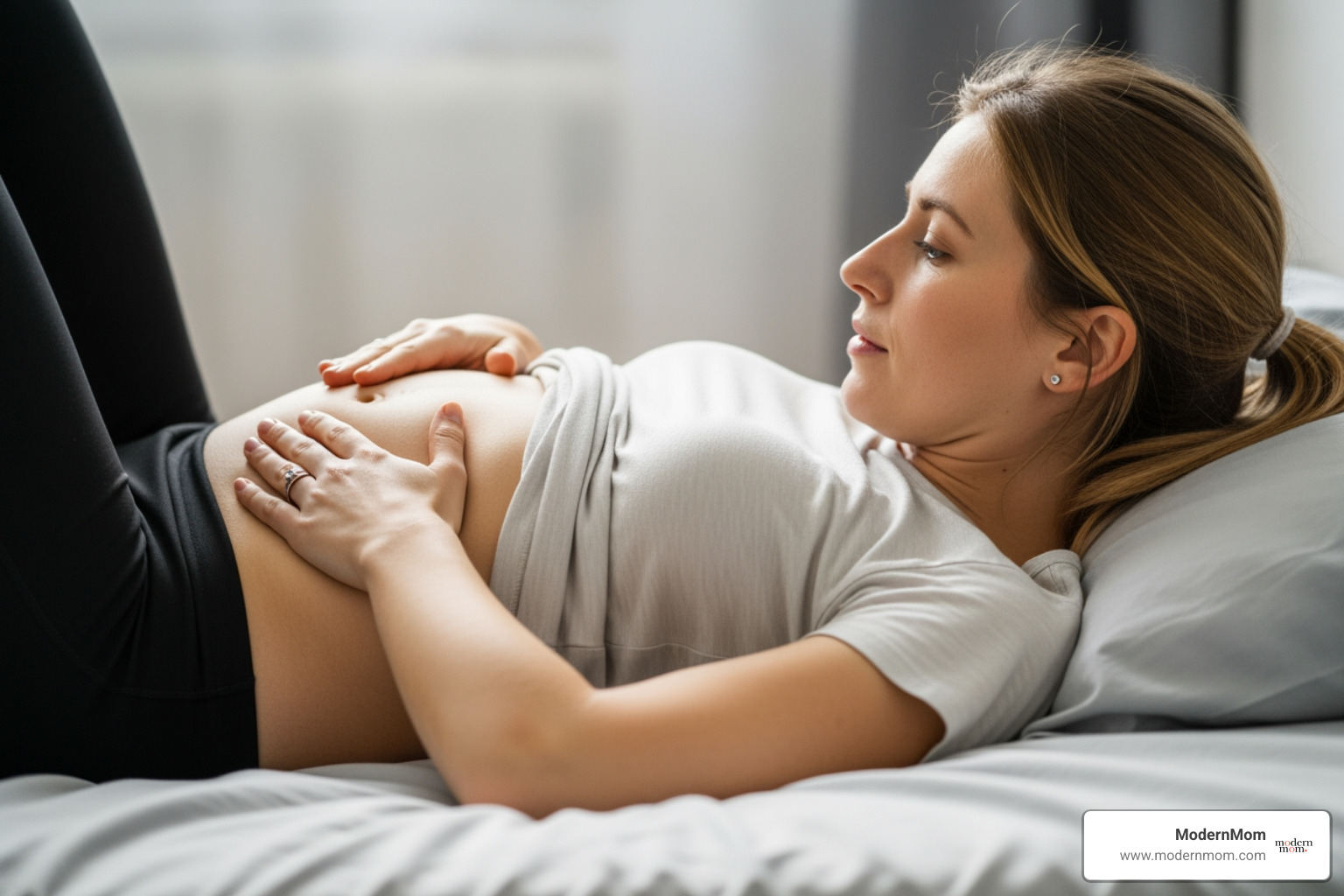
If you suspect you have diastasis recti, or if you’re experiencing persistent pelvic pain, incontinence, or other pelvic floor issues, we highly recommend seeing a pelvic floor physical therapist. They are specialists who can provide personalized assessments and guidance.
Essential Core Recovery Exercises
Once you’ve been cleared by your doctor, you can begin incorporating gentle exercises to rebuild your core and pelvic floor strength. These exercises focus on reconnecting with and activating these crucial muscle groups.
- Diaphragmatic Breathing (Belly Breathing): This is a fundamental exercise for core and pelvic floor recovery. Lie on your back with knees bent. Place one hand on your chest and one on your belly. As you inhale, let your belly rise, keeping your chest relatively still. As you exhale, gently draw your belly button towards your spine, feeling your pelvic floor lift. This helps to re-engage your deep core and pelvic floor.
- Transverse Abdominis (TVA) Activation: The TVA is your deepest abdominal muscle, acting like a natural corset. While lying down or sitting, take a deep breath. As you exhale, gently draw your belly button inwards, as if you’re trying to zip up a tight pair of jeans. Hold for a few seconds and release. Focus on engaging this muscle without clenching your glutes or holding your breath.
- Kegel Exercises: Essential for postpartum recovery, Kegel exercises help strengthen the muscles that support the pelvic organs. To perform a Kegel, imagine you’re trying to stop the flow of urine or prevent passing gas. Squeeze and lift these muscles without engaging your glutes, thighs, or abs. Hold for a few seconds, then relax completely. Start with quick flicks (10-20 reps) and slow contractions (hold for several seconds), working up to 3-4 sets, 3 times a day. You can learn more about Kegel Exercises and their benefits.
- Pelvic Tilts: This exercise helps strengthen your abdominal muscles and can relieve lower back pain. Lie on your back with your knees bent and feet flat on the floor. Flatten your lower back against the floor by tightening your abdominal muscles and tilting your pelvis slightly upward. Hold for up to 10 seconds, then release. Repeat 5-10 times, working up to 20 repetitions.
These exercises are designed to be gentle and foundational. They help restore function and prepare your body for more challenging movements later on.
Your Gentle Guide to a Post Partum Workout
When it comes to a post partum workout, slow and steady wins the race. The goal is to gradually reintroduce movement and build strength, not to push yourself to exhaustion. Always prioritize proper form over intensity to prevent injury and ensure you’re effectively engaging the right muscles.
Every workout should begin with a gentle warm-up to prepare your muscles and joints, and end with a cool-down to aid recovery and flexibility. This might look like a few minutes of light walking, arm circles, and gentle stretches.
Recommended First Exercises for Your Post Partum Workout
Once you have your doctor’s clearance, typically around 6 weeks postpartum for vaginal births or 8-12 weeks for C-sections, you can start incorporating these low-impact, foundational exercises into your routine:
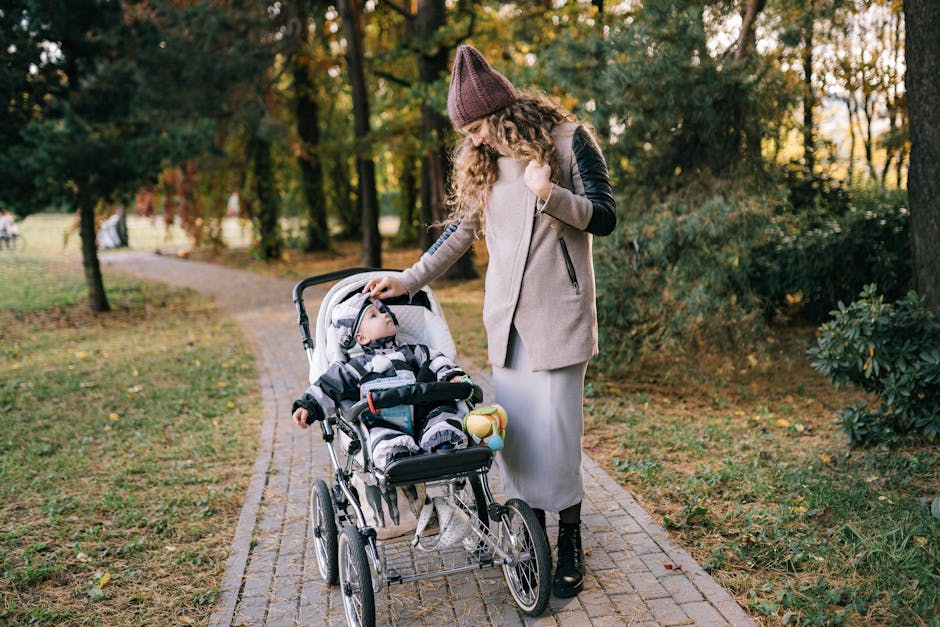
- Walking: This is one of the best and most accessible forms of exercise. Start with short, 5-minute walks and gradually increase your duration by a minute each day. Aim to build up to 30 minutes, five days a week. Walking with your baby in a stroller is a great way to get fresh air and exercise.
- Glute Bridges: Lie on your back with knees bent and feet flat, hip-width apart. Engage your core and lift your hips off the floor until your body forms a straight line from shoulders to knees. Squeeze your glutes at the top. This helps strengthen your glutes and core.
- Clamshells: Lie on your side with knees bent and stacked, feet together. Keeping your feet touching, lift your top knee towards the ceiling, engaging your glutes. Lower slowly. This targets your hip abductors and glutes, crucial for pelvic stability.
- Modified Planks: Start on your hands and knees, or elbows and knees. Ensure your body forms a straight line from your head to your knees. Engage your core, drawing your belly button towards your spine, and hold for 15-30 seconds. This builds core strength without excessive strain.
- Bodyweight Squats: Stand with feet hip-width apart. Lower your hips as if sitting in a chair, keeping your chest up and core engaged. Go only as deep as comfortable. Squats strengthen your legs and glutes, which are essential for everyday tasks with a baby.
- Stationary Cycling: Riding a stationary bike is a low-impact way to boost cardiovascular fitness without putting stress on your joints or pelvic floor. You can adjust the resistance to suit your comfort level. For those looking for creative ways to incorporate movement into a busy day, you might find inspiration in options like working out while you work with Cubii.
Consistency is more important than intensity in these early stages. Even 10-minute workouts can make a significant difference in your recovery and energy levels.
Exercises to Approach with Caution
While we encourage gentle movement, some exercises should be approached with extreme caution or avoided entirely in the early postpartum period. Your body needs time to heal, and certain movements can hinder that process or even cause injury.
- High-Impact Activities: Running, jumping, high-intensity interval training (HIIT), and plyometrics should generally be avoided for at least 12 weeks postpartum, and often longer. These activities put significant stress on your joints and pelvic floor, which are still recovering due to hormonal changes like the presence of relaxin, which can make joints unstable for 6-12 months after delivery.
- Traditional Crunches and Sit-Ups: These exercises can put excessive pressure on your abdominal muscles and pelvic floor, potentially worsening diastasis recti or contributing to pelvic floor dysfunction. Avoid any exercise that causes “coning” or “doming” of your abdomen. Focus on deep core exercises first.
- Intense Core Work: Beyond crunches, any exercise that requires significant abdominal bracing or twisting should be approached carefully. Your deep core needs to be re-established before you challenge it with complex movements.
- Heavy Lifting: You likely won’t be able to lift anything heavy for several weeks after giving birth, especially if you had a C-section. Gradually introduce light weights, focusing on proper form and core engagement. If you’re considering returning to strength training, ensure your body is ready and always prioritize your recovery. For general guidance on weight lifting and fitness, resources like weight-lifting-workouts-to-reduce-cholesterol can offer insights, but always adapt to your postpartum needs.
Always listen to your body. If an exercise causes pain, discomfort, or any of the warning signs we mentioned earlier, stop immediately. It’s better to be safe and allow for full recovery than to push too hard and risk a setback.
Making It Work: Practical Tips for New Moms
Finding time for a post partum workout can feel like an impossible task when you’re navigating the demands of a newborn. We understand! But even small, consistent efforts can make a huge difference.
A challenge is simply finding the time. When caring for a newborn, our schedules are often dictated by feedings, naps, and diaper changes. This is where short workouts become incredibly effective. Even 10-minute bursts of walking, stretching, or strengthening can make a difference in boosting your mood and energy.
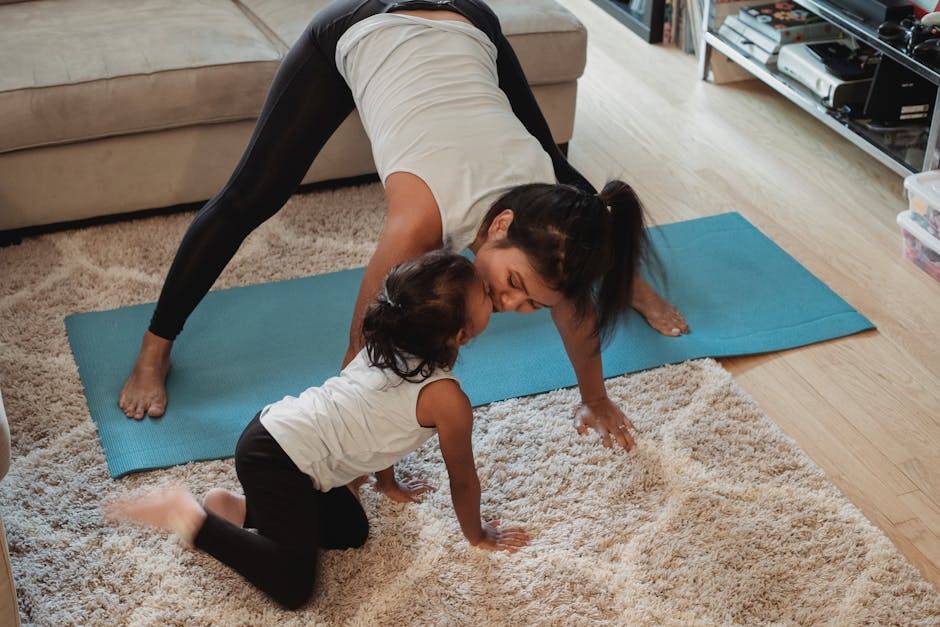
Try scheduling exercise blocks, even if they’re brief, into your day like any other appointment. This helps prioritize your well-being. Exercising with your baby can also be a wonderful way to bond and incorporate movement. Take them for walks in the stroller or lay them on a play mat while you do some floor exercises.
Staying hydrated is always important, but it’s especially crucial when exercising postpartum, particularly if you’re breastfeeding. Breastfeeding mothers need extra fluids and approximately 500 calories more per day than before conception. Ensure you’re drinking plenty of water throughout the day, and carry a water bottle during your workouts. Focus on nourishing your body with balanced meals to support your recovery and energy levels. For more on nutrition while nursing, check out Nursing Your Baby—What You Eat and Drink Matters.
Finally, don’t underestimate the power of a strong support system. Ask your partner, family, or friends to help watch the baby while you get a quick workout in. Exercising with a friend can also provide motivation and accountability.
How to Stay Motivated
Motivation ebbs and flows, especially during the challenging postpartum period. Here’s how we can keep moving forward:
- Set realistic goals: Instead of aiming for pre-pregnancy fitness levels right away, focus on small, achievable goals like walking for 15 minutes daily or consistently doing your pelvic floor exercises.
- Find an activity you enjoy: You’re more likely to stick with something you genuinely like. This could be dancing, gentle yoga, swimming, or simply walking in nature.
- Track your progress (not just weight): Celebrate non-scale victories like increased energy, improved mood, better sleep, or being able to carry your baby with less strain.
- Give yourself grace: Some days, a workout just won’t happen. That’s okay! Don’t let one missed day derail your entire journey. Be kind to yourself and pick it up again tomorrow.
- Remember your “why”: Is it to feel stronger? To have more energy for your family? To manage stress? Keep your core motivation in mind to push through tough days.
Frequently Asked Questions about Postpartum Workouts
We know you have questions, and we’re here to provide clear, expert-backed answers to help you steer your post partum workout journey.
How long will it take to get back to my pre-pregnancy fitness level?
This is one of the most common questions, and the answer is: it’s different for everyone! There’s no set timeline for returning to pre-pregnancy fitness levels. It varies greatly based on factors like your delivery method, any medical needs, your support system, and your personal priorities. It can take approximately 40 weeks to grow a baby, and it can take nearly as long, if not longer, to feel like your pre-pregnancy self.
The key is to focus on consistency over intensity. Gradually rebuilding your strength and stamina will lead to lasting results. Celebrate every small victory along the way – whether it’s walking a little further, holding a plank for a few extra seconds, or simply feeling more energized. It truly is a journey, and for many women, it’s a journey of at least a year.
What are the best exercises for diastasis recti?
If you have diastasis recti, the focus of your post partum workout should be on re-establishing a deep core connection and healing the abdominal separation. Avoid any exercises that cause “coning” or “doming” of your abdomen, as this indicates too much intra-abdominal pressure and can worsen the separation.
Effective exercises for diastasis recti include:
- Pelvic Tilts: As described earlier, these help engage your deep core.
- Heel Slides: Lie on your back, knees bent. Gently engage your core, then slowly slide one heel away from you, keeping your back flat. Slide it back in. Alternate legs.
- Glute Bridges: These strengthen your glutes and help stabilize your pelvis while engaging your core gently.
- Transverse Abdominis Activation: Focus on the gentle “zipping up” sensation we discussed.
- Modified Planks: Performed on your knees, ensuring your core is engaged and your back remains flat.
It’s highly recommended to consult with a pelvic floor physical therapist if you have diastasis recti. They can provide a personalized program and ensure you’re performing exercises correctly.
How can I safely exercise after a C-section?
Exercising after a C-section requires extra patience and careful consideration, as you’re recovering from major abdominal surgery.
- Doctor’s Clearance is Paramount: Always wait for your doctor’s clearance, which typically comes around 8-12 weeks postpartum. They will assess your incision site and overall recovery.
- Start with Walking and Deep Breathing: In the very early stages (after initial clearance), gentle walking is encouraged to promote circulation and healing. Deep breathing exercises, as discussed, are also crucial for reconnecting with your core without stressing the incision.
- Focus on Posture: Good posture helps alleviate strain on your healing abdominal muscles. Be mindful of how you sit, stand, and carry your baby.
- Avoid Direct Strain on Your Incision: This means avoiding traditional crunches, sit-ups, and heavy lifting for many weeks. Any movement that causes pain or a pulling sensation around your incision should be stopped. You likely won’t be able to lift anything heavy for several weeks.
- Progress Very Slowly: Your body has been through a lot. Begin with the most gentle core and pelvic floor exercises, gradually increasing duration and intensity only as you feel stronger and pain-free. For example, if you had a C-section, you’ll need to wait until at least 12 weeks after the birth before doing activities such as swimming.
Every C-section recovery is unique. Listen to your body, communicate with your healthcare provider, and don’t rush the process.
Conclusion: Accept Your Strength, One Day at a Time
Your postpartum journey is a marathon, not a sprint. We’ve learned that a thoughtful, gradual post partum workout approach is not just beneficial for your physical health, but also for your mental and emotional well-being. Be kind to your body; it just performed a miracle.
Focus on rebuilding your strength from the inside out, nurturing your core and pelvic floor, and listening to your body’s signals. Celebrate every small victory – whether it’s a 10-minute walk, a successful set of Kegels, or simply choosing rest when you need it. Feeling strong, energized, and connected to your body is the ultimate goal, not chasing an unrealistic ideal.
You are not alone in this journey. At ModernMom, we’re here to support you every step of the way. For more tips, insights, and stories on embracing your body after baby, explore our dedicated section on your Body After Baby journey.