

Your Core Deserves a Fresh Start After Baby
Starting a postpartum ab routine is one of the most important—and most misunderstood—parts of recovering after pregnancy. Before diving in, here’s a quick-start snapshot of what a safe, effective routine looks like:
Quick-Start Postpartum Ab Routine (Beginner-Safe)
- Diaphragmatic breathing — Start from day one; reconnects your deep core
- Pelvic floor activation (Kegels) — Gentle, anytime, anywhere
- Pelvic tilts — Safe from week one for most vaginal births
- Heel slides — Begin around weeks 2-4 with no discomfort
- Glute bridges — Add around weeks 4-6
- Bird-dog / Modified dead bug — Introduce after 6-week clearance
- Toe taps from tabletop — Build control before moving to harder moves
Always get clearance from your doctor or midwife before starting, especially after a C-section.
Your body just did something incredible. Growing and birthing a baby stretches, shifts, and reorganizes your entire core—and it doesn’t simply “reset” on its own. Around 60% of women experience diastasis recti (abdominal separation) postpartum, yet many of us are sent home with little guidance on how to actually heal it.
The good news: with the right approach, real recovery is possible. It starts with understanding what changed in your body and why gentle, intentional movement matters more than intensity right now. This guide brings together expert-backed advice so you can recover with confidence, not confusion.
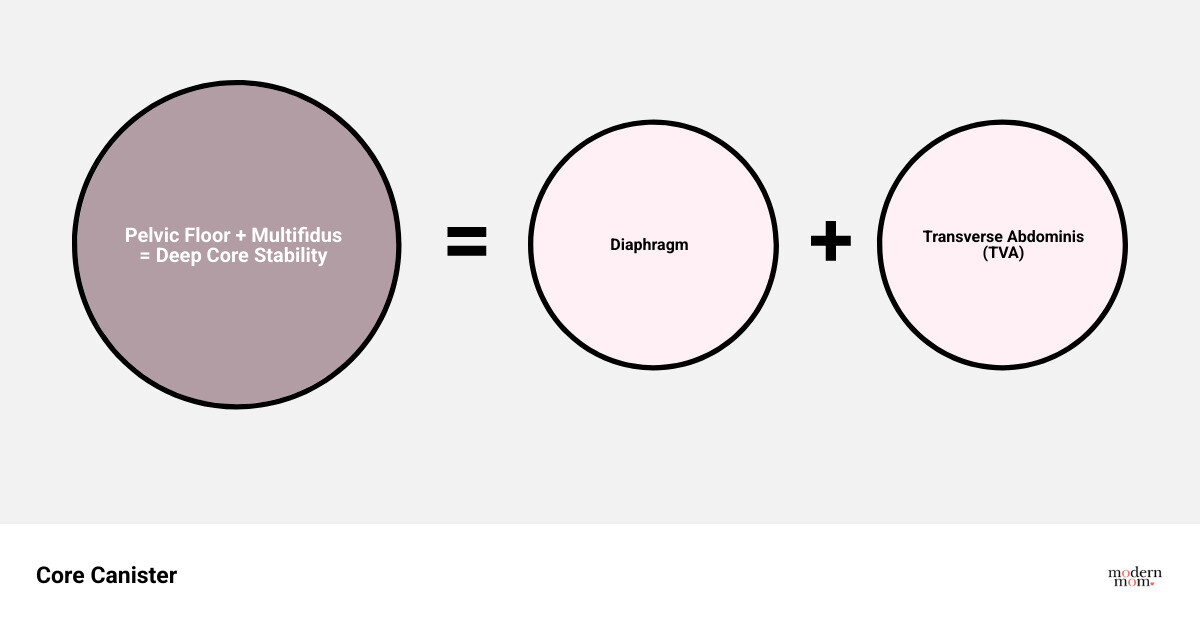
Postpartum ab routine definitions:
Understanding Your Postpartum Body and Diastasis Recti
When we talk about “the core,” we aren’t just talking about a six-pack. During pregnancy, your growing baby needs space, which causes the rectus abdominis (the outermost “six-pack” muscles) to stretch and separate. This happens along the linea alba, the connective tissue that runs down the center of your stomach.
This condition is known as diastasis recti. According to Cleveland Clinic, it’s incredibly common, affecting roughly 60% of women. While it’s often seen as just a “mommy pooch,” it’s actually a functional issue. When these muscles stay separated, your core loses its ability to stabilize your spine, which can lead to back pain and poor posture.
Healing isn’t about “closing the gap” at all costs; it’s about restoring tension to that connective tissue so your core can support you again. Strengthening your deep core—specifically the Transverse Abdominis (TVA)—is the secret to regaining that stability.
How to Test for Abdominal Separation at Home
You don’t need fancy equipment to check your progress. You can perform a simple self-test at home to see where your muscles stand:
- Lie on your back with your knees bent and feet flat on the floor.
- Place your fingers horizontally across your midline, just above your belly button.
- Slowly lift your head (like a tiny crunch), keeping your shoulders on the floor.
- Feel for a gap. How many fingers can you fit between the left and right sides of the muscle?
- Check for tension. Does the gap feel like a firm trampoline (good tension) or do your fingers sink deep toward your spine (low tension)?
A gap of one to two finger-widths is considered normal. If you find a gap of three or more fingers, or if the tissue feels very soft, it’s a sign that your postpartum ab routine should focus heavily on deep core reconnection first.
When to Safely Start Your Postpartum Ab Routine
We totally get it—you’re eager to feel like yourself again. But rushing back into the gym can actually set your recovery back. The timeline for starting your postpartum ab routine depends heavily on your delivery and how your body’s healing.
- Vaginal Birth: Many women can begin very gentle breathing and pelvic floor exercises within a few days. However, wait for your 6-week checkup before adding more “active” movements.
- C-Section: This is major abdominal surgery. Your muscles weren’t cut, but they were moved, and the incision needs significant time to heal. Most experts recommend waiting at least 8–12 weeks before attempting anything beyond gentle walking and breathing.
The American College of Obstetricians and Gynecologists (ACOG) notes that while exercise can boost energy, it must be gradual. Complete healing of the abdominal wall can take anywhere from 6 weeks to 6 months.
Red Flags to Watch For
As you begin moving, your body will give you “stop” or “slow down” signs. Listen to them! Watch out for:
- Coning or Doming: If you see a ridge or “loaf” shape popping up down the center of your stomach, stop immediately. This means your core can’t handle the pressure of that move yet.
- Pelvic Pressure: Feeling like something is “falling out” or heavy in the pelvic region is a sign to scale back.
- Urinary Incontinence: Leaking when you move or jump isn’t just a “mom thing”—it’s a sign your pelvic floor needs more targeted help.
- Pain: Any sharp pain at your C-section scar or in your lower back means the exercise is too advanced for now.
If these symptoms persist, we highly recommend consulting a pelvic floor physical therapist. They’re the “gold standard” for postpartum recovery.
The Foundations: Breathing and Deep Core Activation
Believe it or not, the most effective postpartum ab routine doesn’t look like a workout at first. It looks like breathing—specifically, 360-degree diaphragmatic breathing.
Imagine your core as a canister. The diaphragm is the lid, and the pelvic floor is the base. When you inhale, your ribs should expand out to the sides and back, and your pelvic floor should relax. As you exhale, your pelvic floor lifts slightly, and your Transverse Abdominis (TVA)—your body’s natural corset—should draw in toward your spine.
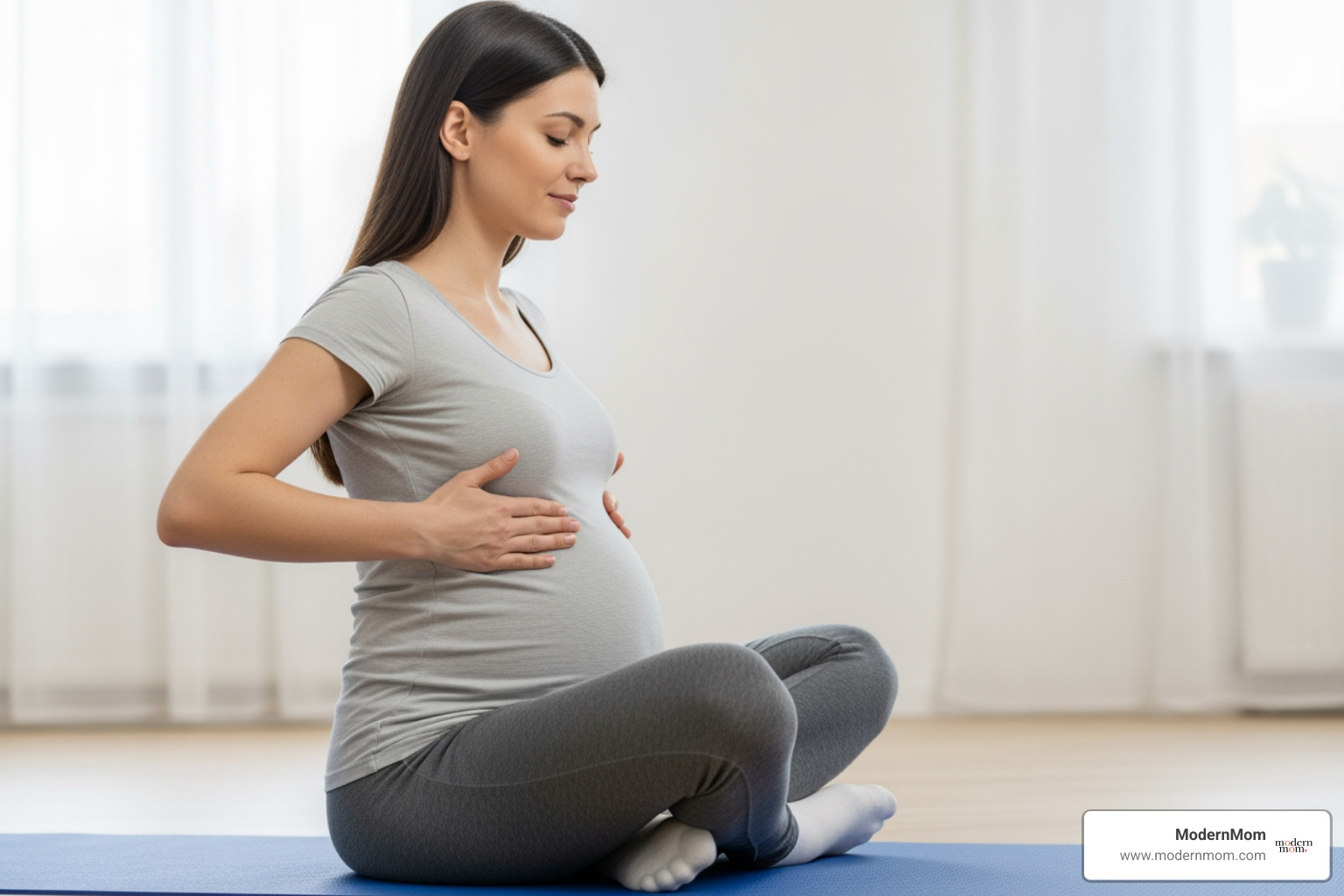
Mastering this “core-breath connection” is the foundation for everything else. Without it, you’re just putting more pressure on an already weakened abdominal wall.
Why Standing Exercises Are a Game-Changer
While most people think of ab workouts as “floor work,” standing exercises are often better for new moms. Why? Because they’re functional. You spend your day standing, lifting a baby, and pushing a stroller—not lying on a mat.
Standing ab moves use gravity to help you find your center and often put less direct pressure on a diastasis recti gap. They also help retrain your posture, which often shifts during pregnancy. Simple moves like wall-supported breathing or “core marches” are incredible for building real-world strength.
A Sample Postpartum Ab Routine for Beginners
Ready to get started? This routine focuses on stabilization—teaching your muscles to stay tight and supportive rather than moving through a large range of motion.
| Exercise Type | Beginner Focus | Advanced Progression |
|---|---|---|
| Breathing | 360 Diaphragmatic | Breathing with weights |
| Stabilization | Pelvic Tilts / Heel Slides | Dead Bug / Bird-Dog |
| Functional | Standing Marches | Glute Bridges with March |
| Support | Modified Side Plank (Knees) | Full Side Plank |
Step-by-Step Exercises
Try this 10-minute circuit 3–4 times a week. Focus on quality and breath over speed.
- Pelvic Tilts (10 reps): Lie on your back. Exhale, tilt your pelvis back, and press your lower back into the floor. Feel your lower abs engage.
- Heel Slides (10 per side): In a neutral spine position, exhale and slowly slide one heel out until your leg is straight, then slide it back. Keep your hips perfectly still.
- Bird-Dog (8 per side): On all fours, extend your opposite arm and leg. Keep your back flat—imagine a cup of coffee sitting on your lower back that you can’t spill!
- Modified Dead Bug (10 reps): Lie on your back with legs in “tabletop.” Lower one foot to tap the floor while keeping your back pressed down.
- Glute Bridges (12 reps): Squeeze your glutes to lift your hips. This strengthens the “back side” of your core, which is vital for posture.
Exercises to Avoid and When to See a Professional
In the early stages of your postpartum ab routine, some “classic” exercises can actually do more harm than good. Until your deep core is strong and your diastasis has healed significantly, it’s best to avoid:
- Standard Crunches and Sit-ups: These create intense outward pressure that can worsen abdominal separation.
- Full Planks: If your core isn’t ready, your back will arch, and your stomach will “dome” toward the floor.
- Russian Twists: Heavy twisting can strain the healing connective tissue.
- Leg Raises: Lifting both legs at once is very high-pressure; wait until you’re much stronger.
If you’ve been consistent for 8–12 weeks and still don’t see improvement, or if you struggle with chronic back pain or leaking, please see a Pelvic Floor Physical Therapist. They can provide personalized plans that a general workout simply can’t.
Frequently Asked Questions
How long does it typically take for abdominal muscles to heal?
Most moms see significant improvement within 6 to 12 weeks, but complete “restoration” of the core can take 6 months to a year. Patience is your best friend!
Can I do these exercises if I had a C-section?
Yes, but you’ll need to wait longer to start. Focus on gentle scar massage and diaphragmatic breathing first. Once your incision is fully healed and your doctor clears you, these stabilization moves are the safest way to rebuild.
Is it ever “too late” to start healing diastasis recti?
Never! Whether you’re 6 months or 6 years postpartum, your muscles and connective tissue can still be retrained. The body is incredibly resilient, and it’s always a good time to focus on your core health.
Conclusion
At Modern Mom, we know that reclaiming your core isn’t just about fitting into old jeans—it’s about feeling strong enough to lift your toddler without pain and moving through your day with energy. A postpartum ab routine is a form of self-care. It’s about honoring the work your body did and giving it the tools to recover properly.
Be patient with yourself. Celebrate the small wins, like a firmer “trampoline” during your self-test or a walk without back pain. You’ve got this, Mama!
For more tips on staying active while raising a family, Explore more at ModernMom Healthy Living articles or Visit ModernMom.com for our latest guides.