Product Recalls for Parents: How to Check if Something You Own Has Been Recalled
From cribs and car seats to food, toys, medications and household products, recalls are an unfortunate part of family life. The hard part is keeping track.
ModernMom has reported on hundreds of individual product recalls over the years. But recall information changes quickly, products are added or updated, and an article published years ago may no longer be the best place to find current safety information.
So, if you’re trying to find out whether something in your home has been recalled, this guide will help you go straight to the most reliable sources.
How Do I Know If a Product Has Been Recalled?
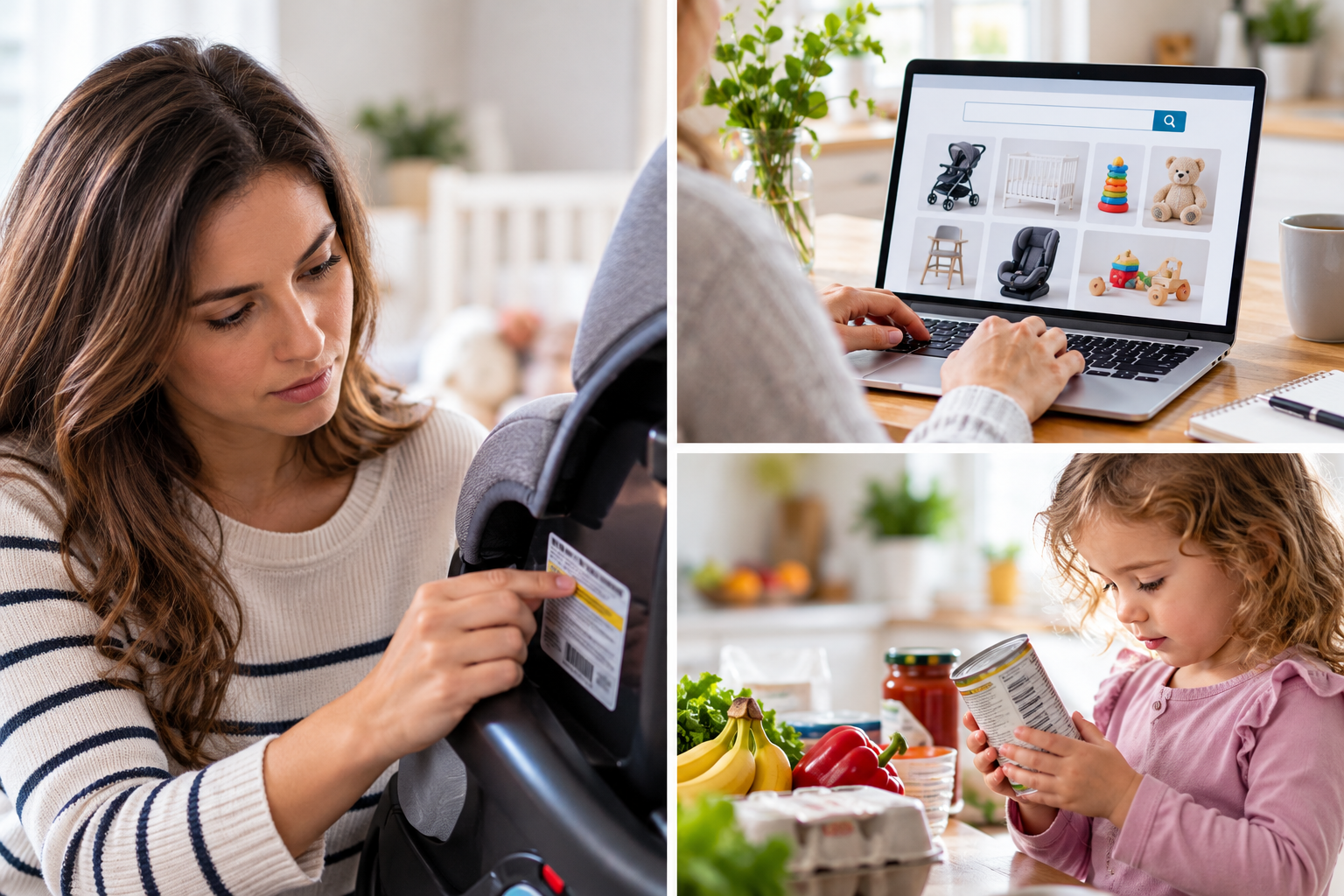
If you’re concerned about a particular product, start with the brand name and as much identifying information as you can find.
Depending on the product, that might include:
- Product name
- Model number
- Serial number
- Manufacturing date
- Lot or batch number
- UPC
- Vehicle Identification Number (VIN)
- Car seat model and manufacturing date
Then search the appropriate government recall database.
Don’t rely only on a social media post, news story or old article. Those can be useful for alerting you to a potential problem, but the official recall notice should tell you exactly which products are affected and what you should do next.
Baby, Children’s Product and Toy Recalls
For recalls involving children’s products and most household consumer products, start with the U.S. Consumer Product Safety Commission (CPSC).
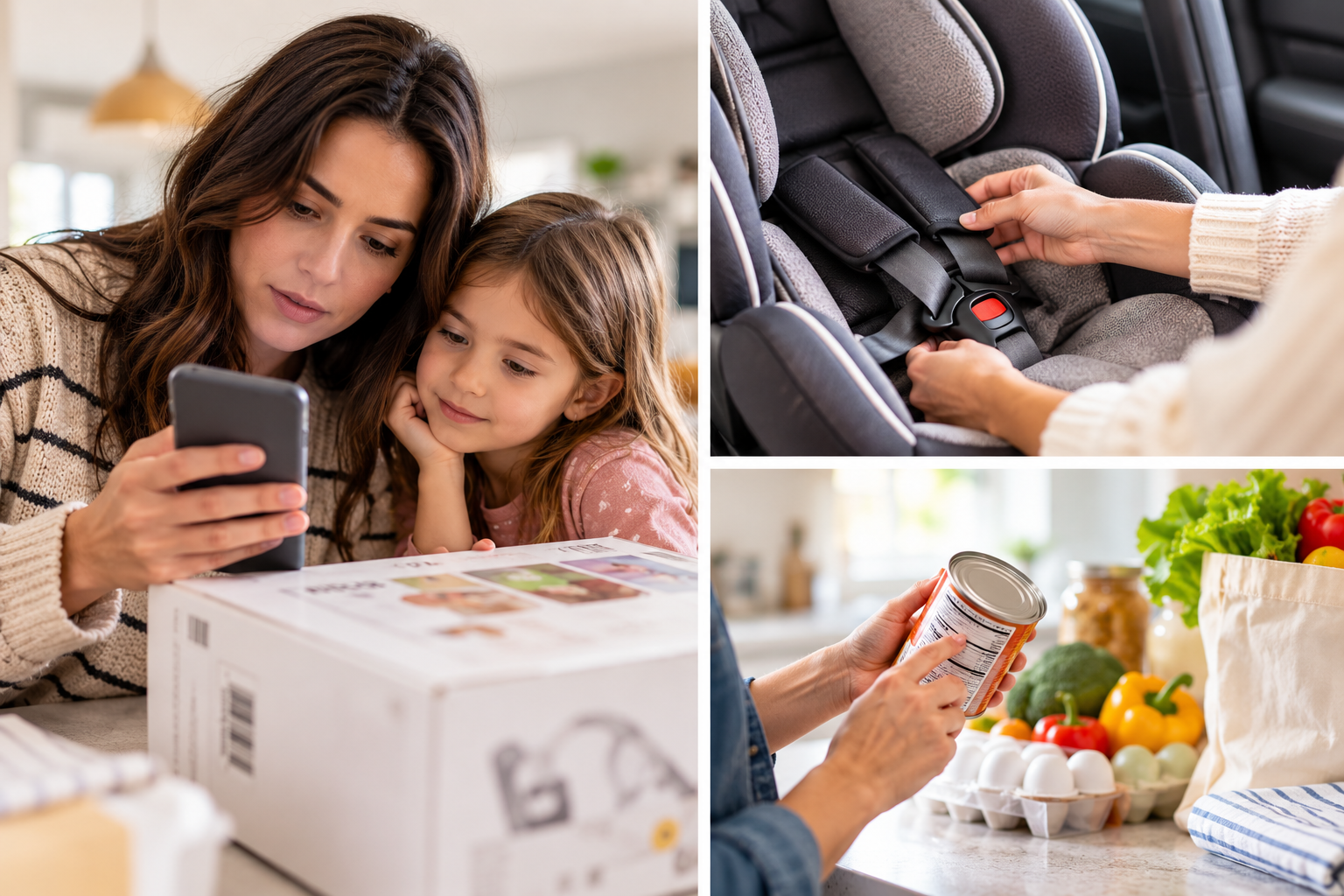
The CPSC maintains a searchable database of recalls and product safety warnings covering products such as:
- Cribs and bassinets
- Strollers
- High chairs
- Baby carriers
- Toys
- Children’s furniture
- Clothing
- Bicycle helmets
- Appliances
- Furniture
- Electronics
- Household products
You can search recalls by product, brand, date, hazard and category.
Search CPSC recalls and product safety warnings
If you’re buying secondhand baby gear, children’s furniture or toys, it’s also worth checking the product against the CPSC database before bringing it home.
Car Seat and Vehicle Recalls
Car seats, vehicles, tires and other automotive equipment are handled by the National Highway Traffic Safety Administration (NHTSA).
For a vehicle, the easiest way to check is usually with its 17-character VIN. NHTSA’s recall lookup can tell you whether a particular vehicle has an unrepaired safety recall.
You can also search for recalls involving:
- Infant car seats
- Convertible car seats
- Booster seats
- Tires
- Vehicles
- Other vehicle-related equipment
Check vehicle and car seat recalls with NHTSA
It’s also a good idea to register a new car seat with the manufacturer so you can be contacted directly if a safety recall is issued.
Food Recalls
Food recalls can come from more than one federal agency, depending on the type of food involved.
FDA Food Recalls
The U.S. Food and Drug Administration (FDA) publishes recalls and safety alerts involving many foods and beverages, as well as dietary supplements and other FDA-regulated products.
Food recalls may involve issues such as:
- Undeclared allergens
- Bacterial contamination
- Foreign material
- Incorrect labeling
- Packaging problems
Check FDA recalls, market withdrawals and safety alerts
Meat, Poultry and Some Egg Product Recalls
The USDA Food Safety and Inspection Service (FSIS) handles recalls and public health alerts involving federally inspected meat, poultry and certain egg products.
Check USDA FSIS recalls and public health alerts
When checking a food recall, pay close attention to package size, lot codes, establishment numbers, expiration or best-by dates and where the product was sold. A recall involving one version of a product doesn’t necessarily mean every package under that brand is affected.
Medication and Health Product Recalls
The FDA also oversees recalls involving medications, medical devices and many other health-related products.
A drug recall does not necessarily mean that every package or strength of a medication is affected. Recall notices may apply only to certain lots, manufacturers or expiration dates.
Search FDA recalls and safety alerts
If a medication you or your child uses appears in a recall notice, don’t automatically stop taking a prescribed medication without checking the recall instructions and, when appropriate, speaking with your pharmacist or healthcare provider.
What Should I Do If I Own a Recalled Product?
First, read the official recall notice carefully.
The appropriate response depends on the product and the reason for the recall. You may be instructed to:
- Stop using the product immediately
- Return it to the retailer
- Contact the manufacturer
- Request a replacement
- Obtain a repair kit
- Dispose of the product in a particular way
- Check a model, serial or lot number to determine whether your item is affected
Don’t give away, donate or resell a recalled product simply because you no longer want it.
For children’s products in particular, that can simply transfer the safety risk to another family.
What If I Bought the Product Secondhand?
Recall checks are especially important for secondhand items.
That gorgeous vintage crib, inexpensive marketplace stroller or hand-me-down baby product may have been manufactured long before you acquired it.
Before using secondhand children’s products, look for identifying information on the item and search the CPSC recall database.
For some products — particularly car seats — there are additional safety considerations beyond recalls, including age, expiration dates and whether the product has previously been involved in a crash.
What If I Can’t Find the Exact Product?
If you’re concerned about a product but can’t find a matching recall notice, check the manufacturer’s website and contact the manufacturer directly.
Small differences in model numbers, manufacturing dates or product names can matter.
You may also find a product safety warning rather than a formal recall. For example, the CPSC publishes both recalls and product safety warnings.
When in doubt, don’t assume a similar-looking product is either included in or excluded from a recall. Verify the identifying information.
How Can Parents Keep Up With New Recalls?
You don’t need to obsessively search recall databases every week.
A few simple habits can make it much easier to hear about important recalls:
- Register baby gear, car seats and other major products with the manufacturer.
- Keep receipts or order confirmations for significant purchases when possible.
- Don’t remove model or serial number labels.
- Check recalls before buying used children’s equipment.
- Pay attention to safety notices from retailers and manufacturers.
- Check your vehicle periodically for open recalls.
- Use official government recall databases when you hear about a possible safety issue.
Looking for an Older ModernMom Recall Article?
ModernMom has covered product recalls for many years. Some of those older individual recall articles have been retired because recall information can become outdated, and we don’t want parents relying on an old article when newer information may be available.
If you arrived here through an older ModernMom recall link, use the official resources above to search for the product, brand or model you’re concerned about.
For current safety information, the federal agency responsible for the product should always be your primary source.
The Bottom Line
Recalls can sound frightening, especially when they involve something your child eats, sleeps in, rides in or plays with.
But finding accurate information doesn’t have to be complicated.
Identify the product as precisely as possible, check the appropriate official recall database and follow the instructions provided in the recall notice.
And if you’re unsure whether the product in your kitchen, nursery, medicine cabinet, or garage is affected, take a few extra minutes to check. It’s one of those small parenting tasks that can make a very real difference.