

That “Roommate Feeling” Is More Common Than You Think — Here’s How to Fix It
Learning how to reconnect in a relationship starts with a few small, intentional shifts — not a grand romantic gesture or a weekend getaway. Here’s a quick overview of what actually works:
- Notice the drift — Recognize when conversations have shrunk to logistics and physical affection has faded
- Turn toward your partner — Respond to their small bids for connection (a comment, a touch, a glance)
- Build daily micro-habits — A 6-second kiss, a real question, a phone-free dinner
- Deepen emotional intimacy — Use open-ended questions to rediscover each other’s inner world
- Introduce novelty — Try something new together to reactivate excitement and dopamine
- Seek support if needed — Couples therapy is a strength, not a last resort
You still love each other. But somewhere between school pickups, work deadlines, and endless to-do lists, something quietly shifted. Maybe you can’t remember the last real conversation you had — one that wasn’t about groceries or schedules. Maybe you’re lying next to each other at night feeling strangely far apart.
You’re not alone. Many couples hit a point where they feel more like roommates than partners — and it almost always happens gradually, not all at once.
Research backs this up. Studies from the Gottman Institute found that couples who eventually divorced were only turning toward each other’s emotional bids 33% of the time, while couples who stayed happy and connected did so 86% of the time. It’s not the big blowups that break relationships — it’s all the small moments of disconnection that quietly add up.
The good news? The same way you drifted apart — through hundreds of tiny choices — you can find your way back. One small, intentional step at a time.
This guide walks you through exactly how to do that, from daily habits and conversation starters to a full 30-day reconnection plan.
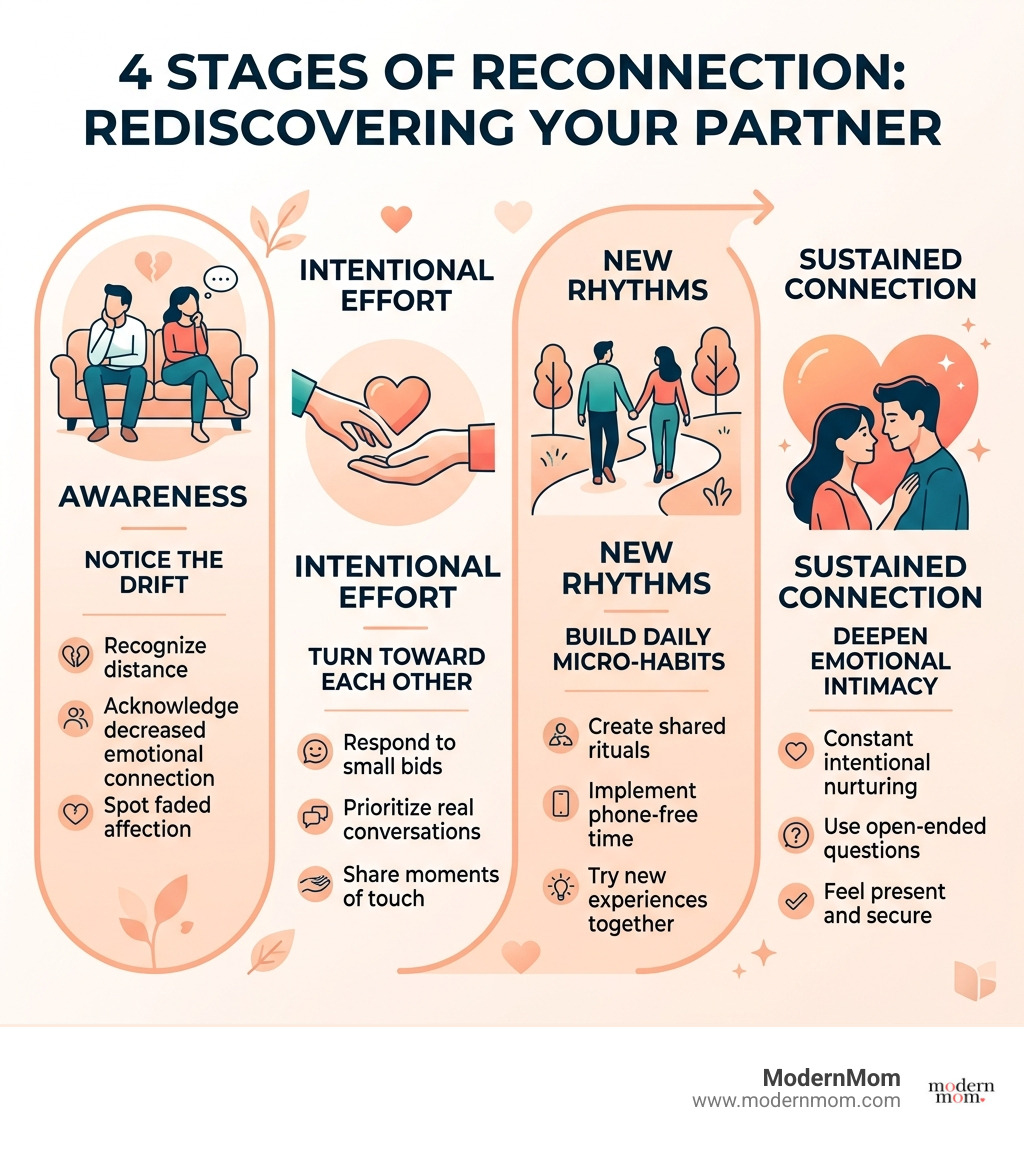
Recognizing the “Roommate Phase” in Your Relationship

In 2026, we’re busier than ever. Between managing digital calendars and the mental load of parenting, it’s easy to slip into what experts call “Roommate Syndrome.” This isn’t a sign that the love is gone, but rather that the connection has been sidelined by logistics.
How do you know if you’ve crossed into the roommate phase? Look for these common signs:
- Parallel Scrolling: You spend your evenings in the same room, but on different devices, rarely sharing what you’re looking at.
- Logistics-Only Talk: Your texts and conversations revolve entirely around “Who’s picking up the kids?” or “What’s for dinner?”
- Sharing News Elsewhere: When something exciting or frustrating happens at work, your best friend or a group chat gets the first text instead of your partner.
- Dwindled Affection: You’ve stopped the “hello” and “goodbye” kisses, and non-sexual touch like holding hands or a hand on the shoulder has vanished.
If this sounds familiar, don’t panic. Acknowledging the distance is the first step toward closing it. It’s also important to stop feeling resentful in your marriage by realizing that drift is often a mutual, unintentional process. As noted in these steps to rebuild connection with your partner, small, intentional steps are the most effective way to bridge the gap.
The Science of Drifting Apart
Why does this happen? According to Dr. John Gottman’s extensive research, relationships thrive or wither based on “bids for connection.” A bid is any attempt to get your partner’s attention, whether it’s a sigh, a comment about a news story, or a physical touch.
Stable, happy couples “turn toward” these bids 86% of the time. Couples who eventually divorce only do so 33% of the time. When we consistently ignore or “turn away” from these small bids, our “Emotional Bank Account” goes into the red. Over time, a negativity bias sets in, where we only notice what our partner is doing wrong rather than what they are doing right.
Small Daily Habits for How to Reconnect in a Relationship

Reconnecting doesn’t require a $5,000 vacation. In fact, research suggests that “micro-investments” — small, daily actions — are more powerful for long-term stability.
- The 6-Second Kiss: A quick peck is a habit; a six-second kiss is a connection. It’s long enough to release oxytocin (the “bonding hormone”) and signals to your brain that this person is your priority.
- The 20-Second Hug: Like the kiss, a long hug lowers cortisol levels and builds physical safety.
- Turning Toward Bids: When your partner says, “Look at that bird outside,” look at the bird. It sounds simple, but you’re telling them, “I hear you, and what you care about matters to me.”
- Specific Appreciation: Instead of a generic “thanks,” try: “I really appreciated how you handled the toddler’s tantrum today; you were so patient.”
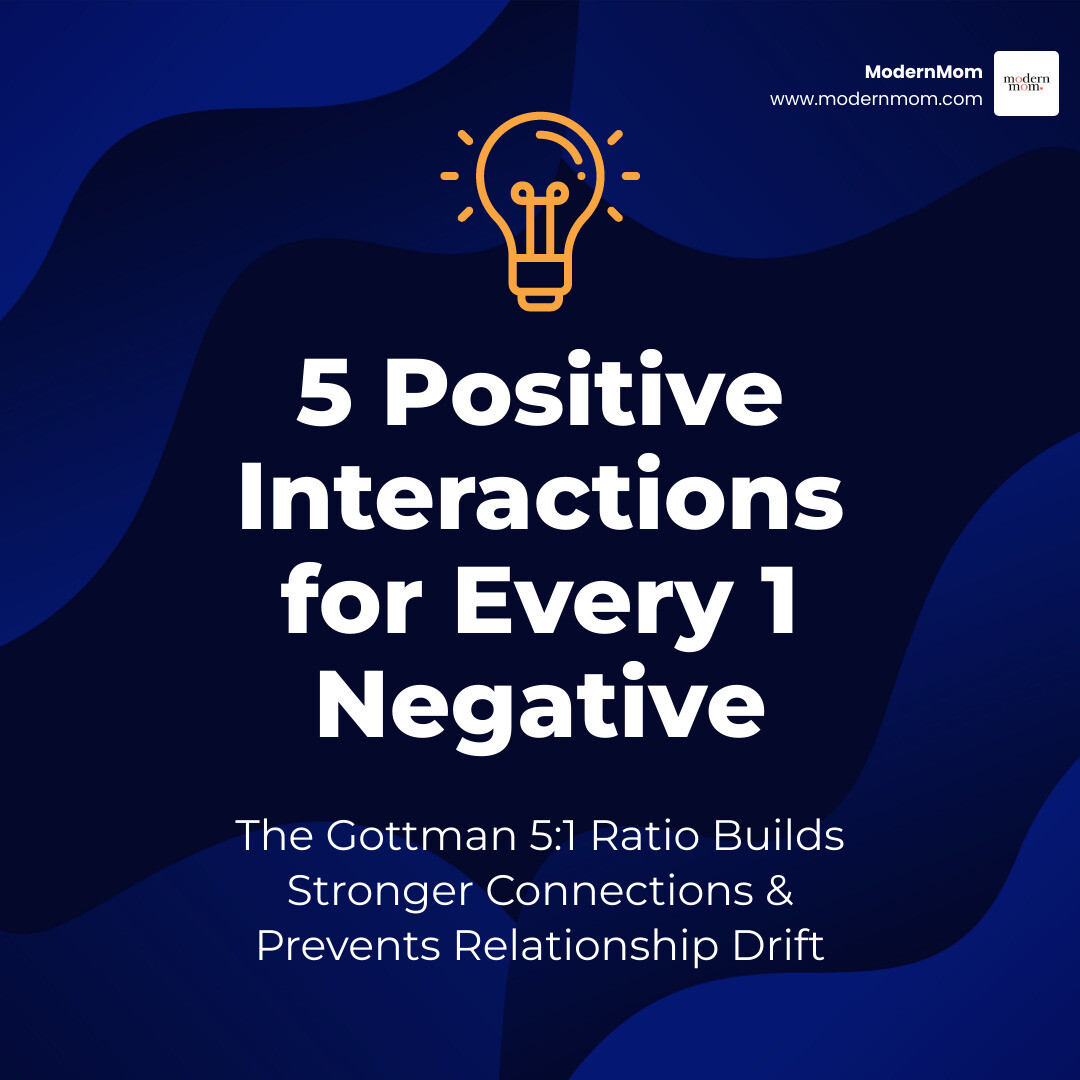
Understanding love languages is also vital. If your partner’s language is “Acts of Service,” a clean kitchen might be more romantic than a bouquet of flowers. You can even learn how to tease your guy in a way that aligns with his love language to bring back that playful spark. Aim for a 5:1 positivity ratio: for every one negative interaction (like a critique), try to have five positive ones.
Building Love Maps Through Daily Rituals
A “Love Map” is the part of your brain where you store the details of your partner’s life — their current stresses, their favorite coffee order, or their dreams for the future. As we evolve, these maps need updating.
- 10-Minute Daily Check-ins: Spend ten minutes every evening talking about anything except kids, chores, or work logistics.
- Phone-Free Zones: Designate the dinner table or the bedroom as “no-phone zones” to ensure you are actually present with one another.
- Reunion Rituals: How do you greet each other after work? A deliberate “reunion ritual” — a hug, a question about their best part of the day, or a 10-second embrace — sets the tone for the rest of the evening. These are great 5 ways to keep the romance alive for parents that fit into even the busiest schedules.
Conversation Starters to Deepen Emotional Intimacy
When we feel disconnected, we often stop asking deep questions because we assume we already know the answers. But people change! To truly learn how to reconnect in a relationship, we have to bring back our curiosity.
Instead of asking “How was your day?” (which usually gets a one-word answer), try these open-ended questions:
- “What is a dream you haven’t shared with me lately?”
- “What was the most challenging part of your week, and how can I support you?”
- “If we could go anywhere tomorrow, no budget, where would we go?”
- “When was the last time you felt really seen or appreciated by me?”
If things have been rocky, you might need to learn How To Win Back Someones Love/ by leading with vulnerability. Sharing your own fears or feelings of loneliness (without blaming your partner) creates a safe space for them to do the same.
Using Curiosity as a Tool for How to Reconnect in a Relationship
Active listening is your best friend here. When your partner shares something, reflect it back: “It sounds like you felt really overwhelmed when your boss added that extra project. Is that right?” This validates their feelings and builds emotional safety.
Treating your partner like a fascinating stranger you’re trying to get to know can reignite the spark. Don’t interrogate; just be genuinely curious about their inner world.
Playful Questions to Spark Joy and How to Reconnect in a Relationship
Not every conversation needs to be heavy. Sometimes, the best way to reconnect is through laughter and silliness.
- “If you were a crayon color, which one would you be today?”
- “What’s the most ridiculous thing you saw on social media today?”
- “What would our ‘perfect day’ look like if we had no responsibilities?”
Silliness acts as a social glue. It lowers defenses and reminds you why you liked each other in the first place.
A 30-Day Plan to Restore Your Spark
If you feel overwhelmed, try a structured approach. Reconnection doesn’t happen overnight; it takes about 20 hours of intentional attention to see a measurable shift in satisfaction.
| Week | Focus | Action Item |
|---|---|---|
| Week 1 | Opening Channels | Three 20-minute phone-free check-ins; mid-day appreciation texts. |
| Week 2 | Physical Touch | Reintroduce the 6-second kiss and non-sexual touch (hand-holding). |
| Week 3 | Novelty & Play | Try one new activity (cooking class, new hiking trail) to boost dopamine. |
| Week 4 | Review & Sustain | Discuss what felt good and pick one habit to keep forever. |
Novelty is a powerful aphrodisiac. When we do something new together, our brains release dopamine, the same chemical present during the “honeymoon phase.” Try a “Cue Card” night: write two low-cost activities on cards (e.g., “Board game” or “Walk around the block”) and have your partner pick one blindly.
Rebuilding Physical Affection Without Pressure
Physical intimacy often stalls when it feels like a chore or an obligation. To fix this, start with low-pressure, non-sexual touch.
- The “Same Bedtime” Rule: Going to bed at the same time increases the chances for spontaneous connection, even if it’s just five minutes of chatting.
- Cuddling Rituals: Spend 10 minutes cuddling while watching a show or before falling asleep.
- Discuss Needs: Use the guidance from the How to Reconnect With Your Partner — Practical Steps to Get Close Again – Breakup Doctor | Breakup Healing App to talk openly about what makes you feel loved and safe. Physical closeness is much easier to rebuild once the emotional foundation is secure.
When to Seek Professional Support
Sometimes, the drift has gone too far for a DIY fix. Seeking help is a sign of commitment to the relationship, not a sign of failure. Consider professional therapy if:
- The “Four Horsemen” are present: Criticism, Contempt, Defensiveness, and Stonewalling have become your primary way of communicating.
- Unresolved Betrayal: You are struggling to move past an affair or a major break in trust.
- The 20-Hour Rule isn’t working: You’ve put in the intentional time, but you still feel stuck in negative patterns.
Methods like the Gottman Method or Emotionally Focused Therapy (EFT) are evidence-based and provide practical tools to help couples find their way back to each other.
Frequently Asked Questions about Reconnecting
How do I reconnect if my partner seems resistant?
It’s common for one partner to feel more “ready” than the other. If your partner is hesitant, don’t push or demand. Instead, start small. Lead with your own “turning toward” behavior. Validate their caution: “I know things have been distant, and it might feel weird to try these check-ins. Can we just try five minutes tonight?” Low-risk experiments are easier to agree to than a total relationship overhaul.
Can we really fall back in love after years of feeling like roommates?
Absolutely. “In love” feelings are not a static state; they are a result of specific behaviors. By reintroducing novelty, curiosity, and responsiveness, you can recreate the chemical environment of early romance. Many couples find their “second marriage” to the same person is actually stronger because it’s built on a foundation of shared history and intentionality.
What are the best low-cost ways to reconnect at home?
You don’t need a babysitter or a reservation to reconnect. Try:
- Cooking a new recipe: It requires teamwork and offers a shared reward.
- A “Happy Memories” Box: Look through old photos and talk about your favorite early dates.
- Board Game Night: A little healthy competition can be very bonding.
- Stargazing: Sit outside for 15 minutes without phones.
Conclusion
Reconnecting isn’t about one grand gesture; it’s about the hundred small choices you make every day to turn toward your partner instead of away. It’s about choosing curiosity over assumption and playfulness over routine.
Start where you are. If you can only manage a 6-second kiss today, start there. The ModernMom community is here to support you in every stage of your journey, whether you’re navigating the toddler years or learning how to make marriage work after separation.
You’ve built a life together — now it’s time to enjoy the person you built it with. Stop the drift and start reconnecting today. Your relationship is worth the effort.