

Why Mom Burnout Recovery Matters More Than You Think
Mom burnout recovery isn’t just about getting more sleep or taking a bubble bath. It’s about reclaiming your energy, joy, and sense of self that motherhood may have slowly worn away.
Quick Recovery Steps:
- Acknowledge you’re experiencing burnout, not just tiredness
- Lower your standards for household tasks and perfectionism
- Set boundaries by saying no and delegating responsibilities
- Practice micro-self-care with 5-10 minute daily resets
- Seek support from partners, friends, or professionals when needed
Maybe you’re lying awake at night while your baby finally sleeps, your mind racing with endless to-do lists. Or you’re snapping at your kids over spilled cereal and wondering what happened to the patient mom you used to be.
You’re not alone. Research shows that more than half of parents experience burnout, with mothers particularly affected by the invisible mental load of managing family life.
Mom burnout goes deeper than everyday exhaustion. It’s a state of physical, emotional, and mental depletion that doesn’t improve with a good night’s sleep. Unlike regular tiredness, burnout makes you feel disconnected from your children and like you’re just “going through the motions.” The good news? Recovery is absolutely possible.
Recognizing Mom Burnout: It’s More Than Just Being Tired
You know that feeling when you’ve had eight hours of sleep but still feel like you’ve been hit by a truck? That’s not just tiredness talking—that might be mom burnout recovery calling your name.
Mom burnout is fundamentally different from regular tiredness. While exhaustion gets better with rest, burnout is a state of physical, emotional, and mental depletion that doesn’t magically disappear after a good night’s sleep. It’s your body and mind’s way of saying, “I’ve been running on empty for too long.”
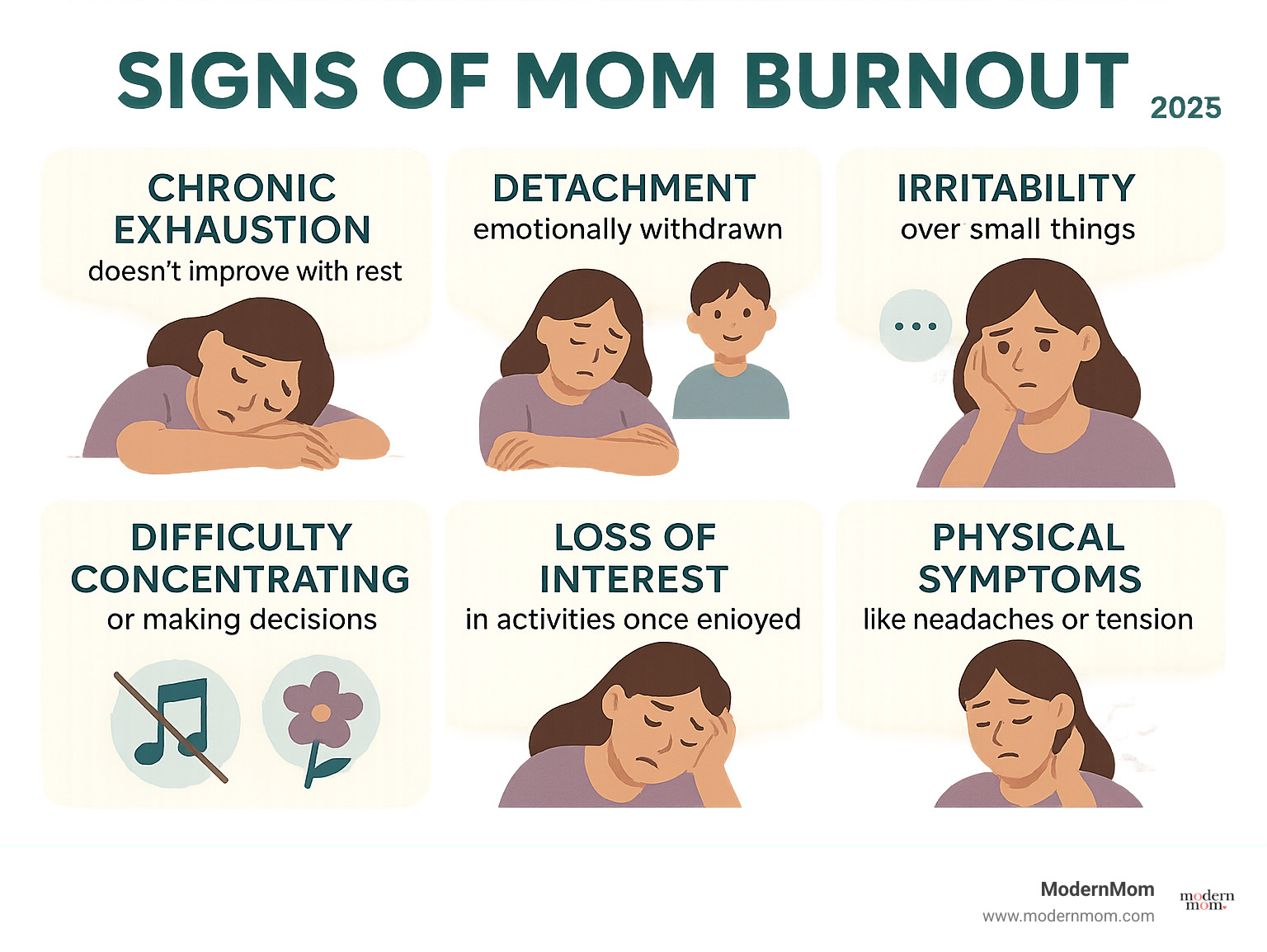
- Physically, you might notice chronic fatigue that rest doesn’t touch, frequent headaches, muscle tension, or changes in your appetite and sleep patterns.
- Emotionally, burnout shows up as irritability over the smallest things. You might feel emotionally numb or detached from your children, just going through the motions.
- Mentally, concentration becomes nearly impossible. You forget important appointments, struggle to make simple decisions, and feel like you’re failing at everything.
This isn’t a personal failing—it’s often the result of “invisible labor,” the mental work of running a family. The impact of parental burnout affects entire families, fueled by societal pressure and perfectionism.
What Causes Mom Burnout?
Mom burnout is a slow leak, not a sudden blowout. Key causes include:
- Lack of support: Feeling like you’re handling everything alone—whether your partner doesn’t see the mental load or family is far away—makes burnout almost inevitable.
- Unrealistic expectations: Social media highlight reels and societal pressure create impossible standards that make us feel like we’re not measuring up.
- Work-life imbalance: Both working and stay-at-home moms face intense pressure. Working moms juggle professional and family duties, while stay-at-home moms face relentless, unpaid labor without breaks.
- Sleep deprivation: Constant tiredness creates a vicious cycle, depleting patience and emotional reserves. For moms of young kids, quality sleep is a distant memory.
- The mental load: The constant, invisible to-do list of planning and managing family life is a major contributor. Research on maternal burnout syndrome factors confirms this risk.
Burnout vs. Depression vs. Simple Exhaustion
Understanding the difference can help you get the right kind of help.
| Symptom/Characteristic | Simple Exhaustion | Mom Burnout | Depression |
|---|---|---|---|
| Primary Cause | Temporary physical or mental exertion; lack of sleep | Chronic, overwhelming stress from caregiving demands | Chemical imbalance, genetic factors, trauma, chronic stress |
| Key Feeling | Tired, sleepy, ready for a break | Depleted, overwhelmed, emotionally detached, ineffective | Persistent sadness, hopelessness, loss of pleasure in activities |
| Duration | Improves with rest (good sleep, weekend break) | Persists despite rest; chronic depletion | Lasts weeks or months, impacts all life areas |
| Recovery Path | Rest, hydration, healthy meals | Strategic self-care, boundaries, support systems, possibly professional help | Professional treatment, therapy, medication, lifestyle changes |
Simple exhaustion gets better with rest. Mom burnout persists despite rest and requires addressing its root causes, like chronic stress and lack of support. Depression is a medical condition with persistent sadness and hopelessness that impacts all areas of life. If you suspect depression or have symptoms lasting more than two weeks, please seek professional help. Depressed? Please make yourself a priority.
The Long-Term Consequences of Ignoring Burnout
Pushing through burnout is risky for your whole family. Chronic stress harms your physical health, leading to headaches, digestive issues, and a weakened immune system. Mentally, it significantly increases your risk of developing anxiety and depression.
Your children feel the impact when you’re emotionally distant or irritable, which can strain your bond. Relationships with partners can also suffer, leading to resentment and communication breakdowns. Burnout can even rob you of the joy in motherhood, making you wonder, “What if I don’t find pure joy in parenting?”
Recognizing burnout is the first step toward mom burnout recovery. Your feelings are valid, and there are concrete steps you can take to reclaim your energy and joy.
Your Action Plan for Mom Burnout Recovery

Recovery doesn’t happen overnight, but it absolutely happens. Mom burnout recovery starts with one small step, building momentum until you feel like yourself again. The key is focusing on actionable changes that fit into your real life.
Essential First Steps for Mom Burnout Recovery
Starting recovery can feel exhausting, but you don’t need to overhaul your life today.
Start by acknowledging what’s really happening. You’re not just tired or failing; you’re experiencing a real condition. Saying “I’m burned out” out loud can be incredibly freeing.
Next, give yourself permission to lower your standards. Good enough is actually good enough. Your kids need a present, emotionally available mom more than they need a Pinterest-perfect home.
Redefining what rest looks like is crucial. Rest might be five minutes of quiet in your car or taking micro-pauses for deep breaths while coffee brews. Finally, start naming your feelings as they come up. Saying “I’m feeling overwhelmed” helps you process emotions instead of stuffing them down, a key step to control your moods.
Setting Boundaries to Protect Your Peace
Boundaries aren’t mean—they’re necessary fences to protect your energy.
Learning to say ‘no’ feels impossible at first. Start small by declining an extra volunteer commitment or a playdate when you’re stretched thin. Practice saying, “I can’t take that on right now.”
Delegating tasks is essential. Your partner might load the dishwasher differently, but done is better than perfect. Sharing the load is key to your recovery.
Create a “mom alone time” signal that your family understands, like closing your bedroom door for five minutes. Train your family to respect this signal—it’s survival, not selfishness. The invisible workload needs to become visible. Share calendars and lists with your partner so others can see the full picture. Modeling healthy boundaries is good parenting, as being your kids’ best parent doesn’t mean being their best friend.
Quick Resets and Mindfulness Techniques
You don’t need an hour to reset your nervous system. Sometimes five minutes is enough.
- Deep breathing exercises: Try the 4-7-8 technique: breathe in for four counts, hold for seven, exhale for eight.
- Mindful moments: Ground yourself in the present by noticing three things you can see, two you can hear, and one you can feel.
- A quick gratitude practice: Retrain your brain to notice the good by jotting down three things you’re grateful for.
- Movement: Do calf raises while brushing your teeth or dance to one song while making lunch.
Research shows that brief mindfulness practices can improve focus and emotional regulation. These aren’t luxuries; they’re essential maintenance.
Reconnecting With Yourself Beyond Motherhood
Somewhere along the way, you might have lost track of who you are outside of being “Mom.” Recovery includes refinding that person.
Refind old hobbies in small ways, like listening to an audiobook while folding laundry or sketching for five minutes. Nurture friendships outside your mom circle with a quick text or call. Have conversations that don’t revolve around children.
Finding your identity outside parenting might mean taking an online course or joining a non-parenting group. As working moms like Janice Dean show us, maintaining your individual identity makes you a better mom, not a more selfish one. You were someone interesting before you became a mom, and you still are.
You’re Not Alone: Building a Support System to Thrive

The hardest part about mom burnout recovery isn’t always knowing what to do—it’s feeling like you have to figure it all out by yourself. You don’t. Building a strong support system is essential for healing. Remember the airplane rule: put your oxygen mask on first.
How to Ask for and Accept Help
Asking for help can feel uncomfortable, but it’s one of the strongest things you can do. The secret is being specific and direct. Instead of saying “I’m drowning,” try “Could you pick up groceries this week?” or “Would you mind watching the kids Saturday morning so I can sleep in?”
When communicating with your partner, be clear. Have an honest conversation about what you need, like asking them to handle the bedtime routine a few nights a week. Don’t forget that kids can help too with age-appropriate chores. It teaches them responsibility and lightens your load.
Leaning on friends and family means taking them up on their offers to help. Ask a friend to bring dinner one night or watch the kids for an hour. Most people genuinely want to help—they just need to know how. Let go of the guilt; accepting help strengthens your relationships and is part of knowing how to build your village.
How Your Partner and Family Can Support You
Your partner and family are your front-line support team, but they can’t read your mind.
The most important thing your partner can do is help shift the mental load. This means taking full ownership of certain family responsibilities—not just helping, but completely managing them, like scheduling doctor appointments or planning birthday parties.
Creating a team approach changes everything. Have weekly check-ins to redistribute tasks based on your current energy levels. Your partner can also offer practical, consistent help, like taking over morning routines or fiercely protecting your uninterrupted self-care time.
Sometimes the most valuable support is simply listening without trying to fix everything. When you need to vent, having someone who just listens and validates your feelings makes an enormous difference. Open communication is the foundation. When your family understands that supporting you is essential for everyone’s well-being, they’re more likely to step up. As the saying goes, “hang in there, moms“—you deserve this support.
Moving Forward: Preventing Future Burnout and Seeking Help
Mom burnout recovery isn’t a destination; it’s an ongoing journey. The goal is building a sustainable life that honors both your role as a mother and your needs as an individual.
Long-Term Strategies for Sustainable Mom Burnout Recovery
Creating lasting change means weaving healthy habits into your daily life. These are small, consistent choices that add up.
- Prioritizing sleep hygiene: Try to go to bed at the same time each night and create a calming bedtime routine. Avoid scrolling your phone in bed.
- Regular physical activity: Move your body in ways that feel good, like dancing in the kitchen or taking a family walk. Movement releases endorphins and reduces stress.
- Healthy nutrition: Keep nutritious snacks within reach and batch cook simple meals. Feeding yourself well gives your body the fuel it needs.
- Scheduling self-care: Treat your well-being with the same importance as your child’s appointments. Block out non-negotiable time in your calendar.
- Creating routines that serve you: Regularly check in with yourself. What’s working? What’s draining you? Build flexible routines that support you.
When and How to Seek Professional Help
Sometimes self-care and support from loved ones aren’t enough. Recognizing when you need professional help is a sign of wisdom and courage.
It might be time to reach out if you’ve been trying recovery strategies for weeks but still feel overwhelmed, detached, or unable to cope. Persistent sadness, feeling hopeless, or losing interest in things you used to enjoy could signal depression and deserve professional support.
If you ever have suicidal thoughts, please call 988 for the Suicide & Crisis Lifeline or go to your nearest emergency room. These thoughts are a medical emergency.
Types of therapy like Cognitive Behavioral Therapy (CBT) can be particularly helpful. Finding a therapist is more accessible than ever, with online options that allow you to meet with a professional from home. Look for therapists who specialize in maternal mental health. Seeking help is an act of love—for yourself and for your family.
Frequently Asked Questions about Mom Burnout
We know navigating mom burnout recovery brings up so many questions. Here are the answers to the questions we hear most often.
How long does it take to recover from mom burnout?
This might be the hardest question to answer because there’s no fixed timeline for recovery. Some moms start feeling glimpses of their old selves after just a few weeks of consistent boundary-setting and micro-self-care moments. Others, especially those who’ve been running on empty for months or years, may need several months to truly bounce back.
What we do know is that mom burnout recovery is a gradual process, not a light switch moment. The magic happens in the small steps. Every time you say no to an extra commitment, take five minutes to breathe deeply, or ask your partner to handle bedtime, you’re making a deposit in your recovery account. Consistency matters more than perfection.
Most importantly, self-compassion is key throughout this journey. You’re not trying to go back to who you were before kids – you’re becoming a new version of yourself who honors both your role as a mother and your individual needs.
How do I explain mom burnout to my partner or family?
Getting your loved ones to understand mom burnout can feel frustrating, especially when they see you functioning day-to-day and assume you’re “fine.” The key is helping them see what’s happening beneath the surface.
Choose a calm time when you won’t be interrupted. Use “I feel” statements to explain your experience without sounding accusatory. Instead of “You never help with anything,” try “I feel completely depleted by managing all the mental tasks like remembering doctor appointments and planning meals.”
Be specific about your needs rather than making vague requests for “more help.” Say something like, “I need you to take full responsibility for Saturday morning activities with the kids so I can have two hours to myself.” Explain it’s a state of depletion, not a choice. Sharing helpful articles like this one can also help partners grasp the real impact of parental burnout.
Can I really prevent mom burnout from happening again?
Yes, prevention is absolutely possible, but it’s not a one-and-done deal. It requires ongoing attention to your well-being.
Building resilience starts with knowing your triggers. Maybe it’s taking on too many volunteer commitments or trying to handle everything without asking for help. Once you recognize your patterns, you can catch yourself before you spiral.
Prioritizing non-negotiable self-care means treating certain wellness habits like appointments you can’t cancel. Regular check-ins with yourself also become second nature over time. Ask yourself weekly: How’s my energy level? What support do I need right now?
Life will always throw curveballs, but when you have strong boundaries, a reliable support system, and the self-awareness to recognize when you’re getting stretched too thin, you can steer these challenges without losing yourself completely.
Conclusion

If you’ve recognized yourself in the signs we’ve talked about, take a deep breath and remember this: you are not alone. The exhaustion, disconnection, and overwhelming sense that you’re drowning are experienced by millions of mothers.
Here’s what we want you to know: mom burnout recovery is absolutely possible. It’s not about becoming a perfect mother, but about reclaiming pieces of yourself and creating sustainable ways to care for both your family and yourself.
Taking the first step is often the hardest part. Whether it’s acknowledging you’re struggling or asking for help, that first step is brave and necessary. Prioritizing your well-being benefits everyone. A thriving mom creates space for a thriving family.
The journey isn’t linear, but armed with boundaries, support, and the knowledge that recovery takes time, you’re already on the right path. Be gentle with yourself, celebrate the small victories, and never forget that asking for help is a sign of strength.
We at ModernMom believe in your ability to find balance and joy again. You deserve to feel energized and connected. Explore more tips for a healthy, balanced life as you continue building the vibrant life you and your family deserve.