
Choosing the Safest Car Seat for 1 Year Old Toddlers: Safety Standards and Orientation
Finding the right car seat for 1 year old toddlers can feel completely overwhelming with so many safety standards, orientation guidelines, and seat types on the market. If you’re struggling to decide whether to switch seats or how to keep your growing toddler protected on the road, don’t worry—this complete guide offers clear, expert-backed solutions for every family’s travel routine.
When our babies turn one, it’s a huge milestone, but their physical development still requires specialized protection during vehicle travel. At age one, a child’s head makes up a large portion of their total body weight, while their neck bones and spinal column are still developing. In a front-end crash, a rear-facing car seat for 1 year old toddlers cradles the head, neck, and torso, distributing collision forces evenly across the shell of the seat rather than putting strain on delicate neck muscles.
The American Academy of Pediatrics (AAP) and the National Highway Traffic Safety Administration (NHTSA) recommend keeping children rear-facing for as long as possible, ideally until they reach the maximum weight or height limit specified by the car seat manufacturer. Studies show that placing the car seat in the center of the back seat reduces the risk of injury by up to 43%. If you frequently travel or use rideshare services with your toddler, review these 12 Safety Tips for Riding an Uber or Lyft to keep your child protected on every single trip.
Key Weight and Height Limits for a Car Seat for 1 Year Old
Transitioning from an infant carrier to a convertible seat gives your child plenty of room to grow while maintaining maximum safety. Most convertible car seats feature rear-facing weight limits ranging from 40 to 50 pounds, allowing toddlers to remain rear-facing well past their second or third birthdays.
Always monitor these specific growth thresholds to know when your toddler is outgrowing their seat setting:
- Rear-Facing Weight Limits: Standard models support up to 40 lbs, while extended rear-facing seats support up to 50 lbs.
- Height Thresholds: Maximum standing height ranges between 40 and 49 inches depending on the specific seat model.
- Head Clearance Rule: The top of your child’s head must be at least 1 inch below the top edge of the car seat shell or headrest.
Rotating vs. Standard Convertible Seats
Rotating 360-degree car seats have become increasingly popular for good reason. Swiveling the seat toward the open door allows parents to place their toddler inside smoothly without straining their back or twisting into awkward positions inside the vehicle.
While standard convertible seats are often lighter and less expensive, rotating seats offer unmatched daily convenience for busy moms. U.S.-available rotating seats can make loading easier, but always verify the exact model is sold for the U.S. market and meets federal crash test safety standards. Graco toddler car seats include convertible models with clear installation features and rear-facing toddler support. Regardless of whether you pick a swivel or standard design, make sure the model fits tightly in your vehicle.
Top Convertible Car Seat Recommendations and Reviews
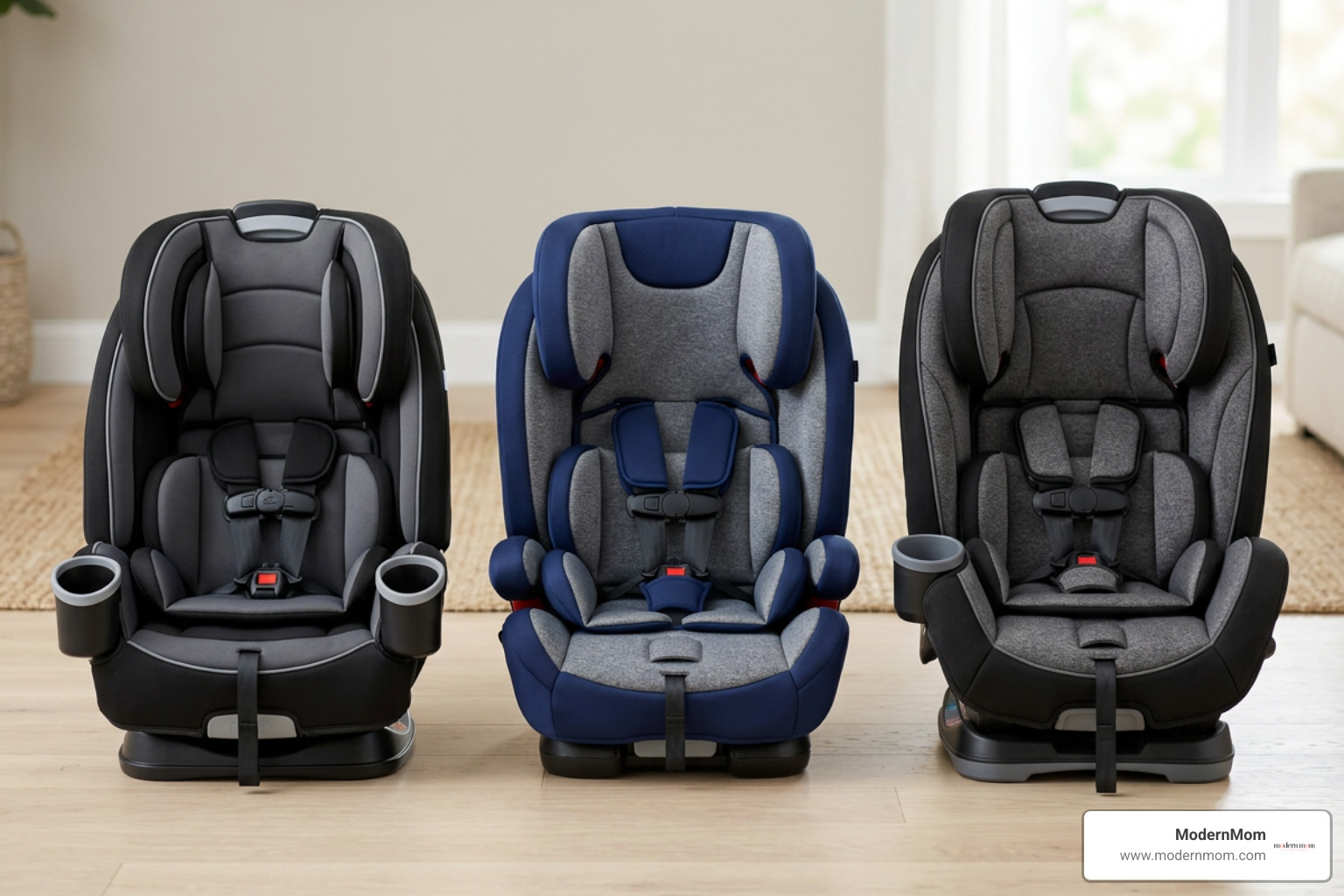
Finding the right seat means balancing crash performance, seat dimensions, ease of installation, and your budget. Here’s how top-rated options compare:
| Car Seat Model | Best For | Rear-Facing Weight Limit | Seat Width | Key Safety Feature |
|---|---|---|---|---|
| Graco 4Ever DLX | Best Overall | Up to 40 lbs | 19.3 in | Steel-reinforced frame, 10-year life |
| Chicco Fit360 | Best Rotating Ease | Up to 40 lbs | 18.2 in | ClearTek rotation, visual tensioning |
| Safety 1st Scenera Extend | Best Budget / Travel | Up to 40 lbs | 17.0 in | Ultra-lightweight, compact travel bag |
| Graco SlimFit3 LX | Best Narrow 3-Across | Up to 40 lbs | 16.5 in | Space-saving design, integrated lock-off |
Graco 4Ever DLX: Best Overall Performance
The Graco 4Ever DLX is a top choice for families seeking long-term value and strong crash test results. This 4-in-1 seat grows with your child from 4 to 120 pounds, transitioning seamlessly from rear-facing to forward-facing, high-back booster, and backless booster.
It features the Simply Safe Adjust harness system, allowing you to adjust the headrest and 5-point harness in a single motion without rethreading straps. Built-in belt lock-offs and an easy-to-read level indicator ensure a straightforward, secure installation every time you set it up.
Chicco Fit360 and Romer Veni: Best Ease of Use and Rotation
For parents prioritizing smooth loading routines, the Chicco Fit360 offers a 360-degree swivel mechanism that locks securely into place for travel. Its intuitive lever makes rotating the seat effortless, saving your lower back during tight parking situations.
The Romer Veni provides extended rear-facing capabilities up to 50 pounds alongside premium fabric trims. Both models feature integrated tensioning systems that eliminate installation guesswork, helping prevent the common fitting errors that lower seat safety performance.
Top Budget-Friendly Convertible Car Seat for 1 Year Old
You don’t need to spend top dollar to get certified crash protection for your toddler. Budget-friendly options must pass the exact same federal safety testing as luxury models. The Disney Baby Scenera Extend Convertible Car Seat is a prime example of an affordable, highly functional option that doesn’t compromise on protection.
Weighing under 10 pounds, this seat is an ideal choice for travel, airport trips, or secondary caregiver vehicles. Its compact shell fits easily in smaller cars, and the included travel bag makes transportation hassle-free for busy families on the go.
Graco SlimFit3 LX: Best Narrow Option for 3-Across
If you need to fit three child seats across a single back seat row, width is everything. Measuring just 16.5 inches wide, the Graco SlimFit3 LX is specially engineered for compact cars and growing families.
Despite its narrow footprint, it doesn’t sacrifice toddler comfort or side-impact safety. It features comfortable armrests, removable cup holders, and breathable mesh fabric to keep your child comfortable on longer drives.
Step-by-Step Installation and Avoiding Common Toddler Seat Mistakes
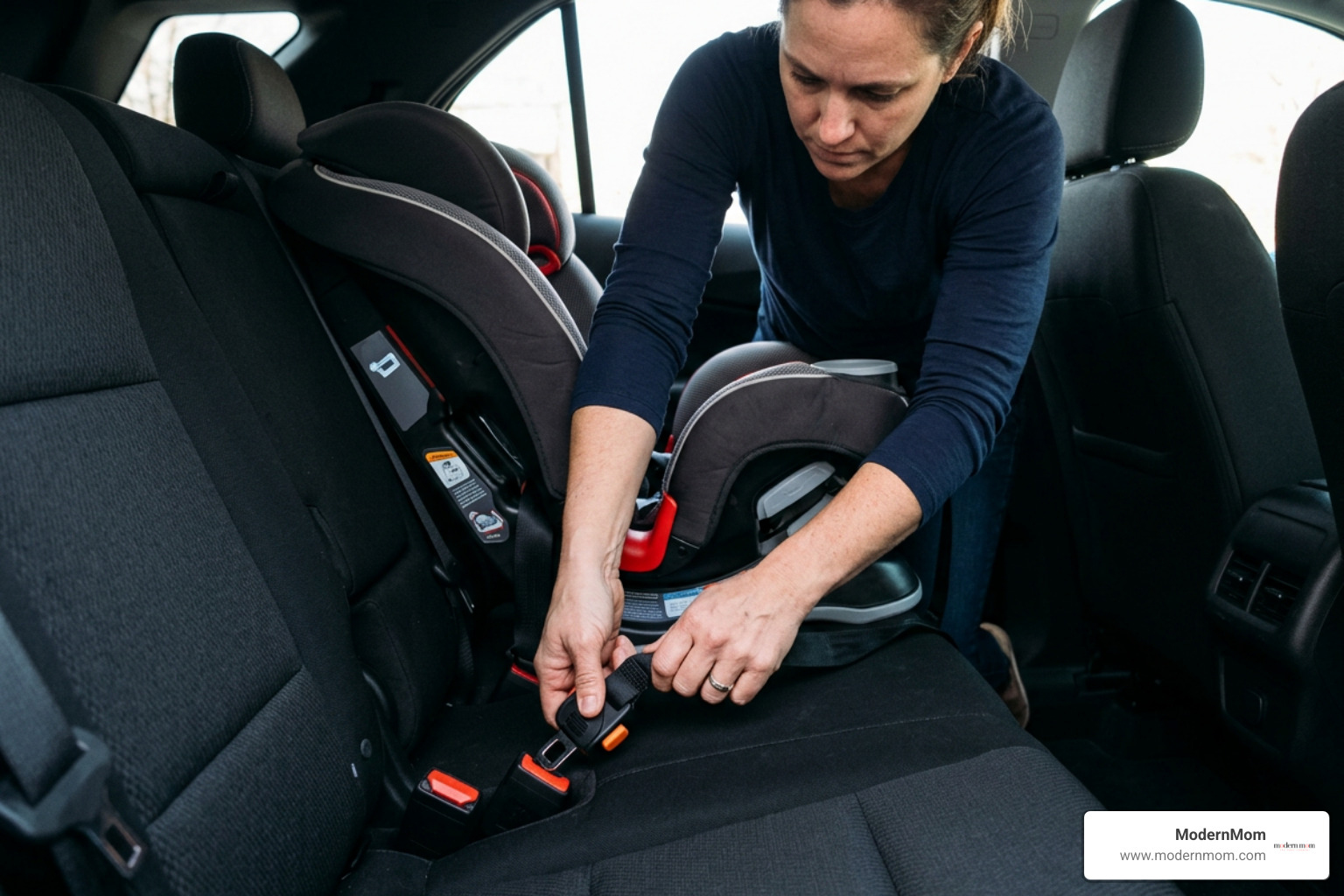
A car seat only protects your child if it’s installed correctly. Studies show over 70% of car seats are installed incorrectly or feature loose harness straps. Taking time to master your specific installation method is essential for keeping your toddler safe. If your seat ever needs deep cleaning after an unexpected spill, check our guide on How to Clean a Car Seat for safe, step-by-step care techniques.
LATCH System vs. Vehicle Belt Routing
Both lower LATCH anchors and vehicle seat belts provide equal safety protection when installed correctly. However, you should only use one method at a time unless your seat manual explicitly states otherwise.
- LATCH Installation: Connect built-in lower anchor connectors to your vehicle’s metal anchors. Lower anchors have strict weight limits (usually 65 lbs total child plus seat weight).
- Seat Belt Installation: Pull the seat belt through the designated rear-facing belt path, buckle it, and lock the retractor or engage the built-in belt lock-off clip.
- The 1-Inch Rule: Grasp the seat at the belt path and pull firmly side-to-side and front-to-back. The seat base shouldn’t move more than 1 inch in any direction.
Avoid Common Installation Errors
Avoid these common mistakes to keep your child properly secured on every drive:
- Harness Slack: The harness straps should lie flat without twists. Perform the pinch test: if you can pinch excess webbing at your child’s shoulder, tighten the harness further.
- Chest Clip Position: The chest clip must sit at armpit level to keep harness straps properly positioned across the shoulders.
- Incorrect Recline Angle: Always check the built-in bubble or line level indicators on the side of the seat to ensure the recline angle is correct for rear-facing infants and toddlers.
Frequently Asked Questions About Toddler Car Seats
Should a 1-year-old stay rear-facing or turn forward-facing?
A 1-year-old child should remain in a rear-facing car seat. Leading medical and safety organizations recommend keeping toddlers rear-facing until they hit the maximum height or weight limits of their convertible car seat, which usually happens around age 2 to 4.
When should my toddler switch to a forward-facing seat?
Your toddler is ready to switch to a forward-facing seat with a harness and top tether only after outgrowing the rear-facing weight or height limits on their convertible car seat. Never turn a child forward-facing simply because their legs touch the vehicle seat back.
Is a seat belt or LATCH installation safer for a convertible car seat?
Neither method is inherently safer than the other. Both seat belts and lower LATCH anchors provide equivalent protection when used correctly. The best option is whichever method gives you a solid fit with less than 1 inch of movement at the belt path.
Conclusion
Finding the right car seat for 1 year old toddlers comes down to selecting a seat that fits your child’s physical frame, matches your vehicle’s dimensions, and gives you confidence during daily installation. Prioritizing extended rear-facing seating, verifying secure belt tensioning, and choosing features that simplify your morning routine will help keep your growing toddler safe on every adventure. For state-specific travel requirements and safety guidelines, check out our Child Seat Belt Laws Guide to stay informed and fully prepared.