

Why So Many Moms Are Running on Empty (And How to Finally Fix It)
If you’re trying to boost energy levels without reaching for yet another cup of coffee, you’re not alone. According to a Gallup survey, 14% of Americans say they don’t have the energy they need to get through the day — and for busy moms juggling school runs, work, and everything in between, that number probably feels low.
Here’s a quick look at the most effective, caffeine-free ways to get your energy back:
- Eat low-glycemic whole foods — swap refined carbs for oats, eggs, nuts, and vegetables to avoid blood sugar crashes
- Prioritize sleep and stress management — even small improvements to your bedtime routine make a big difference
- Move your body daily — as little as 15 minutes of walking can measurably reduce fatigue
- Stay hydrated — just 2% dehydration can tank your focus and physical stamina
- Check for hidden culprits — vitamin deficiencies and common medications are often overlooked causes of exhaustion
The problem isn’t willpower. It’s that most energy advice ignores why you’re tired in the first place.
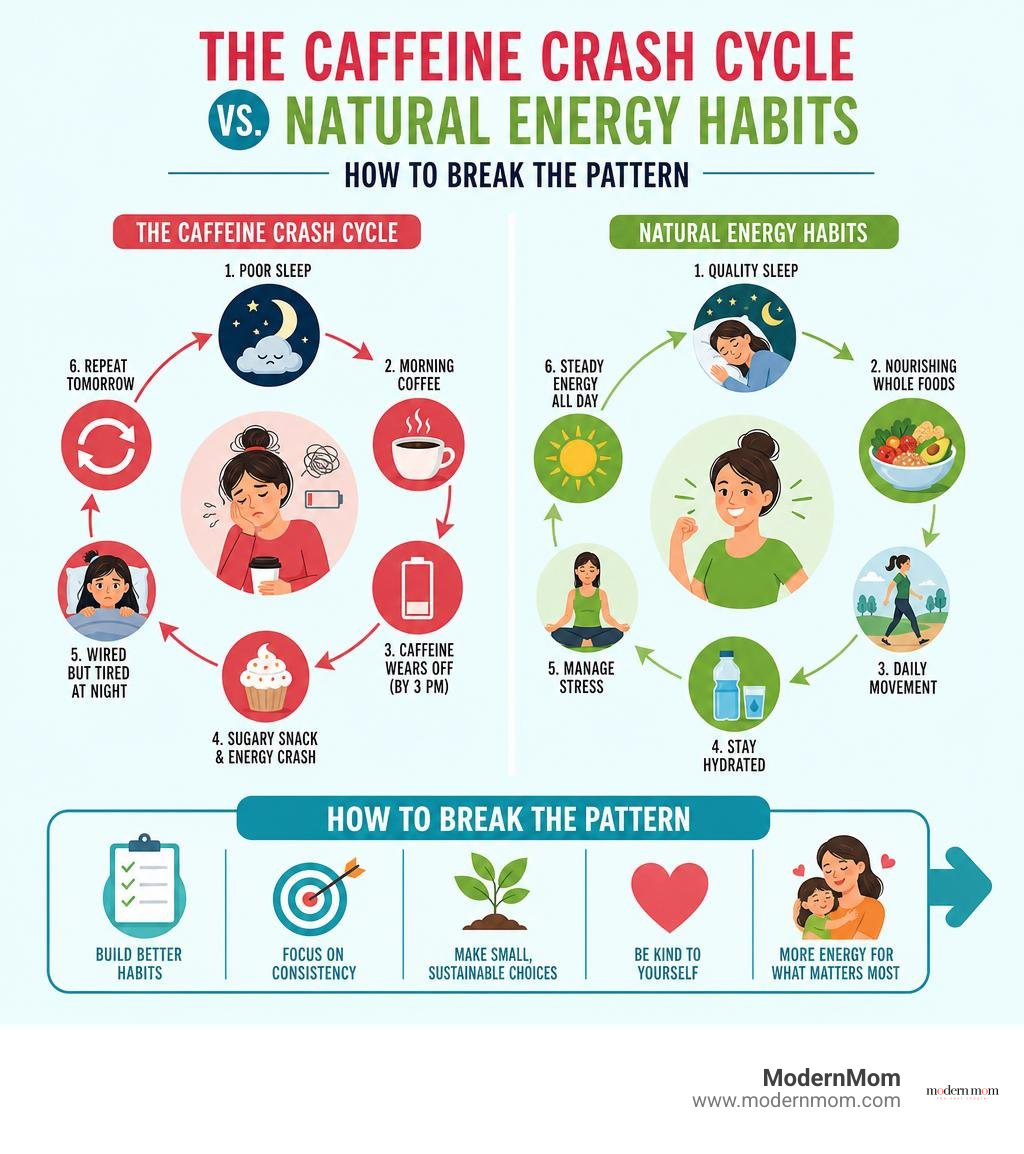
Many moms get stuck in a cycle that looks like this: poor sleep leads to a morning coffee, the caffeine wears off by 3 PM, a sugary snack causes a crash, and by bedtime your body still can’t wind down properly. Repeat. Research shows that people who follow a diet high in refined carbs and added sugar report 26% more fatigue than those eating whole grains and fresh produce — so what you’re eating (and drinking) genuinely matters.
The good news? Small, sustainable changes across sleep, food, movement, and hydration can make a dramatic difference — no expensive supplements required.
Explore more self-care ideas:
1. Fuel Your Body with Low-Glycemic Whole Foods
What we put on our plates acts as the literal fuel for our daily marathon. When we grab a quick, sugary pastry or a white flour bagel on our way out the door, we’re setting ourselves up for a dramatic mid-morning crash.
To keep our engine running smoothly, we want to focus on the glycemic index (GI) of our foods. Low-glycemic foods release glucose slowly and steadily into our bloodstream, preventing those exhausting spikes and drops.
| High-Glycemic (Rapid Crash) | Low-Glycemic (Sustained Fuel) |
|---|---|
| White bread, pastries, sugary cereals | Whole grains (oats, quinoa, brown rice) |
| Sweetened coffee drinks, soda | Nuts, seeds, avocados |
| Chips, pretzels, processed snacks | Eggs, Greek yogurt, lean proteins |
| Sugary candies, milk chocolate | Dark chocolate (70%+), fresh berries |
By shifting our focus toward whole, unprocessed foods, we can easily bypass the dietary fatigue trap. Let’s look at how to put this into practice throughout the busy day.
Start Your Morning with Complex Carbs to Boost Energy Levels
We’ve all heard that breakfast is the most important meal of the day, but for moms, it’s our ultimate shield against early-morning brain fog. Combining complex carbohydrates with high-quality protein and fiber is the secret to lasting stamina.
Eggs are an absolute powerhouse for this, packing 6 grams of protein and essential nutrients into just 78 calories. Pair them with a bowl of warm, fiber-rich oatmeal to keep your blood sugar beautifully stable.
On those chaotic mornings when sitting down for a meal feels impossible, we love having grab-and-go options ready. Our Breakfast Cookies With Banana And Strawberries are a lifesaver, giving you and your little ones a delicious, nutrient-dense start without the kitchen chaos.
Smart Snacking to Prevent the 3 PM Slump
We know that dreaded afternoon slump all too well. Around 3 PM, when the school bell is about to ring or your work inbox is piling up, it’s tempting to raid the pantry for chocolate chip cookies or processed snacks.
Instead, we can proactively beat the crash by reaching for a handful of almonds, which are packed with magnesium to support healthy muscle function and energy metabolism. Greek yogurt topped with fresh berries is another fantastic choice, offering a satisfying blend of protein and slow-release healthy fats.
If you have a sweet tooth, a small square of dark chocolate (70% cocoa or higher) is a brilliant hack. It contains natural stimulants like theobromine that raise alertness without the jitters. For dinner prep that keeps you energized for the evening routine, try making a batch of our comforting Spinach Quinoa Casserole Recipe to feed the whole family.
2. Prioritize Restorative Sleep and Stress Management
It’s no secret that motherhood and stress go hand-in-hand, but chronic stress is one of the quietest energy thieves we face. When we’re constantly in “fight-or-flight” mode, our bodies produce high levels of cortisol, which eventually drains our vitality and disrupts our natural sleep cycles.

To reclaim our natural vigor, we have to address both how we rest and how we handle daily tension.
Establish a Calming Bedtime Routine
Getting a good night’s sleep isn’t just about the hours spent in bed; it’s about the quality of that rest. To help our brains produce melatonin—the hormone that tells us it’s time to sleep—we need to limit blue light exposure from our phones and tablets for at least an hour before bedtime.
We can also optimize our physical environment. Sleep experts recommend keeping your bedroom at a cool 65 degrees Fahrenheit and installing blackout shades to block out ambient neighborhood lights.
If you struggle with tossing and turning, you might try a counterintuitive approach called sleep restriction. By temporarily limiting your time in bed to only the hours you’re actually asleep, you can train your brain to sleep more deeply and soundly. For a complete guide on resetting your body’s internal clock, take a look at our 7 Tips For Detoxing And Restoring Energy.
Quick Stress-Relief Hacks for Busy Moms
When stress-induced emotions start consuming massive amounts of your energy, you need quick tools to diffuse the tension. One of our favorite, science-backed instant pick-me-ups is laughter. Watching a quick, funny video or calling a close friend releases a flood of endorphins that immediately lifts your mood and breaks the stress cycle.
You can also use guided imagery right in your living room or office. Close your eyes for just two minutes and visualize a calm, peaceful setting—like walking through a quiet forest or sitting on a warm beach.
At the end of a demanding day, don’t forget to show your body some physical appreciation. Learning How To Soothe Achy Feet After A Long Day can melt away physical tension, helping your nervous system transition smoothly into a deeply restorative state.
3. Move Your Body to Naturally Boost Energy Levels
When you’re already feeling exhausted, the absolute last thing you want to do is work out. But biologically speaking, physical movement is one of the most effective ways to boost energy levels.
According to the Exercise and Energy: The Link, Best Exercises, Tips, and More guide on Healthline, regular physical activity stimulates our brain chemistry and improves cardiovascular health, making every daily task feel lighter.
Low-Impact Workouts That Fit into Your Schedule
We don’t need to spend hours at the gym to reap these benefits. In fact, low-intensity movement is often better for tired moms because it doesn’t place excessive stress on an already overworked body.
A simple 15-minute walk around the neighborhood can immediately increase blood circulation and lift your spirits. If you’re aiming for a daily target, you can learn more about how movement translates to energy expenditure in our guide on How Many Calories Does 10,000 Steps Burn.
For moms recovering from childbirth, a gentle Post-Partum Workout is the perfect way to safely rebuild strength. If you only have a few minutes between chores, trying a quick 5 Minute Ab Blast can get your blood pumping and leave you feeling accomplished and alert.
The Cellular Science of Exercise and Stamina
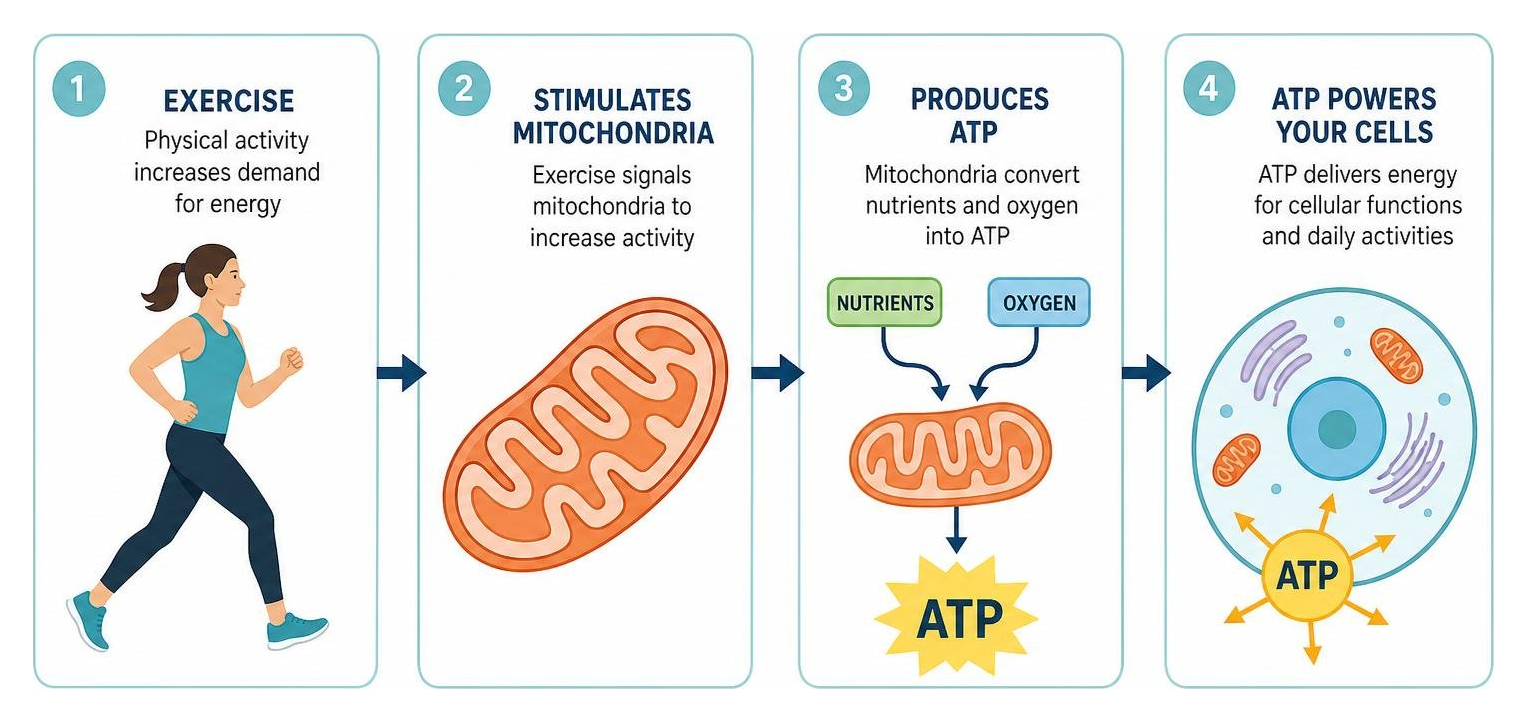
How does this work under the hood? Movement actually increases energy at the cellular level by promoting the health of our mitochondria—the tiny powerhouses inside our cells that generate Adenosine Triphosphate (ATP), our body’s primary energy currency.
When we exercise, we also deliver oxygen and vital nutrients to our tissues, helping our cardiovascular system work more efficiently. This means our heart and lungs don’t have to work as hard during everyday chores, leaving us with plenty of leftover stamina.
Just be sure to listen to your body to avoid overtraining syndrome, which can cause persistent fatigue and sore joints. We always recommend taking at least one or two rest days a week to let your muscles recover and rebuild.
4. Hydrate and Address Hidden Fatigue Culprits
Sometimes, the reason we feel completely wiped out has nothing to do with sleep or food. It’s often due to simple, easily overlooked factors like mild dehydration or minor nutrient deficiencies.

Why Mild Dehydration Saps Your Focus
Did you know that as little as 2% dehydration can lead to a drop in cognitive function, reduced motivation, and increased feelings of fatigue? When our fluid levels drop, our blood volume decreases, which means our heart has to work much harder to pump oxygen and nutrients to our brain and muscles.
We should aim to drink 8 to 10 glasses of water throughout the day. If plain water feels a bit boring, swapping your afternoon coffee for a cup of green tea is a wonderful alternative.
Not only does it help keep your fluids up, but the natural compounds in it provide a smooth, jitter-free focus. Plus, you can enjoy the amazing Green Tea Beauty Benefits as an added self-care bonus! To dive deeper into how water keeps us alert, check out the 9 Natural Ways to Boost Your Energy Levels article on Healthline.
Checking for Vitamin Deficiencies and Medication Side Effects
If you’ve optimized your diet, sleep, and hydration but still feel incredibly heavy and tired, it might be time to look a little deeper. Vitamin deficiencies—especially Vitamin D and Vitamin B12—are incredibly common culprits behind unexplained fatigue.
Additionally, many everyday medications can cause drowsiness as a sneaky side effect. Common antihistamines, blood pressure medications, and even certain pain relievers can actively sap our energy throughout the day.
We highly recommend scheduling a quick check-in with your doctor or primary care physician to review your current medications and run a simple blood panel to rule out any underlying nutritional gaps.
5. Know When to Check In with a Doctor
If you’ve tried improving your sleep, meals, hydration, and movement but still feel unusually drained, it may be time to look for an underlying cause instead of adding another quick fix.
Persistent fatigue can sometimes point to issues like low iron, thyroid changes, vitamin D or B12 deficiency, sleep apnea, depression, or medication side effects. This doesn’t mean something is seriously wrong, but it does mean your body may be asking for more support than another lifestyle tweak can provide.
Simple Questions to Bring to Your Appointment
Before your visit, jot down when your fatigue started, what time of day it feels worst, how you’re sleeping, and whether you’ve noticed other symptoms like dizziness, heavy periods, headaches, mood changes, or shortness of breath. A short symptom log can help your doctor decide whether basic labs, a medication review, or a sleep evaluation makes sense.
You can also ask whether any supplements, herbs, or energy products are safe for you personally—especially if you’re pregnant, breastfeeding, managing a health condition, or taking prescription medication. The goal isn’t to chase a bigger energy boost; it’s to make sure there isn’t a simple, treatable reason you’re running on empty.
Frequently Asked Questions about Fatigue
What is the difference between normal tiredness and chronic fatigue?
Normal tiredness is a typical response to a busy day, physical exertion, or a late night, and it’s easily remedied by a good night of sleep. Chronic fatigue, on the other hand, is an overwhelming, persistent exhaustion that isn’t relieved by rest and lasts for weeks or months. If your tiredness is accompanied by joint pain, headaches, or a feeling of constant brain fog, we highly recommend consulting a healthcare professional to rule out any underlying medical conditions.
How does dehydration directly cause physical and mental sluggishness?
When our bodies lack sufficient fluids, our total blood volume shrinks. This makes our blood slightly thicker, forcing our cardiovascular system to work harder to transport oxygen and vital nutrients to our vital organs. The immediate result is a noticeable drop in physical endurance, slower reaction times, and difficulty concentrating on daily tasks.
Can certain everyday medications actually make me feel tired?
Yes, absolutely. Many over-the-counter and prescription drugs list drowsiness as a primary side effect. Antihistamines (commonly taken for seasonal allergies), certain blood pressure medications, muscle relaxants, and some antidepressants can all leave you feeling sluggish. It is always wise to review your current prescriptions with a local pharmacist or doctor to see if an alternative option is available.
Conclusion
Reclaiming your vitality doesn’t require a magic wand or a constant stream of double-espressos. By listening to our bodies and making small, intentional adjustments to what we eat, how we rest, and how we move, we can naturally boost energy levels and show up fully for the people we love most.
Taking care of your own energy is a vital part of taking care of your family. For more practical wellness advice, healthy recipes, and supportive parenting tips, explore our dedicated ModernMom Health & Fitness corner. You’ve got this, mama!