

Why Family Quality Time Is Worth Fighting For
Family quality time is one of the most powerful gifts you can give your kids — and it doesn’t require a big budget, a Pinterest-worthy setup, or a free weekend.
Here’s a quick snapshot of what it is and why it matters:
- What it is: Focused, present, distraction-free time spent connecting with your family
- Why it matters: It builds self-esteem, improves kids’ academic performance, reduces behavioral problems, and strengthens emotional bonds
- How much time do most families actually get? Studies show the average parent spends just 39 minutes a week in meaningful conversation with their children — while the average TV runs for 49 hours in the same home
- The good news: Even small, consistent moments count — a car ride, a shared meal, a bedtime chat
If you’ve ever felt guilty about not doing enough with your kids, you’re not alone. Between work, errands, and the endless scroll of notifications, real connection can quietly slip through the cracks. But research consistently shows that how you show up matters far more than how long.
Families who eat meals together without screens report stronger relationships, better grades, fewer behavioral problems, and more open communication. And it’s not just about meals — it’s about any moment where everyone is genuinely present.
The truth is, you don’t need to overhaul your schedule. You need a few smart, doable habits that fit into the life you’re already living.
Quality vs. Quantity: Why Meaningful Moments Matter Most
Many of us worry that because we work long hours, we aren’t spending enough time with our kids. But developmental psychologists have reassuring news: the quality of the time we spend together matters far more than the sheer number of hours.
When we focus on quality, we create a secure space for healthy emotional development and self-esteem. According to experts, spending quality time with family strengthens relationships and bonds, serving as the foundation of a child’s emotional security. It gives them a sense of belonging and unconditional love that shields them from external pressures.
Moreover, having regular, focused interactions helps parents catch spontaneous teaching moments. These are the unplanned, serendipitous conversations that happen when we are fully present—like during a car ride or while folding laundry. You can’t schedule these breakthrough moments; they only happen when we slow down and give our children our undivided attention.
To understand what our kids truly need to feel secure, check out what psychologists say about emotional readiness in What Psychologists Want You To Know Is The Real Back To School Essential.
The Science-Backed Benefits of Family Quality Time
Prioritizing family quality time isn’t just a feel-good parenting goal; it is backed by serious scientific research. Studies consistently show that children who experience regular, meaningful connection with their parents perform better academically and have fewer behavioral problems.
For instance, regular family meals are associated with improved mental health, higher self-esteem, and lower rates of depression and substance use in teens. When we gather without distractions, we naturally build resilience and foster open communication.
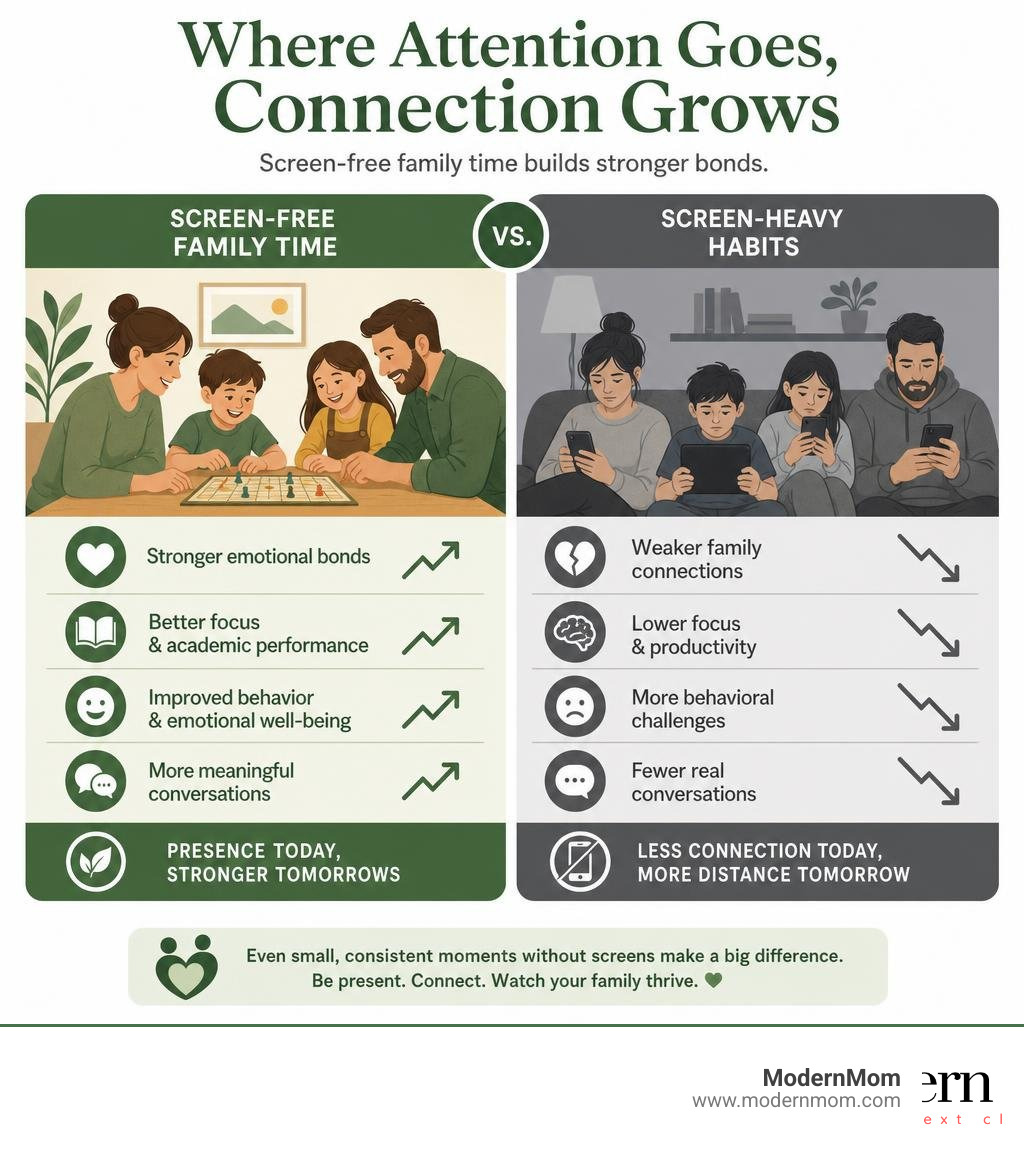
To see the difference simple lifestyle adjustments can make, let’s compare screen-heavy habits with screen-free connection:
| Screen-Heavy Family Habits | Screen-Free Connection Habits |
|---|---|
| Background TV on during meals | Active, face-to-face dinner conversations |
| Silent scrolling side-by-side on the couch | Playing a quick card game or board game |
| Distracted responses while checking emails | Undivided attention during “micro-connections” |
| High stress from constant digital stimulation | Lower stress levels and calm, regulated nervous systems |
How to Fit Connection Into a Hectic Schedule
We get it—your calendar is already packed to the brim. Between school drop-offs, sports practices, and work deadlines, adding “family time” to the to-do list can feel like another source of stress.
The secret is to work within the rhythms of your daily life rather than trying to manufacture perfect, Instagram-worthy events. By using smart calendar management, we can reclaim small pockets of time without burning ourselves out.
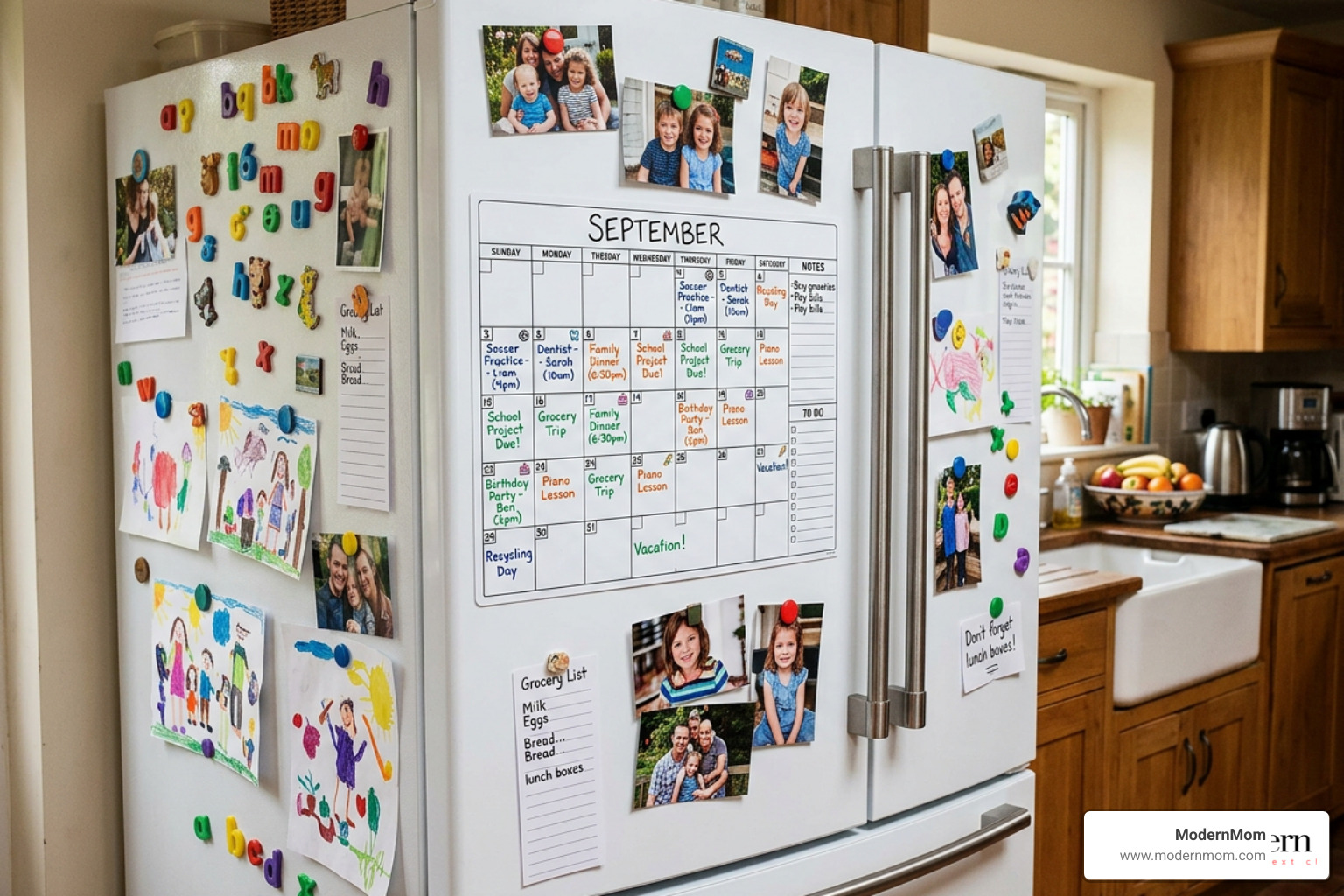
Using tools like those found in Family Calendar Organization Chaos Apps Tips And Tricks For Seamless Scheduling can help you map out your week and protect your family time blocks. Additionally, designing a balanced daily routine using The Routine Revolution Simple Steps To Design Your Perfect Day ensures that connection becomes automatic, even when you’re completely exhausted.
Turning Everyday Chores Into Family Quality Time
Who says chores have to be boring? We can easily turn everyday tasks into meaningful bonding opportunities.
Meal prep is one of the easiest places to start. Involving your kids in choosing recipes, grocery shopping, and cooking teaches them valuable life skills while fostering teamwork.
- Let toddlers wash veggies: It keeps them busy and builds fine motor skills.
- Let school-age kids measure ingredients: A sneaky way to practice math!
- Let teens take charge of a meal: This builds independence and self-reliance.
To make meal planning a breeze and save your sanity, check out Never Ask Whats For Lunch Again Crafting Your Perfect Weekly Plan. When chores are shared, they take less time, and the laughter along the way makes the work feel light.
Establishing Rituals and Traditions That Stick
Predictable rituals reduce stress and make kids feel safe. Creating simple, daily or weekly traditions helps anchor your family, giving everyone something to look forward to.
This can be as simple as a 15-minute bedtime reading routine, hosting weekly family meetings to check in on everyone’s highs and lows, or writing a family mission statement together. You can also start exciting yearly traditions, such as Making New Years Resolutions With Your Kids, which teaches them goal-setting in a supportive, loving environment.
Low-Cost and Screen-Free Activities for All Ages
You don’t need to spend a fortune on theme parks or expensive vacations to build lasting memories. In fact, the best family moments often cost absolutely nothing.

Here are some of our favorite low-cost, screen-free activities:
- The “Tuesday Night” Card Game: Keep a deck of cards on the kitchen table for a quick game of Uno or Go Fish.
- Backyard Stargazing: Throw some blankets on the grass and look for constellations.
- Family Playlist Battles: Let everyone pick a favorite song and explain why they love it.
- Nature Walks: Take a stroll around your neighborhood or a local trail and collect interesting leaves or rocks.
Age-Appropriate Family Quality Time Ideas
As our kids grow, their emotional needs and interests change. Tailoring your family quality time to their developmental stage ensures everyone stays engaged.
- Toddlers: Focus on sensory, child-led play, silly songs, and rough-and-tumble floor play.
- School-Age Kids: Engage them in creative arts, building challenges, or board games. For inspiration on fostering their imagination, read our tips on Helping Your Kids Develop Creativity A Lifelong Love Of Learning.
- Teens: Respect their growing independence with low-pressure, one-on-one “dates” like grabbing boba, going for a drive, or letting them teach you how to play their favorite video game.
Giving Back Together as a Family
Volunteering as a family is a beautiful way to build empathy and teach kids about the world around them. It shifts the focus outward and strengthens your shared values.
If you are wondering how to get started, look at How I Incorporated Philanthropy Into Family Time for practical, real-life ideas. Whether you are assembling care packages for a local shelter or cleaning up a neighborhood park, working toward a common good acts as the ultimate “family glue.”
Overcoming Common Barriers to Connection
Even with the best intentions, barriers like screen addiction, busy work schedules, and sibling rivalry can get in the way.
To overcome these, we have to establish healthy boundaries. Try setting up a “tech basket” at the front door where everyone—including parents—must deposit their phones during meals or family nights.
When conflicts arise during family time, use it as an opportunity to practice active listening. Encourage everyone to use “I” statements (e.g., “I feel frustrated when…” instead of “You always…”) to keep conversations constructive and loving.

Frequently Asked Questions About Family Connection
How do I handle a teenager who resists family time?
It is completely normal for teens to pull away as they seek independence. Instead of forcing them into large family events, try scheduling low-pressure, one-on-one dates. Ask them to choose the activity, practice active listening without offering unsolicited advice, and respect their need for space.
What if we only have 15 minutes of free time a day?
Don’t underestimate the power of “micro-connections.” A 10-minute chat before bed, a silly sing-along in the car on the way to school, or a quick card game after dinner all count. Focus on being entirely present in those short windows.
How can we keep family night consistent without adding stress?
Keep expectations realistic. It does not need to be a Pinterest-perfect event. Use a rotating “decider” system so the planning burden doesn’t fall entirely on you, keep snacks simple, and protect the scheduled night on your calendar like an absolute emergency.
Conclusion
At the end of the day, our kids won’t remember how clean the house was or whether we bought them the most expensive toys. They will remember the Tuesdays we spent laughing at the kitchen table, the walks where we listened to their dreams, and the feeling of being completely seen and loved.
At ModernMom, we believe in choosing grace over perfection. Parenting is a beautiful, messy journey, and you are doing a wonderful job. By making small, intentional adjustments today, you are building a lifetime of secure, happy memories for your family.