Why Teaching Toddler Toilet Cleaning Is One of the Best Habits You Can Start Now
If you’re ready to teach toddler toilet cleaning, here’s the quick version:
- Start around ages 3–4, when most toddlers have the physical reach and coordination to help.
- Teach self-wiping first — front to back, using child-sized wipes or folded toilet paper.
- Add simple seat-cleaning tasks like wiping down the potty chair with a damp cloth.
- Use child-sized tools — small cloths, spray bottles with water or diluted vinegar.
- Make it fun — songs, games, and reward charts go a long way.
- Always finish with handwashing — every single time, no exceptions.
Potty training gets so much attention. There are books, apps, three-day boot camps, and enough advice to fill a library. But here’s what most of those resources skip right over: what happens after your toddler uses the potty on their own.
Wiping. Flushing. Cleaning up the seat. These are the skills that turn a potty-trained toddler into a truly independent one — and they matter more than most parents realize. Research from the University of Minnesota tracked children for over 25 years and found that kids who started simple chores at ages 3–4 were significantly more successful as young adults than those who started later or not at all.
Toilet hygiene is one of those foundational habits. And the good news? It doesn’t have to be a battle.
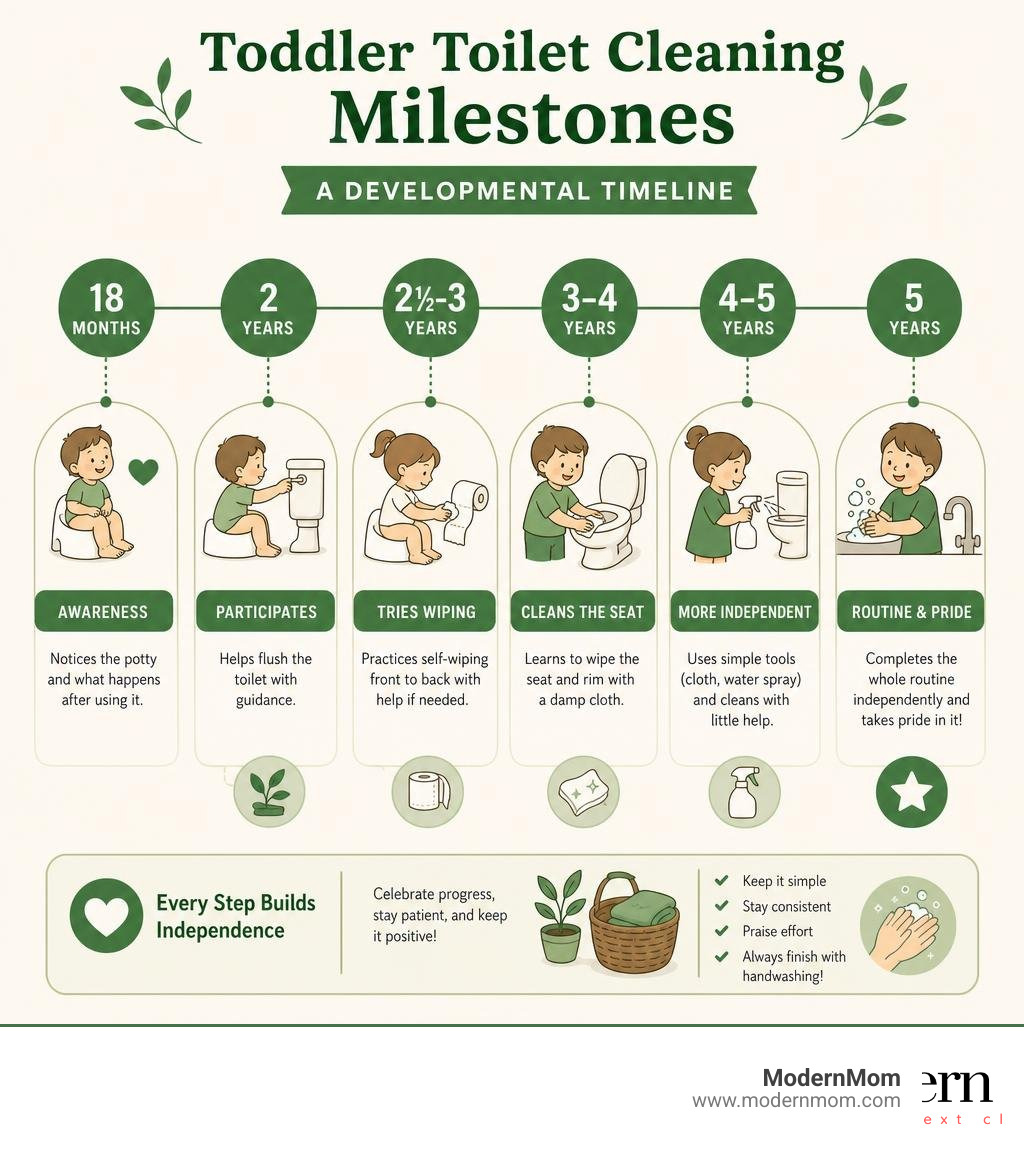
Teach toddler toilet cleaning vocab to learn:
Why You Should Teach Toddler Toilet Cleaning Early
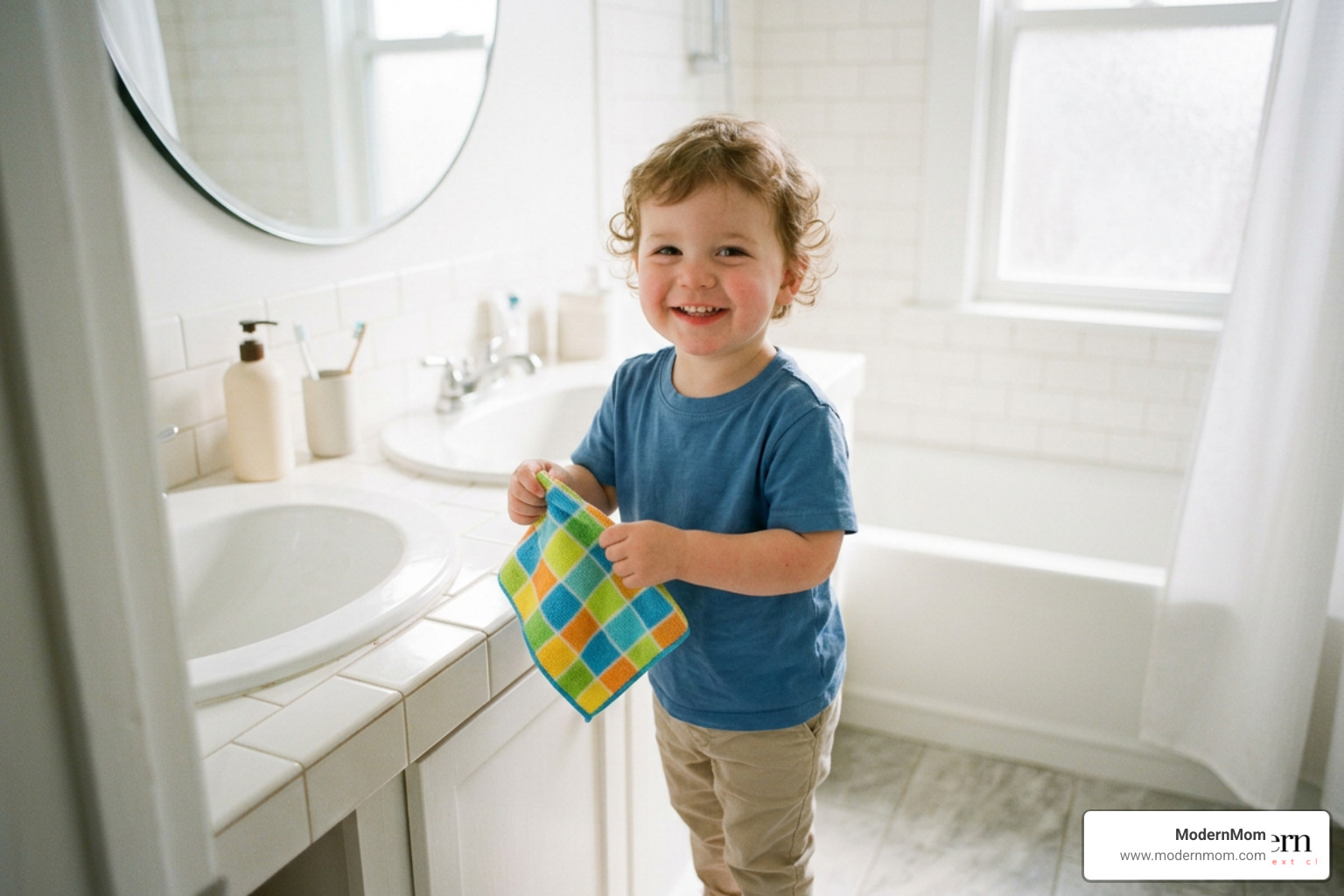
When we think of household chores, cleaning the toilet is rarely at the top of our “fun family activities” list. However, introducing these habits early does wonders for your child’s development. In the Montessori method, “practical life” activities like washing dishes or wiping tables are not viewed as labor. Instead, they are deeply satisfying tasks that build a toddler’s focus, hand-eye coordination, and self-esteem.
According to a survey by Braun Research, while 82% of parents had chores when they were children, only 28% expect their own kids to do them today. By stepping in and doing everything for our kids because “it is faster,” we might accidentally teach them learned helplessness. When we teach toddler toilet cleaning, we show them that they are capable, valued members of the household who can care for themselves and their environment.
Here is a quick look at how early chore participation impacts long-term success:
| Success Metric (Adults Tracked Over 25 Years) | Started Chores at Ages 3–4 | Started Chores in Teens / Never |
|---|---|---|
| Completed Education Rates | Significantly Higher | Average to Lower |
| Early Career Success | Highly Successful | Moderate |
| Strong Family & Peer Relationships | Well-Established | Variable |
Developmental Benefits of Early Chores
Beyond building a clean home, involving your toddler in toilet cleanup exercises their growing prefrontal cortex. Breaking down a multi-step task — like wiping, checking the paper, disposing of it, and washing hands — builds executive function.
It also refines their fine motor skills. Gripping toilet paper, folding it carefully, and directing their hand to the right spots requires serious muscle coordination. Plus, doing these tasks together strengthens your family identity. It teaches your little one that everyone in our home works as a team to keep things comfortable and clean.
Recognizing Readiness and the “Opposite Ear” Test
How do you know if your little one is physically ready to tackle self-wiping and potty cleaning? There is a simple, highly reliable physical test you can try right now: the Opposite Ear Test.
Ask your child to reach their dominant arm over the top of their head and touch their opposite ear. If they can easily do this, it means their limbs have grown long enough and their shoulder joints are flexible enough to reach around and wipe their own backside.
Typically, this coordination peaks between ages 3 and 4. Starting at this stage is incredibly important for their physical health. Pediatricians note that constipation affects 1 in 3 children, and a primary contributor is stool withholding. Often, toddlers hold their bowel movements because they are anxious about using public toilets or feel uncomfortable with the wiping process. Teaching them independent hygiene gives them the confidence they need to go anywhere.
How to Safely Teach Toddler Toilet Cleaning for the Potty Chair and Seat
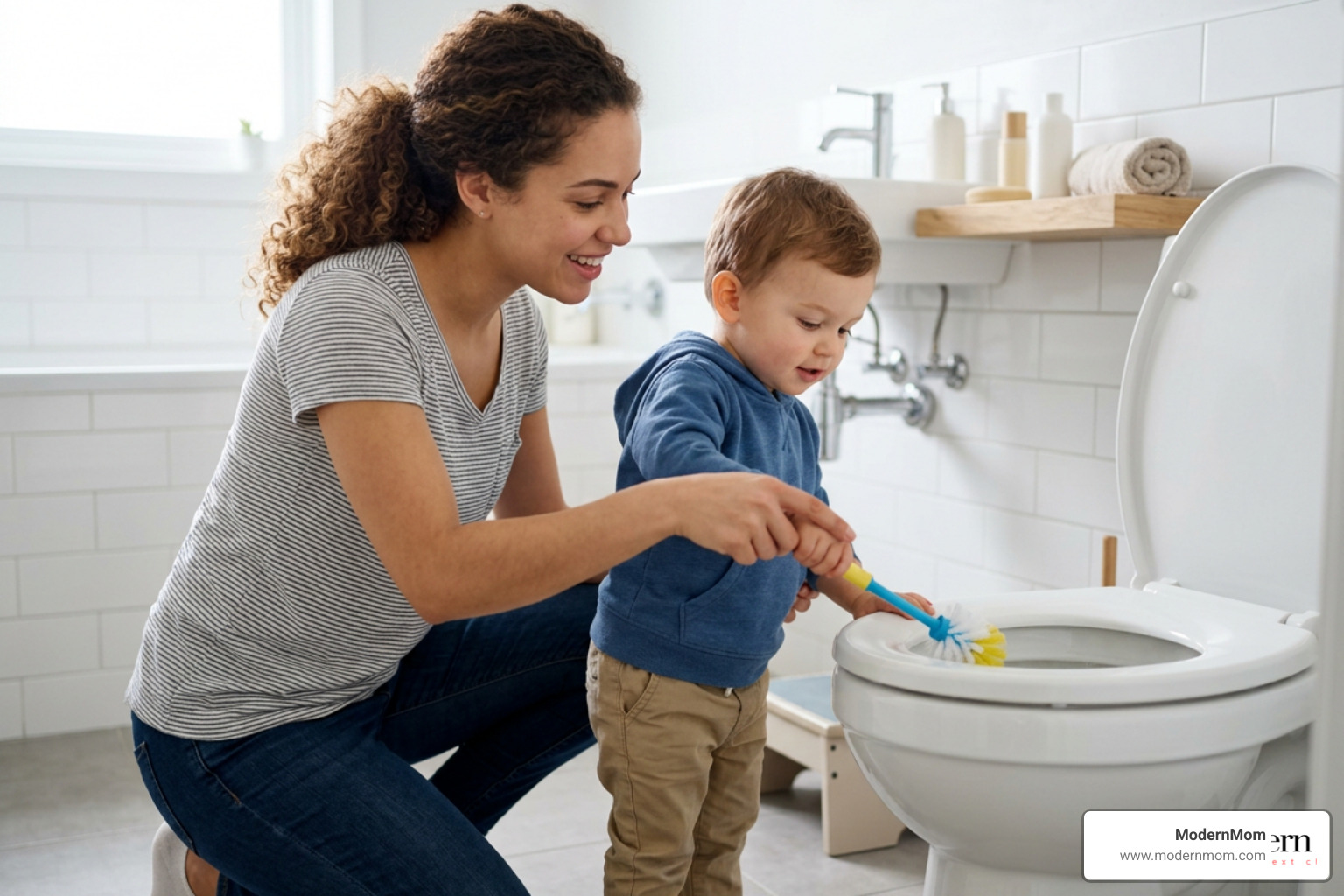
Once your child is physically ready, it is time to build their confidence step-by-step. The goal of toddler chores is participation and muscle memory, not absolute perfection. We want to scaffold the process so they feel supported without getting frustrated.
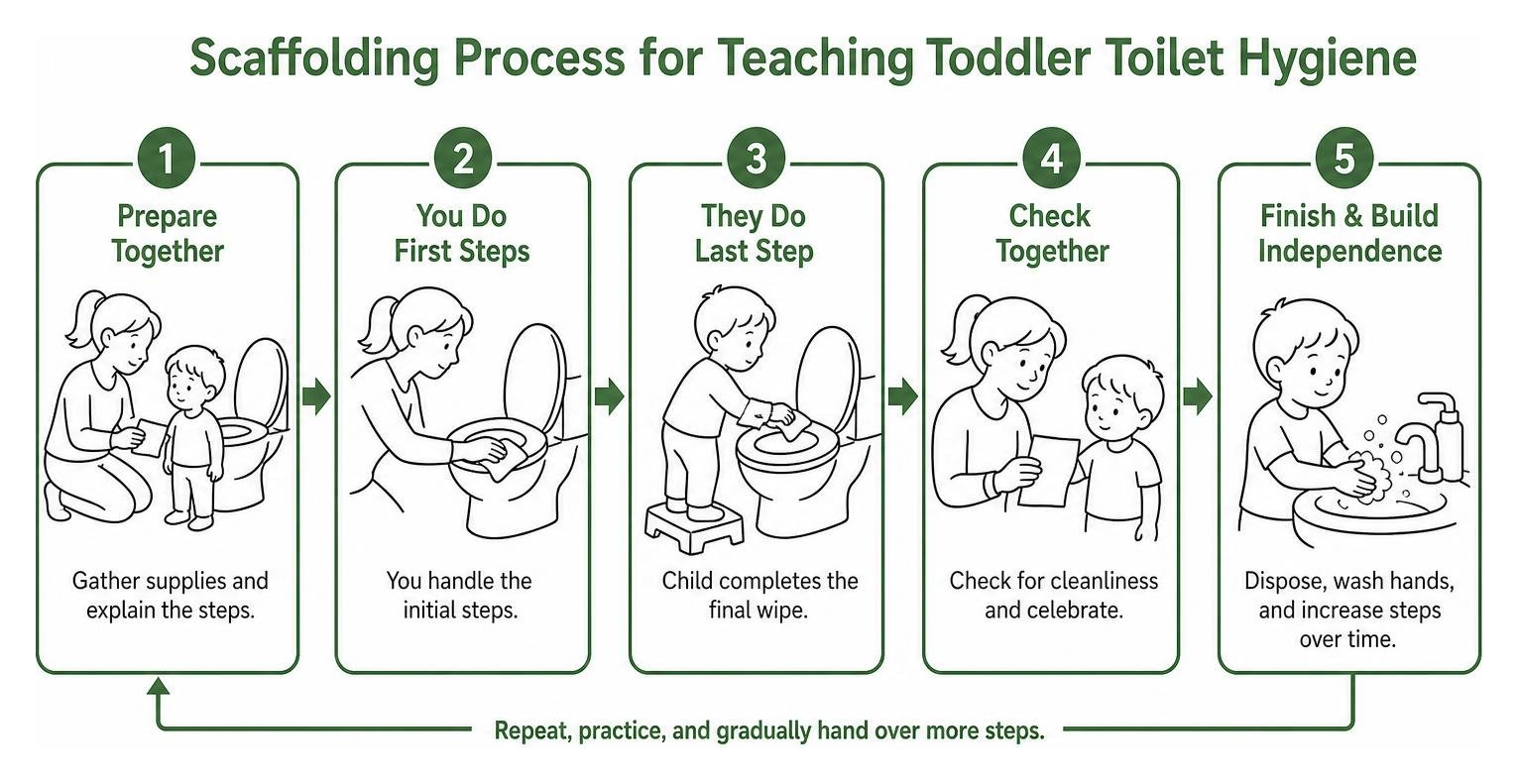
Step 1: How to Teach Toddler Toilet Cleaning and Wiping Basics
Before your toddler ever touches their own backside, they need to learn the mechanics of the wipe. We love using a teaching method called backwards chaining. This means you do the first few steps of the process, and let your toddler complete the very last step (like the final “courtesy wipe”). This ensures they always end on a successful note!
Start by teaching portion control. Kids love to pull endless streams of toilet paper, which leads to major plumbing disasters. Teach them to pull a strip of paper that is exactly the length of their arm. Show them how to fold it in half, and half again, rather than scrunching it into a giant, ineffective ball.
Use hand-over-hand guidance. Sit behind your child on the potty, place your hand over theirs, and guide them through the physical motion of reaching and wiping. This builds the necessary muscle memory without leaving them to guess.
Step 2: Fun Games to Teach Toddler Toilet Cleaning and Hygiene
Because toilet cleaning can feel a little abstract (and, let’s face it, a bit gross), gamifying the process is a lifesaver. Here are two fantastic games to try:
- The Balloon Wiping Game: Blow up a balloon halfway and tape it to a chair at your child’s height. Place a small dab of peanut butter or shaving foam on the balloon “cheeks.” Give your child a wipe and let them practice the scooping, front-to-back motion until the balloon is clean.
- The Germ Monster Hunt: This clever trick is inspired by a brilliant mom who shared her story on Upworthy. You can disinfect the toilet seat yourself first, then use a dry-erase marker to draw cute little “germ monsters” on the porcelain bowl or potty chair. Hand your toddler a damp cloth or a Magic Eraser and let them “defeat” the monsters by wiping them away. It is incredibly visual and teaches them exactly where germs like to hide!
Mastering the Hygienic Wipe (Front-to-Back)
For young girls, teaching the direction of the wipe is a crucial health rule. Always emphasize wiping from front to back. This keeps rectal bacteria far away from the urethra and vagina, preventing painful urinary tract infections (UTIs).
If your toddler struggles with the reach-around technique, teach them the between-the-legs front-wipe for urinating, or have them start by gently patting the area dry. For bowel movements, guide them to reach around the side of their hip rather than trying to reach directly from the back, which can be difficult for short toddler arms.
The “Check, Chuck, Clean” Routine
To make the bathroom routine memorable, we use a simple three-step rhyme: Check, Chuck, Clean.
- Check: Look at the toilet paper or wipe after wiping. Is it clean? If not, get a new piece and wipe again.
- Chuck: Drop the used paper into the potty chair or toilet bowl.
- Clean: Wash hands thoroughly with warm water and soap, or use an antibacterial hand wipe.
Using visual schedules or colorful picture charts right at eye level in the bathroom can increase task completion in young children by up to 60% compared to verbal instructions alone. It acts as a friendly, silent reminder of what comes next.
Safe, Chemical-Free Cleaning Methods for Toddlers
When it comes to letting your toddler help clean the physical potty chair or the outside of the family toilet, safety is our number one priority. You should never let a young child handle harsh chemical sprays, bleach, or disinfecting wipes.
Instead, mix up a safe, kid-friendly DIY cleaner. Fill a small spray bottle with equal parts water and white vinegar, and add a drop of mild dish soap. This non-toxic solution is completely safe for toddler skin and lungs.
Give them a small, child-sized microfiber cloth. Spray the solution onto the potty seat or the outer base of the toilet yourself, and let them wipe it dry. By modeling the behavior safely, they learn that keeping the bathroom tidy is a normal, healthy part of daily life.
Troubleshooting Resistance, Sensory Issues, and Bathroom Accidents
It is completely normal to run into bumps along the road. Some days your toddler will happily clean their potty, and other days they might completely refuse.
If your child resists, avoid shaming or raising your voice. Anxiety and fear shut down the learning centers of a child’s brain, which will only prolong the learning process. Instead, focus on offering choices. Research shows that toddlers offered simple choices (like “Do you want to use the dinosaur wipe or the blue toilet paper?”) complete tasks 40% more often than those given direct commands.
If your child has sensory issues and dislikes the sticky feeling of wet wipes or the texture of dry toilet paper, do not force it. You can try using a warm, damp washcloth that you wash immediately afterward, or look into installing a gentle child-friendly bidet attachment.
What to Do When Plumbing Disasters Strike
As your child learns to manage toilet paper, clogs are bound to happen. If you find yourself dealing with a major bathroom backup, do not panic. We have a complete guide on How To Unclog A Toilet Thats Backing Up Into The Bathtub to help you handle those messy plumbing emergencies quickly and calmly.
Frequently Asked Questions About Toddler Toilet Hygiene
What age should a child be able to wipe themselves?
Most children develop the physical reach and coordination to wipe themselves independently between ages 4 and 5. The ideal goal is to have this skill mastered before they enter kindergarten, as general educators in public schools are often legally restricted from assisting children with toileting in the restroom.
Are flushable wipes safe for my home’s plumbing?
While many brands label their wipes as “flushable,” they do not break down in water nearly as fast as standard toilet paper. To protect your plumbing and septic system, we recommend a strict “one wipe per flush” rule, or better yet, tossing wipes into a lined lidded trash can next to the toilet.
How do I handle a toddler who is afraid of flushing?
The loud, sudden rush of flushing water can be terrifying for sensory-sensitive toddlers. To help them overcome this fear, try gradual exposure. Let them stand near the bathroom door while you flush, or make a game of plugging their ears and saying, “Bye-bye, bubbles!” over the noise. Over time, the fear will fade as they realize they are in control.
Conclusion
Teaching your toddler to clean up after using the potty is a beautiful milestone on their journey to independence. It takes a little extra patience, plenty of consistency, and a good sense of humor, but the lifelong habits you are building right now are worth every single spill.
Remember to celebrate the small wins, keep the pressure low, and laugh through the messy moments. For more practical parenting tips on keeping your little ones safe and healthy through every developmental stage, check out our guide on ModernMom Baby Sleep Safety. You’ve got this, mama!