

How to Reconnect With Your Spouse When You Feel Like Roommates
To reconnect with spouse, start small and stay consistent: set aside 10 phone-free minutes each day, ask one real question about how they are doing, listen without trying to solve the problem, and add a simple moment of affection that feels welcome to you both.
Emotional distance rarely begins with one big fight. For busy parents, it often grows through rushed mornings, work stress, kid schedules, unfinished chores, and conversations that become only about logistics. You can love your partner deeply and still feel lonely in the same home.
The good news: reconnection does not require a costly trip or a perfect date night. It starts with small moments of attention, curiosity, safety, and shared fun. This guide will help you spot emotional drift, rebuild trust, and create realistic routines that fit family life.
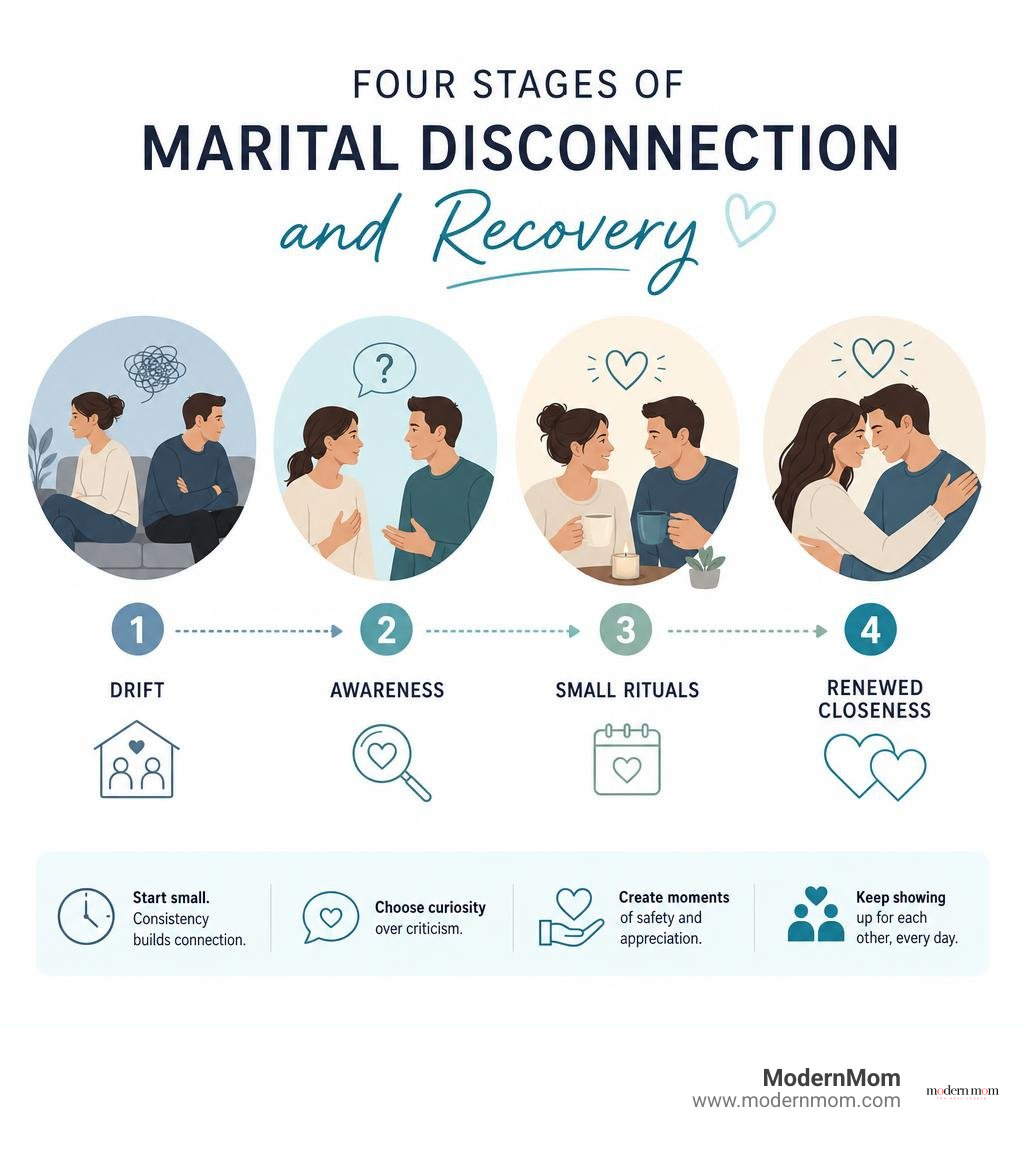
Simple guide to reconnect with spouse terms:
Why Marriages Drift Apart and the Warning Signs to Watch For
The Silent Causes of Emotional Drift
Couples rarely wake up one day and decide to grow apart. Instead, emotional distance creeps in quietly through everyday exhaustion. As mothers, whether we are soothing a newborn through midnight feedings, shuttling tweens between sports practices, or balancing career demands with caring for aging parents, our emotional energy is constantly tested across every season of motherhood.
When life turns into an endless checklist, conversations shift into purely administrative coordination: “Did you pack lunches?” or “Who is picking up the dry cleaning?” In fact, research indicates that the average couple spends less than four minutes a day in meaningful dialogue. Over time, natural novelty declines, and stress accumulates.
We stop turning toward each other’s small bids for connection—like a sigh after a long workday, a shared glance across a chaotic dinner table, or a casual comment about an article—simply because we are worn out. Understanding how to get the love you want begins with recognizing that disconnection is rarely a lack of affection; it is usually a symptom of depleted reserves.
Spotting the “Roommate Syndrome” Early
When emotional distance lingers, couples often slip into “roommate syndrome.” You share a roof, split expenses, and co-manage the kids seamlessly, yet the romantic pulse of the relationship feels gone. You may feel like efficient business partners managing a bustling household rather than two people who chose each other.
| Connected Partnership | Roommate Marriage Dynamic |
|---|---|
| Sharing daily dreams, fears, and emotions | Conversations limited to logistics, chores, and schedules |
| Turning toward bids with eye contact and interest | Parallel scrolling on devices in the same room |
| Casual, non-sexual touch throughout the day | Physical contact reserved only for quick goodbyes or absent |
| Addressing small hurts before they turn into resentment | Sweeping frustrations under the rug to avoid conflict |
| Mutual laughter, playfulness, and shared curiosity | Polite silence or functional, transactional exchanges |
If you notice you share exciting news with friends before telling your partner, or you feel lonely while sitting side by side on the sofa after bedtime routines, your marriage is asking for gentle, intentional attention.
Proven Daily and Weekly Steps to Reconnect With Spouse
Micro-Habits to Reconnect with Spouse Every Day

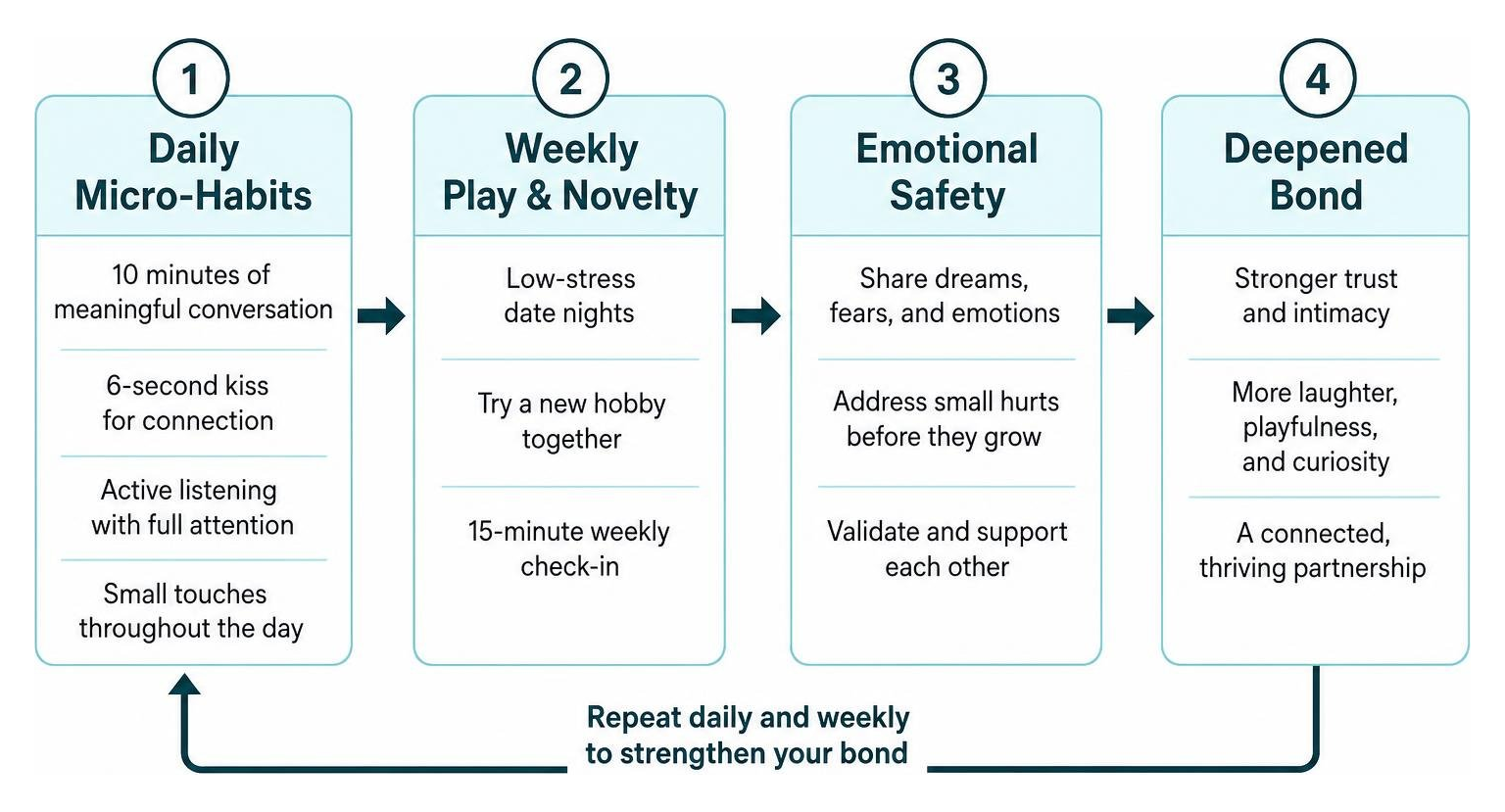
Rebuilding closeness does not demand hours of free time. Focusing on micro-habits creates significant shifts in relationship satisfaction over time without adding to your mental load.
- Practice the 10-Minute Rule: Dr. Terri Orbuch’s 30-year study of over 400 couples discovered that the happiest partners spend at least 10 minutes every single day talking about things other than work, kids, household chores, or logistics. Ask genuine questions: “What was the most interesting part of your day?” or “What has been on your mind lately?”
- Reinstate the 6-Second Kiss: Relationship experts note that a six-second kiss is long enough to release oxytocin, step out of parent mode, and foster intentional warmth before parting in the morning or upon reuniting in the evening.
- Master Active Listening: Put your phone facedown. When your spouse speaks, reflect their words back before offering advice: “It sounds like you felt really overwhelmed by that meeting today.” Exploring simple strategies to rekindle emotional intimacy reminds us that listening is an act of love.
Weekly Rhythms for Play and Novelty
Novelty stimulates dopamine in the brain, mirroring the excitement felt in the earliest stages of dating. Incorporating shared playfulness into your routine helps break the monotony of the weekly grind and gives both partners something lighthearted to anticipate.
- Plan Low-Stress Date Nights: You do not need an expensive night out or a babysitter to rekindle your spark. Setting up simple, creative dates at home—such as a dessert tasting, a backyard stargazing chat, or a board game night after the kids are asleep—provides uninterrupted bonding. For inspiration, explore fun date night at home ideas to easily recharge together.
- Try a New Hobby Together: Take a 15-minute cooking class online, try a gardening project, or tackle a shared DIY home goal.
- Weekly Check-Ins: Spend 15 minutes each Sunday evening discussing highlights, lowlights, and how you can support one another in the coming week.
Rebuilding Emotional Safety and Trust When Distance Runs Deep
Establishing Psychological Safety and Validation

According to the Gottman Institute, emotional safety is the number one predictor of marital satisfaction. When safety is compromised, partners build protective emotional walls to guard against criticism and exhaustion.
Rebuilding this foundation requires validating your partner’s experiences without defensiveness. Practice “Empathy Cubed”—understanding their perspective cognitively, feeling for them emotionally, and showing supportive behavior. Embracing the power of positivity transforms your home environment by actively highlighting what your partner does right rather than focusing on shortcomings. Giving voice to small appreciations softens guarded dynamics and creates room for authentic vulnerability.
Physical Affection Beyond the Bedroom
Physical intimacy thrives when emotional closeness leads the way. Reintroducing touch gently—without the immediate expectation of sex—builds warmth, comfort, and mutual security throughout the day.
- Reunion Rituals: Greet each other with a warm 20-second hug when reuniting after work or errands, allowing your nervous systems to co-regulate.
- Casual Touch: Hold hands while taking a walk, rub their shoulders while watching a movie, or sit close on the couch instead of across the room.
- Express Heartfelt Appreciation: Leave a short handwritten note on the bathroom mirror or send a mid-day text expressing gratitude for something specific they did.
Navigating Resistance and Professional Support
How to Reconnect with Spouse When One Partner Is Distant
It is common for one partner to feel the distance more keenly than the other. In fact, approximately 70% of people seeking guidance for marital connection are wives whose husbands believe things are “just fine.”
If your spouse seems emotionally withdrawn or resistant:
- Drop the Pressure: Avoid asking “Are we okay?” daily. Pressure often causes a distant partner to withdraw further.
- Shift Your Energy: Focus on your personal well-being, friendships, and joy. If you find yourself in an emotional slump, focusing on getting yourself out of a rut restores personal energy, which naturally benefits the relationship dynamic.
- Make Low-Stakes Bids: Offer simple invitations without expectations, such as a quick walk around the neighborhood. Learning how to connect when your partner is emotionally distant highlights the value of leading with calm consistency rather than frustration.
When to Seek Marriage Counseling
While self-guided steps work wonders, professional support offers invaluable guidance when patterns feel deeply entrenched. Consider marriage counseling if:
- Conversations routinely spiral into stonewalling, contempt, or circular arguments.
- Unresolved betrayals, such as emotional affairs, continue to damage trust.
- Distance has persisted for over six months despite consistent personal efforts.
- You need a structured, neutral space to navigate major life transitions together.
Frequently Asked Questions About Marital Reconnection
How long does it take to rebuild closeness with your spouse?
Most couples notice positive shifts within 4 to 8 weeks of consistent, intentional effort. Meaningful reconnection is built on a sustained “proof of work”—small daily acts of kindness, active listening, and warmth that steadily rebuild emotional security over time.
What if my husband thinks we are fine while I feel disconnected?
A perception gap is completely normal. Instead of framing the conversation around what is wrong, frame it around your personal desires: “I love you and value our relationship, and I miss having dedicated time just for the two of us.” Propose a quick, low-pressure weekly check-in rather than an overwhelming relationship overhaul.
Can a marriage recover from emotional disconnection without counseling?
Yes. Many marriages successfully navigate seasons of distance through intentional daily habits, structured communication rhythms, shared new experiences, and a mutual decision to prioritize emotional safety at home.
Conclusion
Every long-term marriage moves through different seasons, and drifting apart does not mean your story is finished. By committing to micro-connections, genuine curiosity, and playful moments, you can revitalize the warmth and partnership you once shared. For deeper guidance on healing and strengthening your partnership, explore our comprehensive advice on how to make a marriage work. Small, intentional steps taken today create the foundation for lasting intimacy tomorrow.